
Review · SWEDISH MUSEUMS
Stockholm Pass: Save up to 50% – Includes Vasa Museum
Stockholm rewards the well-planned museum hopper. This digital pass gives you one QR code for more than 50 attractions, including the Vasa Museum, Royal Palace, Skansen, boat tours, and several unusual museums. I especially like the freedom to choose your own pace and the chance to mix major sights with smaller places such as the Strindberg Museum or Fjäderholmarna island.
I also like that the pass is ready in the Go City app, with no voucher exchange required. The main caution is that transportation is not generally included, and seasonal boat routes, bus schedules, reservations, and QR code problems can affect the value.
In This Review
- Five details that shape the experience
- What the Stockholm Pass actually gives you
- Start with the Vasa Museum on Djurgården
- Use the Old Town for compact sightseeing
- Take a boat, but check the timetable first
- Add art, design, and modern Sweden
- Science, music, and unusual stops
- SkyView and the farther-out choices
- Hop-on hop-off help, with a few traps
- How to plan a two-day pass
- QR codes, reservations, and avoiding frustration
- Who should buy the Stockholm Pass?
- FAQ
- How many days is the Stockholm Pass valid?
- Is the Vasa Museum included?
- Does the pass include public transportation?
- Can I visit an attraction more than once?
- Are boat tours available all year?
- Do all attractions require reservations?
Five details that shape the experience

- The Vasa Museum is the strongest anchor: The restored 1628 warship gives the pass a superb first stop.
- One pass covers very different Stockholm: You can visit royal rooms, Sami exhibits, photography galleries, amusement rides, and Viking displays.
- Boats add real value: Canal trips to Djurgården, Vaxholm, Birka, Fjäderholmarna, and other islands are among the most appealing inclusions.
- Plan by neighborhood: Djurgården alone can fill a full day, while the Old Town offers several included sights within easy walking distance.
- Seasonal services need checking: Boat tours, Gröna Lund, hop-on hop-off services, and island trips do not operate on the same schedule all year.
- The QR code matters: Download and sync the pass in the Go City app before heading out, and make sure you are showing the Go City code rather than a booking barcode from another app.
What the Stockholm Pass actually gives you
The Stockholm Pass is a digital attraction pass valid for 2, 3, 4, or 5 consecutive calendar days. It is not a 48-hour or 120-hour pass. Once you use it at your first attraction, the clock runs by calendar date, so activating it late in the afternoon still counts as day one.
At about $101.70 per person, the pass makes sense only if you plan to visit several paid sights. A single museum visit will not justify the price. Three or four worthwhile admissions in a day, combined with a boat trip or another higher-priced attraction, can make the numbers work.
I would not buy it simply because the advertising says save up to 50 percent. That saving depends entirely on your choices. If you prefer long lunches, public parks, free churches, and a relaxed pace, buying individual tickets may cost less. If you enjoy visiting several museums and want to add a cruise, the pass has a much better chance of paying for itself.
The digital format is convenient when it works properly. Your pass becomes available after booking confirmation, and you use the Go City app or its PDF guide. I recommend opening the pass before leaving your hotel, syncing it to the app, and taking a screenshot of the relevant instructions. Several problems reported with this product involve missing or inactive QR codes, not the attractions themselves.
More Museum Tours in Stockholm:
- Stockholm: Skansen Open-Air Museum Admission Ticket
★ 4.5 · 3,427 reviews - Stockholm Pass: Save up to 50% – Includes Vasa Museum Ticket
★ 4.1 · 2,392 reviews - Stockholm: Nobel Prize Museum and Exhibition Entry Ticket
★ 4.3 · 994 reviews
Start with the Vasa Museum on Djurgården
The Vasa Museum is the clearest reason to consider this pass. The warship sank on its maiden voyage in 1628, just after leaving Stockholm, and was later brought up from the sea and restored. The museum lets you see the full ship, not just a few fragments behind glass.
Plan around an hour, though I would allow longer if you enjoy maritime history. Exhibits explain how the ship was built, why it sank, and how the recovery and conservation work took place. The scale of the vessel makes this more than a routine museum stop.
Djurgården gives you an excellent cluster of included attractions. After the Vasa, you can walk to the Viking Museum, Nordiska Museet, Spritmuseum, Skansen, Fotografiska, and the Swedish Museum of Performing Arts, although Fotografiska is farther from the main Djurgården group.
Skansen is the world’s oldest open-air museum, with historic Swedish buildings, local traditions, plants, and animals. It needs about three hours if you want more than a quick stroll. Gröna Lund can also take three hours or much longer, but it is seasonal and better suited to families and amusement-park fans than to a packed museum day.
The Viking Museum is a manageable 90-minute stop. Its interactive displays cover Viking daily life and include a ride-style presentation and a reconstructed Viking based on archaeological DNA research. It is a good companion to the Vasa, especially if you want history presented in an accessible way rather than through long text panels.
Use the Old Town for compact sightseeing
Stockholm’s Old Town, or Gamla Stan, is where the pass can save time and walking. The Royal Palace, Storkyrkan, the Royal Armoury, Nobel Prize Museum, and Riddarholmen Church are all part of a useful central group.
The Royal Palace is a large baroque residence with 600 rooms spread across 11 floors. You will not see every room, of course, but the palace gives you a strong sense of Sweden’s monarchy and ceremonial life. Set aside about an hour.
The Royal Armoury adds the personal objects that a palace tour may lack. You can see royal clothing, weapons, parade armor, carriages, and other pieces connected with Swedish rulers. I would pair these two sights if you enjoy court life and royal ceremony.
Storkyrkan is a shorter visit, about 30 minutes. The cathedral dates to the 1300s and has been connected with royal weddings, political events, and the opening of parliament. It is a useful stop while walking through the medieval lanes.
Riddarholmen Church is another half-hour visit and serves as a burial church for many Swedish kings and queens. Admission is listed as free with the pass, so it may not affect your financial calculation, but it adds atmosphere and historical context.
The Nobel Prize Museum takes about an hour and focuses on Alfred Nobel and the prize recipients in medicine, literature, physics, chemistry, economics, and peace. The audio commentary makes it an easy self-guided stop.
The Judiska Muséet covers Jewish-Swedish life from the 18th century onward. It is smaller than the palace museums, but it adds an important perspective on how laws shaped Jewish life in Sweden. Small museums like this are where a pass can encourage you to visit places you might otherwise skip.
Take a boat, but check the timetable first

Stockholm is a city of islands, so the included water routes are not decorative extras. They help you understand how the city fits together and can provide a break from indoor sightseeing.
The Royal Canal Tour travels through Djurgården and past views of the Old Town, Slussen, and the Fjäderholmarna islands. It lasts about an hour and is an easy addition to a Djurgården day.
The Stockholm Highlights Boat Tour takes you beneath the city’s bridges and through the locks connecting Lake Mälaren with the Baltic Sea. You see Södermalm, the Essinge islands, Hammarby Sjöstad, Djurgården, and the Old Town from the water.
Other routes reach farther. A boat to Vaxholm takes you to a popular archipelago town known as the capital of the Stockholm archipelago. Vaxholm Fortress has a museum focused on Stockholm’s defensive past. A boat to Birka takes you toward the Viking settlement, while Fjäderholmarna offers a shorter 25-minute boat ride to islands with cafés, restaurants, a smokery, craft shops, a brewery, and summer events.
Drottningholm Palace is another boat-friendly outing. The UNESCO-listed palace is one of Sweden’s best-preserved 17th-century royal residences, and Drottningholm Court Theatre dates from 1766. The Chinese Pavilion, built as a royal birthday surprise in 1753, adds a playful rococo-era touch.
Here is the catch: many of these routes are seasonal. Service can end or change near the close of the season, even when a general attraction page still appears to show the activity. Check the Go City app and the operating company’s current timetable on the day you plan to go.
Do not build a short cruise stop around a boat that has not been confirmed. A port visit is especially risky because boats may fill, run infrequently, or return later than your ship schedule allows.
More things to do in Stockholm:
- Stockholm: City Archipelago Sightseeing Cruise with Guide
★ 4.3 · 10,798 reviews - Stockholm: Archipelago Boat Tour
★ 4.4 · 3,110 reviews - Stockholm: Highlights Boat Tour
★ 4.3 · 2,542 reviews - Stockholm: Ghost Walk and Historical Tour
★ 4.7 · 2,206 reviews
Add art, design, and modern Sweden

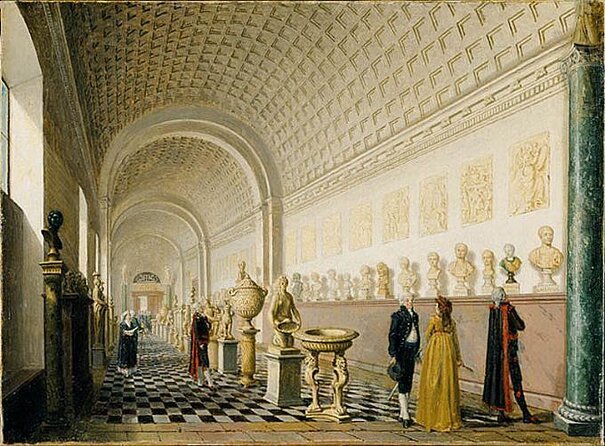
The pass is not limited to royal buildings and old ships. Nationalmuseum is the major art stop, with European works arranged across grand rooms and galleries. Its collection includes artists such as Rembrandt, Renoir, Rubens, Cézanne, and Degas.
Fotografiska offers a different mood, with changing photography exhibitions and a more contemporary feel. It is a good late-day option if you want art without another palace interior.
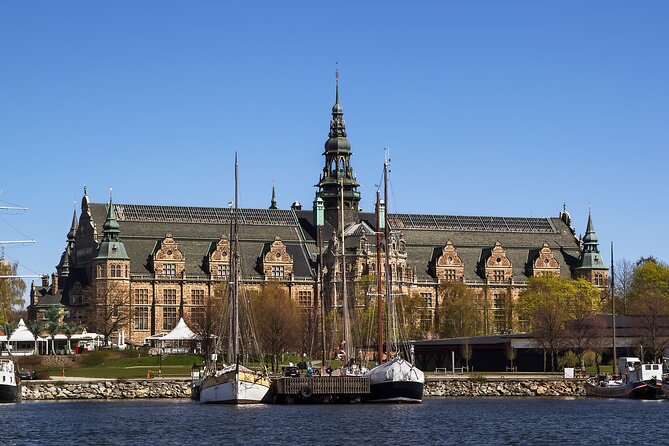
Nordiska Museet tells the story of Nordic life through clothing, interiors, furniture, and everyday objects from the 16th century onward. Its exhibitions on Arctic life and the Sami add current environmental and cultural questions to the displays.
Prins Eugens Waldemarsudde focuses on Swedish art and occupies a historic home. Millesgården, about 20 minutes from central Stockholm, combines a former home with sculpture and outdoor settings created by Carl Milles and Olga Milles.
Hallwyl Museum takes you into the opulent winter home of the von Hallwyl family. You will see art, porcelain, furniture, and rooms preserved from a wealthy household. Sven-Harry’s Art Museum is more contemporary and presents art in a modern setting designed to make exhibitions approachable.
The Gustavsbergs Porslinsmuseum is a good choice for design fans. Its collection covers Swedish ceramics made from 1825 to 1993, including pieces associated with Stig Lindberg, Lisa Larson, Wilhelm Kåge, Karin Björquist, and Tyra Lundgren.
Science, music, and unusual stops

Tekniska Museet is one of the best family choices. You can experiment with eye-controlled painting, virtual sculpture, music made through thought, and other hands-on displays. Tom Tits Experiment, outside central Stockholm, is Sweden’s largest science center and offers even more activity-based learning.
The Swedish Museum of Performing Arts has musical instruments, costumes, set models, and around 20 interactive stations. I would choose it if you like theatre, music, or dance, rather than forcing it into a day already crowded with art museums.
Spritmuseum looks at Swedish drinking culture through taste, smell, and displays. It is an unusual stop and may appeal more to adults than children.
The ICEBAR Stockholm is also adults only. Your 45-minute visit includes a warm cape and gloves, and the room is rebuilt each year with a new theme using natural ice from the Torne River. It is a novelty, not a major cultural sight, but the pass can make this short experience easier to justify.
The Strindberg Museum preserves August Strindberg’s last residence, including his bedroom, workroom, dining room, dining room, and library, along with books, photographs, paintings, and personal objects. Check the repeated dining-room wording in the guide if you are planning around a tight schedule, but the museum itself is a compact literary stop.
SkyView and the farther-out choices

The SkyView glass cabin climbs the side of Avicii Arena and offers views across Stockholm’s southern suburbs. The ride itself takes about 20 minutes, with a total visit of roughly an hour.
I would verify its current operating status in the app before counting it toward the pass value. The attraction information and user experiences have not always appeared consistent, so do not make this your only reason for buying the pass.
Several included activities require more time and transport than their short visit estimates suggest. Artipelag on Värmdö combines modern art, architecture, food, and nature, but it is not a quick central museum stop. Sigtuna requires a boat outing and time on foot in one of Sweden’s oldest settlements.
Pampas Marina offers kayaking or stand-up paddleboarding along Karlbergskanalen toward City Hall. Kristineberg and Nacka Strand offer seasonal adventure golf, while Vaxholm Fortress and Gustavsberg require planning beyond the city center.
These options are useful for a longer 4 or 5-day pass. They are poor choices for a one-day pass unless the activity is the main purpose of your day.
Hop-on hop-off help, with a few traps
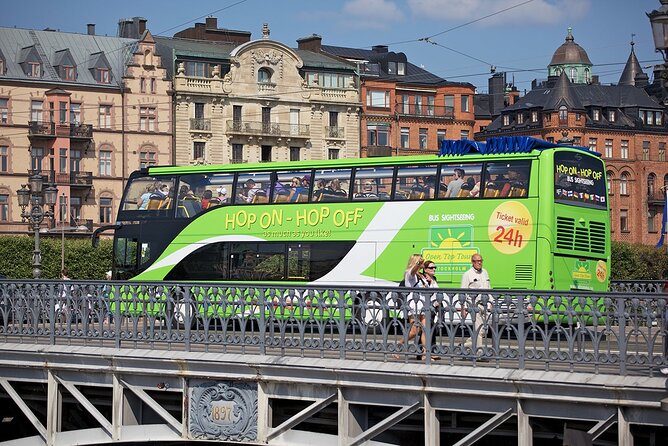
The included Stromma hop-on hop-off bus and boat can help you cover ground, especially between central Stockholm, the Palace, Djurgården, and other sights. A full bus circuit is listed at about seven hours, but you can ride only part of the route.
Pay attention to the operator. Stockholm has more than one red hop-on hop-off service, and the buses can look similar. The pass is tied to the designated service, not simply any red bus. This confusion has led to wrong boarding points and wasted time.
Schedules matter too. Service may end around 4 or 5 p.m., even when you still have museums to visit. The buses are not a replacement for Stockholm’s public transport, and the pass does not include ordinary public transit. Plan to buy a separate visitor travel card if you need buses, metro, or commuter transport beyond the included services.
Fika at Systrarna Andersson is listed as an included tradition rather than a standard admission. It gives you a chance to pause for coffee and cake, though you should confirm the current terms in the app before relying on it as a meal break.
How to plan a two-day pass
For two days, I would concentrate on central Stockholm and Djurgården rather than chase distant stops.
Day one: Start at the Vasa Museum, then choose the Viking Museum and Nordiska Museet. Take a short canal tour if the schedule fits, and finish with Skansen or Fotografiska.
Day two: Visit the Royal Palace, Royal Armoury, Storkyrkan, Nobel Prize Museum, and Riddarholmen Church. Add Nationalmuseum or a confirmed boat ride if you still have time.
This plan gives you at least four substantial admissions plus a cruise, which is the level of use needed to make a $101.70 pass feel sensible. I would not attempt Vaxholm, Birka, Drottningholm, and central museums in the same two days.
For three to five days, the pass becomes easier to use at a relaxed pace. You can set aside a day for Drottningholm, another for the archipelago, and a separate day for art or science museums.
QR codes, reservations, and avoiding frustration
The pass is designed for direct entry by cellphone QR code, but you need the correct code. A Viator booking barcode may not be the same as the Go City admission code. After booking, use the Get ticket option, update your email if asked, and sync the pass in the Go City app.
Some attractions require reservations. Use the app to identify them before you leave, especially boat trips and seasonal services. If a QR code does not appear, or the pass shows inactive, resolve the problem before reaching the ticket desk if possible.
I would carry the PDF guide as a backup and keep the phone charged. If you are visiting by cruise ship, plan conservatively, avoid a far-out boat trip as your only major activity, and leave time to return to the port without depending on a late bus.
Who should buy the Stockholm Pass?
I recommend it for an active museum visitor who wants the Vasa Museum, several royal or cultural sights, and at least one boat tour. Families can also get good use from Skansen, Gröna Lund, Tekniska Museet, and Tom Tits Experiment.
I would skip it if you want only one or two museums, rely on public transportation, or have a short port call with no time to study routes and schedules. The pass gives you access, not a guide, itinerary, or transit network.
The biggest strength is choice. The biggest weakness is that you must manage the details yourself. If you plan by neighborhood, confirm seasonal attractions, use the correct QR code, and visit enough paid sights, this can be a useful Stockholm bargain. If you buy it casually and hope the boats and buses will sort out the rest, it can become an expensive phone screen.
FAQ
How many days is the Stockholm Pass valid?
You can buy a pass for 1, 2, 3, 4, or 5 days. It becomes active when you visit your first attraction and then remains valid for the number of consecutive calendar days purchased.
Is the Vasa Museum included?
Yes. Admission to the Vasa Museum is included, and the visit is planned for about one hour.
Does the pass include public transportation?
No. Ordinary public transportation is not included. Transportation to attractions is also generally excluded unless a specific boat, bus, or other activity is listed as part of the pass.
Can I visit an attraction more than once?
No. Each included attraction can be visited only once.
Are boat tours available all year?
Not all of them. Several boat routes are seasonal, including services to Vaxholm, Birka, Fjäderholmarna, and some sightseeing cruises. Check the Go City app or digital guide for current schedules.
Do all attractions require reservations?
No, but some activities do require reservations. Use the Go City app to check requirements and reserve where necessary.
Just added in Stockholm
- Wolf and Wildlife Tracking in Sweden★ 5.0 · 1 review
- World War II Stockholm Old Town Walking Tour and Army Museum★ 4.6 · 4 reviews
- Viking History Half-Day Tour from Stockholm★ 5.0 · 1 review
- Stockholm Old Town Walking Tour + Archipelago Cruise★ 5.0 · 1 review
- Wine tasting in Old Town Stockholm★ 5.0 · 1 review
- Wolf and Wildlife Tracking in Sweden★ 5.0 · 9 reviews
- Scandinavian Art, Architecture and Design Tour in Stockholm★ 4.5 · 11 reviews
- Voyage of the Vikings: Guided Exploration Through Sweden’s Past★ 5.0 · 2 reviews
Swedish Museums, compared.


Stockholm Pass: Save up to 50% – Includes Vasa Museum Ticket
Read our review →


Skip the Line: Disgusting Food Museum Entrance Ticket
Read our review →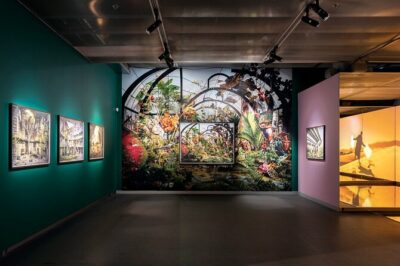

Vasa Museum Guided Tour, Including Ticket & Guide
Read our review →
Browse the lists this tour appears in