Review · STOCKHOLM TOURS
Scandinavian Art, Architecture and Design Tour in Stockholm
Stockholm wears its style well. This three-hour walk connects Östermalm design shops with grand theaters, a 19th-century food hall, royal parks, and the Nationalmuseum, giving you a useful introduction to how Swedish art and architecture fit together. I like the route’s mix of polished streets and everyday food culture, and I like that you get time to browse design stores at your own pace. The main drawback is that much of the experience takes place outdoors, so poor weather can disrupt the plan.
I also like the small maximum of 10 people. That keeps the walk more personal and leaves room for questions, rather than turning it into a moving lecture. Guide Olesia has earned particular praise for her engaging stories and for finding a good balance between explanation and free time. Still, the tour is best for you if design, buildings, and cultural background matter more than entering a long list of interiors.
In This Review
- Key points to know before you book
- Why this Stockholm walk works as an introduction
- Östermalm: polished streets and Swedish design names
- Ostermalms Saluhall: a food break with architectural weight
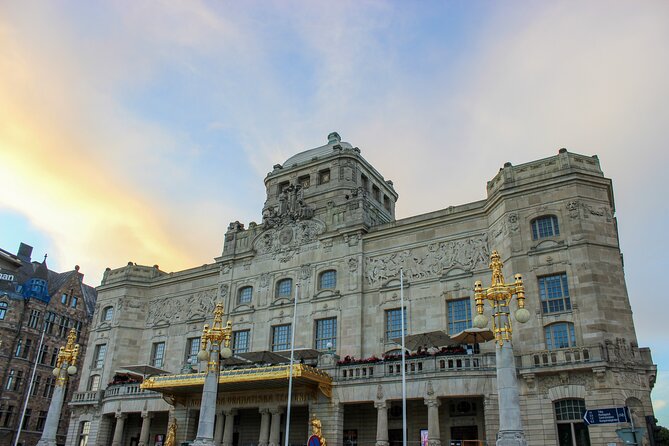
- The Royal Dramatic Theater and Stockholm’s stage tradition
- Kungstradgarden: green space, royal origins, and red paint
- The Royal Swedish Opera and Stockholm’s Phantom story
- Skeppsholmen and the view toward the Old Town
- Group size, pace, and practical details
- Who should take this tour?
- Should you book the Stockholm design walk?
- FAQ
- How long is the Scandinavian Art, Architecture and Design Tour?
- Where does the tour begin?
- Where does the tour end?
- What language is the tour offered in?
- What is the maximum group size?
- Is admission to the design shops included?
- Does the tour visit Ostermalms Saluhall?
- Does the tour include museum admission?
- Can service animals join the tour?
- Can I cancel for a full refund?
- What happens if bad weather cancels the tour?
Key points to know before you book
- Östermalm supplies the design focus: Walk among Stockholm’s famous furniture, upholstery, antique, and home-accessory businesses around Stureplan, Linnégatan, Nybrogatan, and Strandvägen.
- The route has real variety: Swedish food, Art Nouveau, theater, public gardens, Baroque details, modern design, and museum culture all appear within three hours.
- Ostermalms Saluhall adds local flavor: You pass through one of Stockholm’s best-known food halls and see typically Swedish delicacies.
- A small group makes a difference: The tour accepts a maximum of 10 people, with access to design shops included.
- The finish is scenic and practical: The walk ends at the Nationalmuseum, with views toward Stockholm’s Old Town from Skeppsholmen along the way.
- Weather matters: The activity requires good weather, and cancellations caused by poor conditions offer a new date or full refund.
Why this Stockholm walk works as an introduction
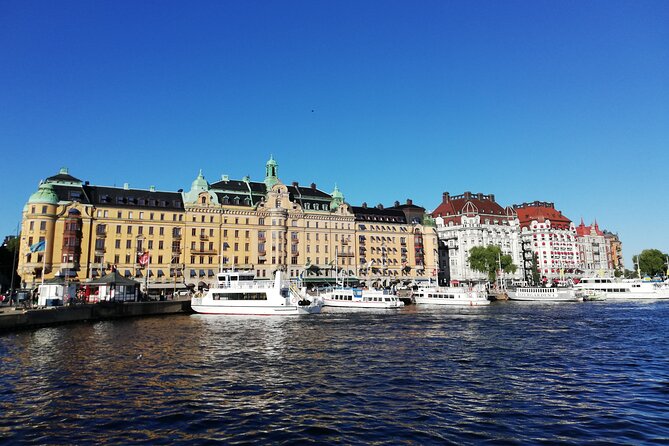
Stockholm can feel spread across water, islands, parks, and distinct neighborhoods. A walking tour that links several central areas helps you understand the city’s visual character without asking you to spend a full day inside museums.
This route begins at Svampen in Stureplan, Östermalm, and finishes in front of the Nationalmuseum. Travel time is included in the roughly three-hour duration, so the walk is not simply three hours of uninterrupted commentary at one location. You move through the city, pause at key buildings and public spaces, and hear how Swedish design developed within its social and historical setting.
The subject is broader than furniture. You hear about upholstery, antiques, theaters, food traditions, parks, paint, museums, and architectural periods from Gothic to Baroque and modern design. That range is useful if you want to see how Swedish style functions in daily life rather than treating it as a collection of famous chairs and lamps.
The price is $61.62 per person. For a three-hour guided walk with access to design shops and a group capped at 10, that is a fair price if you care about the subject. It is less compelling if you mainly want a general city orientation, since Stockholm offers other ways to see major landmarks without a design focus. The value comes from the guide’s interpretation and the route’s connections, not from paid admission to a series of attractions.
More things to do in Stockholm:
- Stockholm: City Archipelago Sightseeing Cruise with Guide
★ 4.3 · 10,798 reviews - Stockholm: Skansen Open-Air Museum Admission Ticket
★ 4.5 · 3,427 reviews - Stockholm: Archipelago Boat Tour
★ 4.4 · 3,110 reviews
Östermalm: polished streets and Swedish design names
The opening hour takes place in Östermalm, one of Stockholm’s more fashionable districts. The route includes Stureplan, Linnégatan, Nybrogatan, and Strandvägen, streets associated with design shops, upholstery houses, antique dealers, and elegant residences.
This is the part of the tour most likely to appeal to you if you enjoy looking closely at interiors and materials. Instead of hearing only broad statements about Scandinavian style, you get a street-level look at the businesses and names that helped shape Stockholm’s design identity. The guide explains their legacy and historical setting, so the shops become part of a larger story.
I appreciate the chance to enter design shops during the walk. One especially useful feature is the balance between guided explanation and personal browsing. You can listen to Olesia explain a design house or upholstery tradition, then take a little time to look at furniture, textiles, and home accessories without being hurried from one stop to the next.
That said, access to shops does not mean a shopping discount or a private buying appointment. You should think of it as a chance to see the retail side of Swedish design. Prices in this part of Stockholm may be out of reach for casual souvenir hunters, but even window-shopping helps you spot the difference between mass-market Nordic decoration and higher-end Swedish craftsmanship.
The route is also a good reminder that design in Stockholm is not confined to museums. It appears in storefronts, fabrics, furniture, building fronts, and the way commercial streets are presented. If you want a design-centered walk rather than a standard list of monuments, Östermalm gives the tour a clear purpose from the start.
Ostermalms Saluhall: a food break with architectural weight
The stop at Ostermalms Saluhall lasts about 30 minutes. It is not just a place to point out Swedish food. The market hall is also one of central Stockholm’s notable architectural landmarks, dating to the 19th century.
Inside, you pass stalls and displays of typically Swedish delicacies. The visit gives the walk a welcome change of pace after the design shops and elegant streets. Food tells you plenty about a place, and a market is often more useful than a polished restaurant when you want to understand what local ingredients and traditions look like in ordinary city life.
The food hall also fits the tour’s main idea: Swedish design is tied to function. A market must serve shoppers, vendors, and the flow of daily business, while still offering a strong visual setting. You can consider the building from both angles, as a working food market and as a piece of historic architecture.
The supplied details do not promise tastings, a meal, or time to shop for lunch. I would treat this as a guided visit rather than a food tour. If you want to buy something, keep the 30-minute stop in mind and avoid assuming that the schedule allows a full meal.
The itinerary also includes a look at a well-known Swedish upholstery name associated with Stockholm’s VIP residents. The exact shop or household name is not specified, but the topic adds a useful link between high-end interiors and the city’s design culture.
The Royal Dramatic Theater and Stockholm’s stage tradition
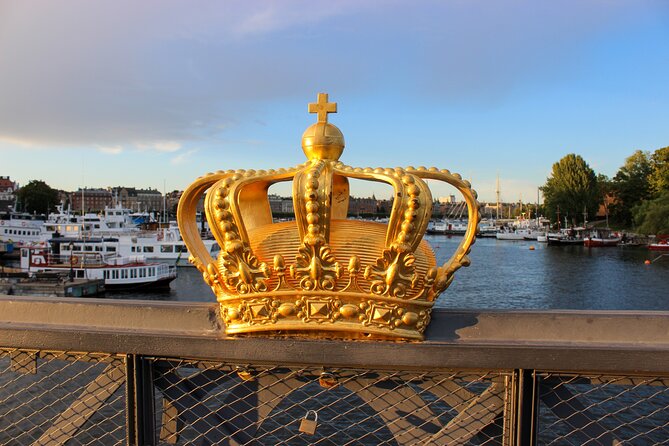
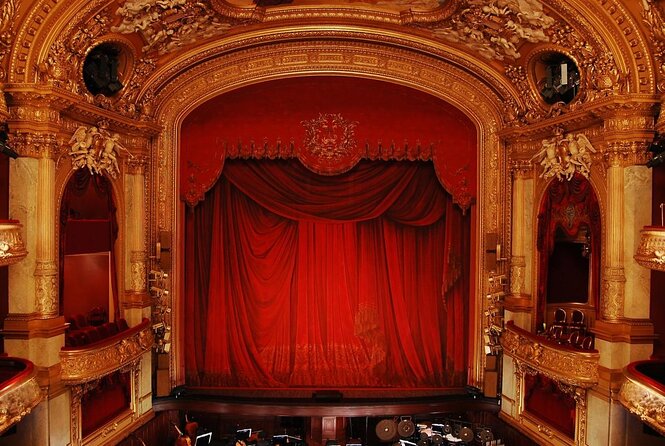
The Royal Dramatic Theater, or Kungliga Dramatiska Teatern, receives about 15 minutes. Its ornate exterior is tied to the Art Nouveau period, and the theater has a long place in Swedish performing arts.
The stop also connects the building with major Swedish acting careers. Greta Garbo and Ingrid Bergman, famous internationally for films including Casablanca, are associated with the theater’s early artistic story. That connection gives the building more life than a quick architectural label would.
Fifteen minutes is enough for an exterior explanation and a few photographs, but not for a full theater visit. You should not expect a performance, backstage access, or an extended look inside. The value here is context: the guide shows how architecture, national culture, and celebrity history meet in one central Stockholm landmark.
The theater works well in the middle of the walk because it keeps the subject from becoming too focused on shopping. You move from furniture and textiles to a public building tied to drama, actors, and Swedish cultural life.
A completely different kind of day:
- Stockholm: Highlights Boat Tour
★ 4.3 · 2,542 reviews - Stockholm Pass: Save up to 50% – Includes Vasa Museum Ticket
★ 4.1 · 2,392 reviews - Stockholm: Ghost Walk and Historical Tour
★ 4.7 · 2,206 reviews - Walking Tour of Stockholm Old Town
★ 5.0 · 1,175 reviews
Kungstradgarden: green space, royal origins, and red paint
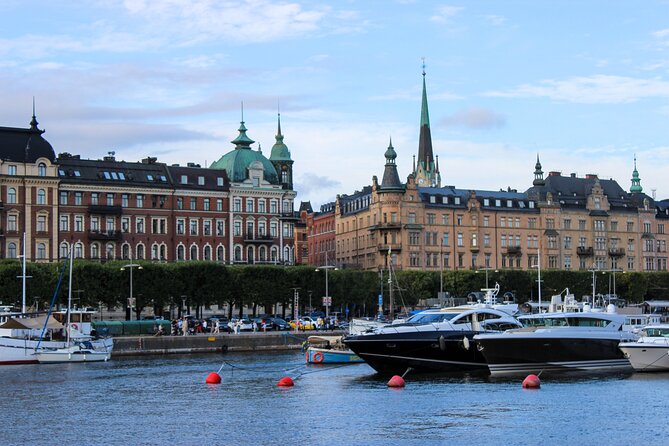
At Kungstradgarden, the tour spends about 45 minutes discussing Stockholm’s parks and the role of green areas in city life. This is one of the longer stops, and it gives the guide room to connect urban planning with several architectural periods.
The garden’s story begins in the 15th century and includes later reinventions. You hear about Gothic, Baroque, and modern influences, while also considering why public green spaces matter in a dense capital. The point is not simply that Stockholm has attractive parks. It is that gardens help shape how the city is used and experienced.
The stop also covers the origin of Sweden’s famous Falu red paint. That detail may seem small, but it is exactly the kind of practical cultural fact that improves your eye as you continue through Sweden. Once you know the story behind the color, traditional Swedish buildings become easier to recognize and understand.
Kungstradgarden provides a natural pause in the route. After several built-up streets and landmark buildings, you have space to think about how trees, paths, and open areas fit into the city. If you are more interested in architecture than art history, this section may be one of the strongest because it explains buildings in relation to their surroundings.
The tradeoff is that the information can cover a lot of ground. You are moving across centuries and styles in one stop, so you may not retain every detail. Still, the broad view is useful, especially early in a Stockholm visit when you are trying to form a mental map.
The Royal Swedish Opera and Stockholm’s Phantom story
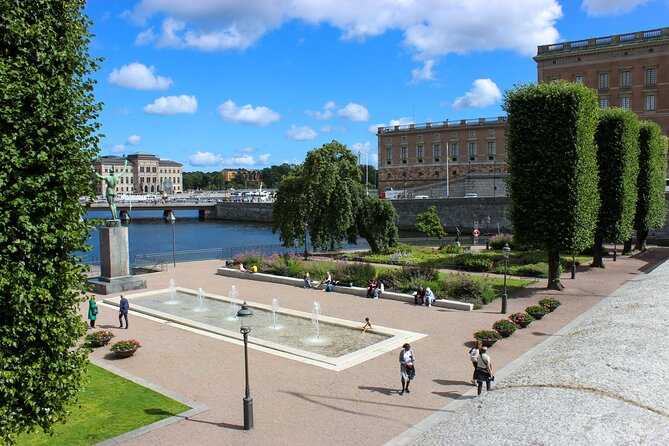
The Royal Swedish Opera is another brief point along the route. This late 19th-century building is presented as an architectural masterpiece, with a story described as Stockholm’s own Phantom of the Opera.
The title adds a little theatrical humor to the walk, but the stop has a practical purpose. It extends the earlier discussion of the Royal Dramatic Theater and shows that Stockholm’s performing-arts buildings are part of the city’s architectural identity, not isolated attractions.
Again, expect an exterior stop rather than an opera performance or interior tour. The supplied schedule does not assign a separate duration, so the opera discussion forms part of the walk between the main timed stops. If you want to see the building at length, you may need to return on your own.
Skeppsholmen and the view toward the Old Town
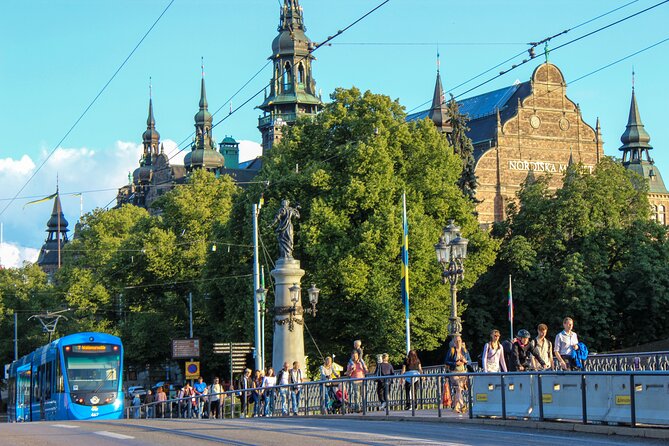
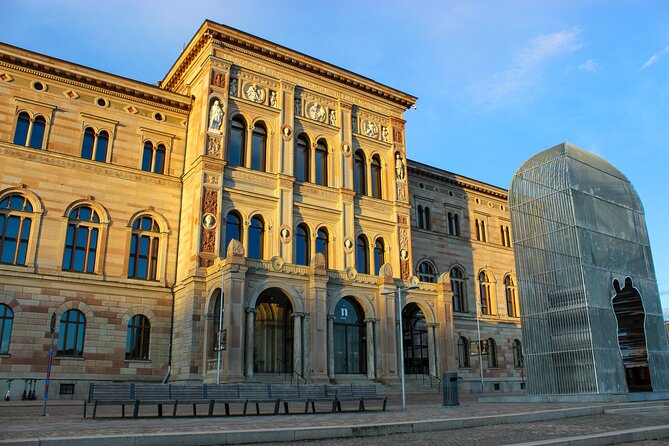
The final section leads toward Skeppsholmen, one of the prettiest islands in central Stockholm, before ending at the Nationalmuseum on Södra Blasieholmshamnen.
Skeppsholmen gives you a view toward Stockholm’s Old Town and brings together the tour’s final themes: art, culture, and architecture. The island is home to important museums, including the Nationalmuseum, Moderna, and ArkDes. Even without a scheduled museum admission, the setting provides a strong way to close a walk about Swedish creative work.
The endpoint in front of the Nationalmuseum is convenient. You can finish by visiting the museum, continue toward the Old Town, or simply use the location as a clear point for the next part of your day. The tour itself does not include museum tickets, so plan on separate admission if you want to go inside.
This final stretch also gives the route a better sense of place. You are not only hearing about Swedish objects and buildings. You are looking across water toward an older part of Stockholm and seeing how museums occupy the modern cultural center. That connection makes the finish feel earned rather than arbitrary.
Group size, pace, and practical details
The maximum group size is 10 people. That is a meaningful advantage on a walking tour built around questions, shop visits, and changing viewpoints. A small party can pause without blocking a large section of sidewalk, and the guide has a better chance to respond to your interests.
The tour is offered in English and uses a mobile ticket. It begins at Svampen, Stureplan, in Östermalm, and ends at the Nationalmuseum. The route is near public transportation, and most people can take part. Service animals are allowed.
You should wear comfortable shoes and dress for outdoor conditions. The experience requires good weather, which is important because the route depends on walking between streets, parks, theaters, and museums. If bad weather cancels the tour, you receive the choice of another date or a full refund.
Free cancellation is available up to 24 hours before the start time. If you cancel later, the payment is not refunded, and changes made within that period are not accepted. The cut-off follows local Stockholm time.
The activity is often booked about 26 days ahead. That does not guarantee it will sell out, but it suggests that reserving early is sensible if your dates are fixed.
Who should take this tour?
I would recommend it to you if you like design but want more than a shopping guide. The walk gives you Swedish furniture and upholstery, yet also adds food, theater, public gardens, paint, museums, and city views.
It also suits first-time visitors who want a thoughtful way to begin their stay. The route introduces several central areas and ends near major museums, so you can use the afternoon to follow up on whichever subject catches your attention.
You may enjoy it less if you want extensive indoor sightseeing. Most of the experience is a guided walk with exterior explanations, and the theater, opera, and museum stops do not include stated admission. It is also not the right pick if rainy weather is likely and you have no flexibility.
Olesia’s approach appears particularly suitable if you appreciate stories rather than a rushed checklist. Her strength is making room for your own browsing while still explaining why a shop, street, or building matters. That balance is the feature I would value most.
Should you book the Stockholm design walk?
Book it if you want a compact, small-group introduction to Swedish design tied to real streets and cultural sites. At $61.62, the price is reasonable for three hours with a maximum of 10 people, especially if you take advantage of the design-shop access and the guide’s personal explanations.
Skip it if your main goal is museum entry, food tasting, or a broad tour of every major Stockholm sight. You will see important buildings and places, but the experience is centered on interpretation, not admissions.
For the best fit, schedule it near the start of your Stockholm stay, reserve ahead if your plans are firm, and leave room afterward for the Nationalmuseum or nearby areas. It is a focused walk with enough variety to help you see Stockholm with sharper eyes.
FAQ
How long is the Scandinavian Art, Architecture and Design Tour?
The tour lasts approximately three hours, and travel time between stops is included.
Where does the tour begin?
It begins at Svampen in Stureplan, Östermalm, Stockholm.
Where does the tour end?
The tour ends in front of the Nationalmuseum at Södra Blasieholmshamnen 2.
What language is the tour offered in?
The tour is offered in English.
What is the maximum group size?
The tour allows a maximum of 10 people.
Is admission to the design shops included?
Yes. Access to design shops is included.
Does the tour visit Ostermalms Saluhall?
Yes. The route includes about 30 minutes inside Ostermalms Saluhall, where you can see typically Swedish delicacies and the market’s historic architecture.
Does the tour include museum admission?
No museum admission is listed as included. The route discusses museums such as the Nationalmuseum, Moderna, and ArkDes, and ends at the Nationalmuseum.
Can service animals join the tour?
Yes. Service animals are allowed.
Can I cancel for a full refund?
Yes, if you cancel at least 24 hours before the experience start time. Cancellations made less than 24 hours before the start are not refunded.
What happens if bad weather cancels the tour?
You will be offered a different date or a full refund.
Just added in Stockholm
- Wolf and Wildlife Tracking in Sweden★ 5.0 · 1 review
- World War II Stockholm Old Town Walking Tour and Army Museum★ 4.6 · 4 reviews
- Viking History Half-Day Tour from Stockholm★ 5.0 · 1 review
- Stockholm Old Town Walking Tour + Archipelago Cruise★ 5.0 · 1 review
- Wine tasting in Old Town Stockholm★ 5.0 · 1 review
- Wolf and Wildlife Tracking in Sweden★ 5.0 · 9 reviews
- Voyage of the Vikings: Guided Exploration Through Sweden’s Past★ 5.0 · 2 reviews
- Private Tour: Swedish History Day Trip to World Heritage Candidate Markim-Orkesta from Stockholm★ 5.0 · 8 reviews
Stockholm Tours, compared.

City Archipelago Sightseeing Cruise with Guide
Read our review →


Stockholm Pass: Save up to 50% – Includes Vasa Museum Ticket
Read our review →