
Review · VIKING HISTORY TOURS
Entrance ticket to The Viking Museum
Vikings come alive in eleven minutes. Stockholm’s Viking Museum mixes films, sound, projections, replicas, and archaeological objects to make the Norse past easier to grasp. I like the Ragnfrid’s Saga ride, which gives the visit a clear story, and the chance to ask questions of guides stationed around the exhibits. The main drawback is that the museum is fairly small and includes plenty of reading, while the ride may feel cheesy or underwhelming to some adults.
At $22.68 per person, I see this as a reasonable stop if you want a short, accessible introduction to Viking life rather than a major archaeological collection. The multilingual audio guide helps you move at your own pace, but you should also check when a live guide is speaking your language. That extra explanation can make the difference between a fun hour and a visit that feels too slight for the price.
In This Review
- Key points to know before you go
- What the Viking Museum is trying to do
- Start with the farm, not the raiders
- Ragnfrid’s Saga, the museum’s main attraction
- Films, projections, and objects in one small space
- Guides and audio help fill in the gaps
- How long to allow, and how to pace your visit
- Is $22.68 a fair price?
- Food, shopping, and the rest of the visit
- Who will enjoy it most?
- Should you book The Viking Museum?
- FAQ
- How much does entry to The Viking Museum cost?
- How long does a visit take?
- Is the ticket available on a mobile device?
- Is an audio guide available in English?
- What is Ragnfrid’s Saga?
- Can I cancel for a refund?
Key points to know before you go
- Ragnfrid’s Saga lasts 11 minutes: This atmospheric ride follows a Viking family through farming, raiding, and the slave trade.
- The museum is compact: Plan on roughly one to two hours, with many visitors finishing the main experience in about an hour.
- You can ask questions as you explore: Guides in Viking-style clothing explain displays and handle questions around the exhibition.
- Expect a mix of old-school panels and modern effects: Films, projections, sound, replicas, and artifacts share the same space.
- The $22.68 ticket suits a short cultural stop: It is less convincing if you want a large collection of original objects.
- Language planning matters: Entry is offered in English, and the audio guide is multilingual. Live guide times vary by language.
What the Viking Museum is trying to do

The Viking Museum is built as an introduction, not as a vast storehouse of Viking artifacts. Its purpose is to bring together several parts of Norse life: shipbuilding, overseas journeys, warfare, farming, mythology, and ordinary work at home.
That broad reach is useful because modern Viking images often focus only on helmets, swords, and raids. Here, you get a reminder that most people in the Viking Age were farmers, traders, craftspeople, parents, and workers. Raiding was part of the picture, but it was not the whole picture.
The museum uses several ways to tell that story. You will encounter films, projected scenes, sound effects, scenery, archaeological objects, and replicas that you can examine more closely. Some displays ask you to read, while others aim to create a mood or show how an object may have been used.
I like this mix for a first visit, especially if you are traveling with children or want a break from long museum labels. Still, the balance leans more toward presentation than toward a large collection. If you want room after room of original objects, this may feel modest.
More Museum Tours in Stockholm:
- Stockholm: Skansen Open-Air Museum Admission Ticket
★ 4.5 · 3,427 reviews - Stockholm Pass: Save up to 50% – Includes Vasa Museum Ticket
★ 4.1 · 2,392 reviews - Stockholm: Nobel Prize Museum and Exhibition Entry Ticket
★ 4.3 · 994 reviews
Start with the farm, not the raiders
The central story begins at Frösala Farm with Ragnfrid and her husband Harald. This starting point matters. It places Viking life in the home community before sending the family out toward danger and adventure.
You learn about daily life at the farm, then move into larger subjects such as shipbuilding, travel, and raids. The exhibition also explains the slave trade in the east and plundering in the west. That wider treatment gives the museum more substance than a simple celebration of Viking warriors.
Norse mythology appears throughout the visit. The exhibition connects myths with what can be supported by archaeology and historical evidence, helping you separate legend from fact. This is one of the most useful parts of the experience because many popular Viking stories blend the two.
Some visitors find the information clear and engaging. Others find that there is too much text for younger children, with not quite enough hands-on material to keep them busy. If your family has limited patience for panels, make the ride and guide sessions your priorities, then choose the displays that catch your interest.
Ragnfrid’s Saga, the museum’s main attraction
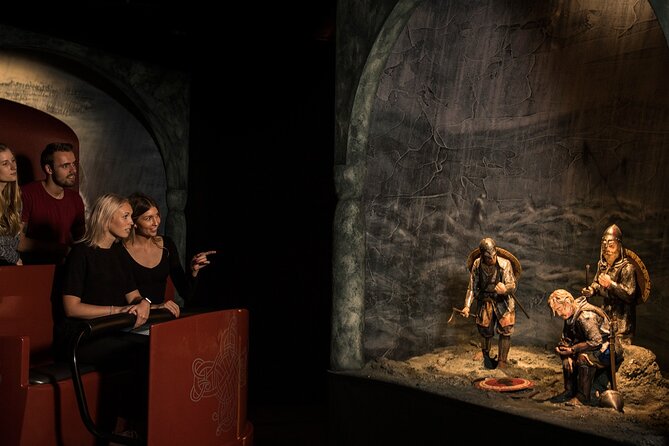
Ragnfrid’s Saga is an 11-minute ride through the Viking Age. You follow Ragnfrid and her family from Frösala Farm into a story of travel, attack, and human trafficking. The trip uses light, sound, scenery, and atmospheric settings, with Ragnfrid narrating the journey.
This is the museum’s most theatrical feature. It is not a full theme-park attraction, and it does not replace a historical explanation. Instead, it gives emotional shape to subjects that can seem abstract on a panel, particularly the dangers of travel and the violence connected with raiding and slavery.
I think the ride works best when you treat it as a short story within the museum, not as the complete reason to buy admission. Some adults enjoy its visual effects and find it exciting, especially when the family is attacked in the forest. Others find the storyline silly or the vehicle uncomfortable, and one especially negative assessment preferred spending more time at Stockholm’s Vasa Museum.
That split reaction is important. If you expect a polished, major attraction, you may be disappointed. If you enjoy a brief theatrical presentation and want children to connect a face and family to the period, it can be the most memorable part of the visit.
Films, projections, and objects in one small space
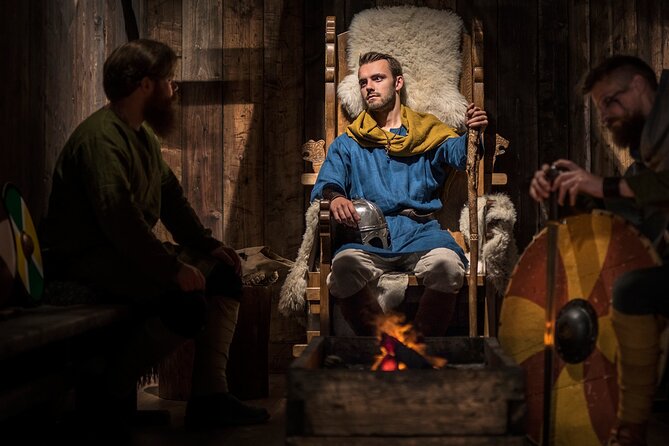
The exhibition combines traditional museum material with modern presentation. You will see archaeological objects and relics, but also films, projections, scenery, and sound effects designed to place them in context.
The result is lively in places, though not constantly interactive. A hands-on replica can help you picture Viking tools, clothing, or domestic life, while a film can explain a journey or historical event faster than a long label. The displays also create good photo opportunities, particularly for families who want a playful picture from the visit.
Do not expect every object to be an original treasure. Replicas are used so you can explore Viking life with more than your eyes. That approach has value, but it also explains why the museum may feel less substantial to someone focused on rare artifacts.
The reading level and amount of text can shape your experience. Adults who enjoy scanning panels may learn a great deal in a short time. Children may prefer the ride, replicas, and visual displays. Teenagers can land somewhere in the middle, depending on how much they enjoy the theatrical style.
More Viking history tours:
- Viking History, Runes & Countryside 9h Tour to Sigtuna & Uppsala
★ 4.5 · 283 reviews - Viking History and Swedish Countryside Tour to Sigtuna & Uppsala
★ 4.5 · 162 reviews - From Stockholm: Uppsala and Sigtuna Viking Sites Tour
★ 4.7 · 157 reviews - Viking History Small Group Tour from Stockholm: Half Day Including Sigtuna
★ 4.5 · 111 reviews
Guides and audio help fill in the gaps
Guides in Viking-style clothing are available around the museum to answer questions. I like this setup because it gives you a chance to ask about something that a label leaves unclear. You are not locked into a formal group for the entire visit, yet you can still get human explanation.
The multilingual audio guide is another useful tool. It lets you hear the material in your own language and move through the museum at a comfortable pace. English is offered, and live guide sessions may be available in several languages at set times.
The practical tip is simple: ask at the start when a guide will be speaking your language. A live explanation can add warmth and detail, while the audio guide gives you control. If you arrive without checking, you may miss the language session that would have made the visit more rewarding.
The quality of your visit can depend on how actively you use these resources. Walk past every panel without stopping, and the museum may feel thin. Ask questions, listen to the audio, and spend time with the objects, and the same compact space can provide a useful overview.
How long to allow, and how to pace your visit
The stated visit time is one to two hours. In practice, you can see the main displays and take the ride in about an hour, while a slower visit with audio and guide conversations can fill closer to two hours.
I would allow at least 60 minutes and up to 90 minutes if you have a real interest in Viking culture. That gives you enough time for the exhibition, Ragnfrid’s Saga, and a little browsing without turning the museum into an all-day commitment.
A sensible order is:
- Check the schedule for live guide sessions in your language.
- Begin with the farm and everyday-life displays.
- Read the sections on ships, journeys, raids, and slavery.
- Take Ragnfrid’s Saga when the timing works.
- Return to objects or panels you want to understand better.
- Leave time for the café and shop if they interest you.
The short duration is a strength during a busy Stockholm itinerary. You can fit the museum between other sights instead of surrendering half a day. It is also a weakness if you judge admission only by the number of galleries or original objects.
Is $22.68 a fair price?
At $22.68 per person, the ticket is not a bargain basement admission, so your expectations matter. The price pays for a guided, audiovisual museum visit with an attraction-style ride, not simply access to a collection of artifacts.
I think the value is best for three groups: first-time visitors who want a clear Viking introduction, families who need visual storytelling, and people who enjoy short museums with several presentation styles. The ticket feels less attractive if you are a serious archaeology fan or already plan to spend significant time at larger historical museums.
Prebooking online may save you a little time and gives you a mobile ticket. Yet there is an important practical point: admission may not be difficult to arrange on the day, so prebooking is more about convenience and fitting the museum into your schedule than guaranteeing access to a rare event.
The museum is booked an average of 26 days ahead, which suggests that many people plan it as part of their Stockholm sightseeing. That does not mean you must book a month early. It does mean you should think about the visit before arriving, especially if you care about a certain start time or a live guide in a particular language.
Free cancellation is available if you cancel at least 24 hours before the start time. Changes or cancellations made inside that window are not refunded.
Food, shopping, and the rest of the visit
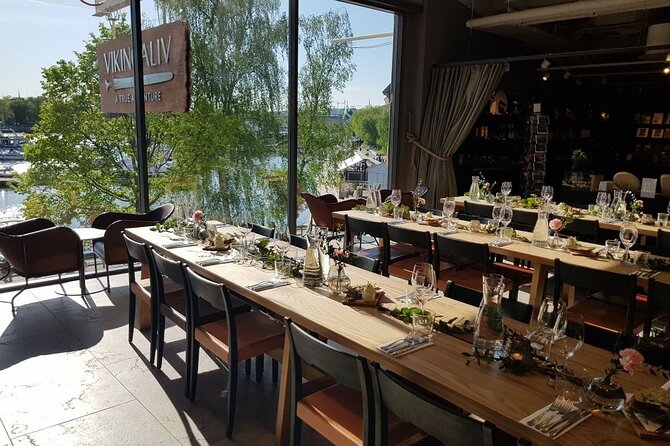
The café adds value if you want to turn the museum into a relaxed stop rather than a quick indoor activity. Reindeer meatballs are a popular recommendation, and the restaurant serves Swedish food. That gives you a chance to try something local without adding another reservation to your day.
The gift shop has Viking-themed items and other interesting choices. I would treat it as an optional extra, but it can be useful if you want a small souvenir connected to the exhibition rather than a generic Stockholm purchase.
The museum is near public transportation, so it is practical to reach as part of a day of sightseeing. The ticket is mobile, service animals are allowed, and most people can take part. The information provided does not give detailed access notes for every section, so contact the museum directly if you need specific assistance beyond those points.
Who will enjoy it most?
I would recommend the museum most strongly to families with younger children, first-time Viking fans, and adults who prefer stories and effects alongside objects. The ride gives the visit a clear center, while the replicas and visual displays help younger visitors picture the period.
It can also work well for a mixed-age group. One person can listen to the audio guide, another can study the objects, and children can focus on the more visual sections. The museum does not force everyone to absorb the material in exactly the same way.
Teenagers and serious history fans may need more careful expectations. The exhibition includes useful information, but it is compact and sometimes old-school in its reliance on panels. The theatrical elements may seem corny to older children or adults who want a more rigorous archaeological presentation.
I would not choose it as a replacement for Stockholm’s Vasa Museum. The two experiences offer different things, and the Viking Museum is much shorter. If you have only limited museum time, decide if you want a focused Viking overview or a larger, more object-centered experience.
Should you book The Viking Museum?
Book it if you want a manageable introduction to Viking life, enjoy audiovisual storytelling, or are traveling with children who need more than glass cases. Make a point of checking the live guide schedule in your language, and give Ragnfrid’s Saga a fair chance without expecting a major ride.
Skip it if your main goal is a large collection of original Viking artifacts or a full day of detailed archaeology. At $22.68, the museum earns its price through presentation, guides, replicas, and a convenient one-hour format. It is a pleasant, focused stop, but its value depends on enjoying the way the story is told.
FAQ
How much does entry to The Viking Museum cost?
The ticket costs $22.68 per person.
How long does a visit take?
The estimated duration is one to two hours. The complete museum experience can take about an hour, while a slower visit with audio and guide conversations may take longer.
Is the ticket available on a mobile device?
Yes. The experience includes a mobile ticket.
Is an audio guide available in English?
Yes. The museum offers a multilingual audio guide, and English is one of the available languages.
What is Ragnfrid’s Saga?
Ragnfrid’s Saga is an 11-minute Viking ride. It follows Ragnfrid, her husband Harald, and their family from Frösala Farm through journeys, western plundering, and the slave trade in the east.
Can I cancel for a refund?
Yes, if you cancel at least 24 hours before the experience start time. Cancellations or changes made less than 24 hours in advance are not refunded.
Just added in Stockholm
- Wolf and Wildlife Tracking in Sweden★ 5.0 · 1 review
- World War II Stockholm Old Town Walking Tour and Army Museum★ 4.6 · 4 reviews
- Viking History Half-Day Tour from Stockholm★ 5.0 · 1 review
- Stockholm Old Town Walking Tour + Archipelago Cruise★ 5.0 · 1 review
- Wine tasting in Old Town Stockholm★ 5.0 · 1 review
- Wolf and Wildlife Tracking in Sweden★ 5.0 · 9 reviews
- Scandinavian Art, Architecture and Design Tour in Stockholm★ 4.5 · 11 reviews
- Voyage of the Vikings: Guided Exploration Through Sweden’s Past★ 5.0 · 2 reviews
Viking History Tours, compared.

Viking History, Runes & Countryside 9h Tour to Sigtuna & Uppsala
Read our review →
Stockholm Viking History Full Day Tour to Sigtuna + Uppsala
Read our review →
Viking History and Swedish Countryside Tour to Sigtuna & Uppsala
Read our review →

Viking History Small Group Tour from Stockholm: Half Day Including Sigtuna
Read our review →

Full Day Viking Tour with Fika Swedish Coffee Break
Read our review →
Private Full Day Viking History Tour from Stockholm Including Sigtuna and Uppsala
Read our review →Browse the lists this tour appears in