
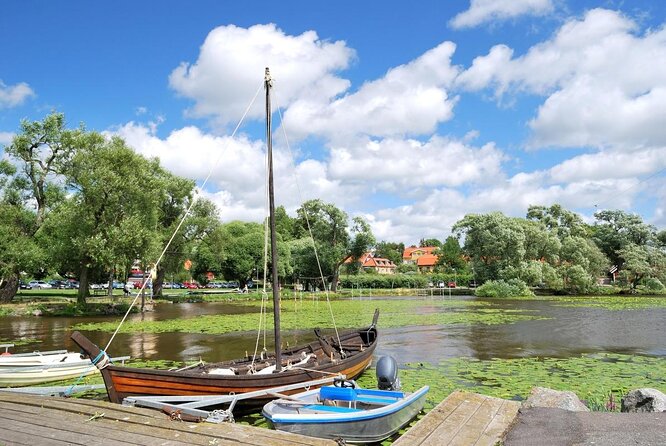
Review · VIKING HISTORY TOURS
Private Half Day Tour: Viking History Trip from Stockholm Including Sigtuna
Runes make Sweden’s Viking past surprisingly personal. This private trip links grave fields, carved stones, an old assembly site, and Sigtuna in about five hours, giving you a useful look beyond Stockholm. I especially like the small private format and the chance to ask questions as you go. I also like that the guide handles the driving, since several sites are spread across the countryside.
The main drawback is value. At $532.19 per person, with a minimum of two people, this is a costly half day, and some stops are quiet outdoor sites rather than grand ruins. You should also allow time for a brisk schedule, especially if you want a relaxed lunch in Sigtuna.
In This Review
- Key points at a glance
- Why this tour works beyond Stockholm
- A 9:30 pickup and a countryside escape
- Broby Bro and the story of Estrid
- Jarlabanke’s causeway and local power
- Arkils tingstad and the Viking meeting place
- Sigtuna: lunch, wooden streets, and church ruins
- S:t Olofs Church Ruins and the early Christian turn
- What the private format is really worth
- Timing, pickup, and cruise port details
- Who should book this half day?
- Should you book it?
- FAQ
- How long is the Viking history tour from Stockholm?
- What sites are included?
- Is hotel pickup included?
- Can cruise passengers join the tour?
- Is lunch included?
- Is this a private tour?
- What language is the tour offered in?
Key points at a glance
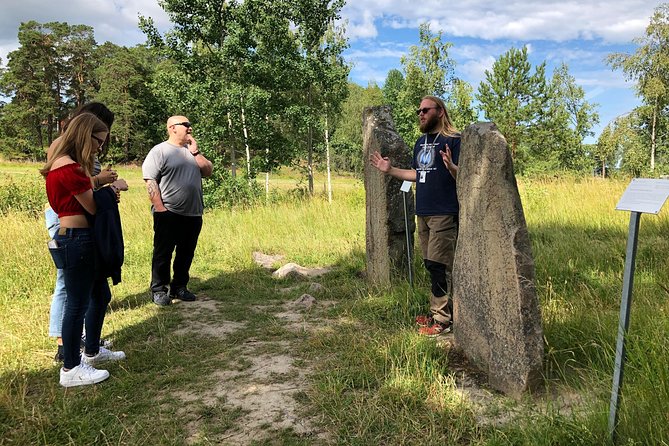
- Broby Bro puts a woman named Estrid at the center of the story, with grave mounds and runestones connected to her family.
- Jarlabanke’s stones sit beside a rebuilt Viking causeway, helping explain roads, power, and trade.
- Arkils tingstad shows how Viking society gathered to make decisions and enforce law, not simply raid and sail.
- Sigtuna adds church ruins, a wooden main street, and lunch, giving the tour a change of pace.
- Private guiding makes the day flexible, and guides such as Olof, Jakob, Gustav, Gabriel, Calle, and Yonatan have been praised for their storytelling.
- The practical catch is pickup range: central Stockholm accommodations and several cruise piers are covered, but Nynäshamn is not.
Why this tour works beyond Stockholm
Stockholm gives you museums and polished city sights. This trip gives you open fields, weathered stones, old church remains, and the places where people once met to settle disputes and make plans. The sites are not grand in the way Rome’s ruins are grand. Their power comes from scale and context.
A runestone can look like a large gray slab until someone explains who raised it, what the inscription says, and why its location mattered. A grassy burial field can seem almost ordinary until you understand that it belonged to a living community with families, trade routes, religious customs, and local rulers.
That is where a private guide earns the fee. Olof, Jakob, Gustav, Gabriel, Calle, and Yonatan are among the guides associated with this experience, and the strongest feedback consistently praises their storytelling, flexibility, and command of Swedish history. One guide even used Scandinavian folklore to keep the drive lively.
The tour is offered in English. If you have hearing difficulties, tell the operator before booking and ask about guide assignment. One person found a strong Swedish accent difficult to follow all day, even though the guide was friendly and well prepared. That is a small but important practical point.
More History Tours in Stockholm
- Stockholm: Ghost Walk and Historical Tour
★ 4.7 · 2,206 reviews - The Original Stockholm Ghost Walk and Historical Tour – Gamla Stan
★ 4.5 · 1,165 reviews - Stockholm: Old Town Historical Walking Tour
★ 4.9 · 344 reviews
A 9:30 pickup and a countryside escape
The day begins with pickup at about 9:30 a.m. from a central Stockholm hotel, port, or other accommodation. The stated pickup area covers locations within roughly 3 to 5 kilometers of Stockholm Central Station, so confirm your exact address before you pay.
You then settle into a private vehicle and leave the city. The drive is part of the experience, not just a transfer. Stockholm’s urban streets give way to Swedish countryside, and your guide can provide background before you reach the first site.
The private vehicle matters here. These Viking locations are scattered, and seeing them independently would require careful planning, local transport, and walking between sites. With a guide driving, you can spend your energy looking out the window and listening rather than checking routes.
The group can be as large as 16 people, although the appeal is strongest for a couple, family, or small party that wants direct contact with the guide. A private tour means only your group participates, and the itinerary can be adjusted around your interests when time allows.
Broby Bro and the story of Estrid
The first stop, Broby Bro, lasts about 55 minutes. You visit a Viking grave field and three important runestones, including one that mentions Jerusalem. That detail alone widens the usual Viking story. The people commemorated here were connected to travel, belief, family networks, and a world much larger than the farms around Stockholm.
The most memorable figure is Estrid, described as the best known Viking woman in the region. The stones were raised by or connected to women in her family, giving the site a rare female perspective. Viking history is often told through kings, warriors, and ships. Broby Bro helps correct that imbalance by showing how women could shape family memory and public identity.
Your guide explains daily life in Scandinavia, the Viking Age, and the origin of the word Viking. One useful lesson is that Viking was a verb connected to going on an overseas expedition, not the name of one uniform people or nation. That simple distinction makes the period easier to understand.
The grave field is free to enter, but it is not a museum with displays or reconstructed buildings. You need to enjoy reading the ground, stones, and setting. If you want dramatic architecture, this may feel spare. If you like history that comes through clues, it is a strong opening stop.
Jarlabanke’s causeway and local power
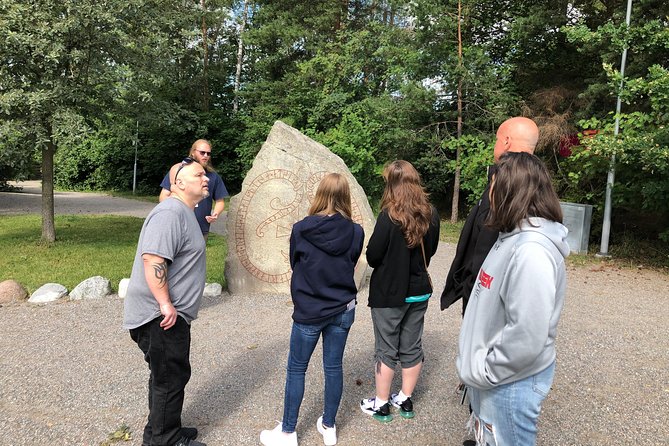
At Jarlabanke Runestones, you spend about 20 minutes walking beside a reconstructed Viking causeway. The short visit gives the day a different angle. Instead of focusing mainly on burial and family memory, the guide explains roads, trade, authority, and the reach of a local lord.
Jarlabanke was a powerful Viking leader, and the stones help introduce the world of regional rulers. The causeway suggests how movement was organized and improved. Roads were not only useful for travelers and traders. They also helped leaders control territory and connect settlements.
This stop is brief, so you should listen closely and ask questions while you walk. The site does not require an admission fee. Its value comes from the explanation of how a ruler could use construction, inscriptions, and public works to make power visible.
For children and younger visitors, the causeway can make the past easier to picture than an isolated stone in a field. For adults, it adds a needed political and economic layer. The Vikings were not only raiders. They were also landowners, builders, traders, and local power brokers.
More Viking history tours:
- Entrance ticket to The Viking Museum
★ 4.0 · 301 reviews - Viking History, Runes & Countryside 9h Tour to Sigtuna & Uppsala
★ 4.5 · 283 reviews - Viking History and Swedish Countryside Tour to Sigtuna & Uppsala
★ 4.5 · 162 reviews - From Stockholm: Uppsala and Sigtuna Viking Sites Tour
★ 4.7 · 157 reviews
Arkils tingstad and the Viking meeting place
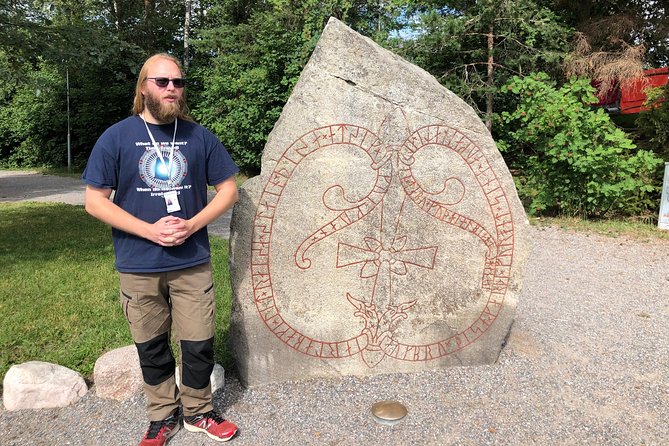
Arkils tingstad is one of the day’s most distinctive stops. You spend about 55 minutes at a well preserved assembly site, or thing site, with its own runestones. This is where the tour moves from individual families to the rules that held a community together.
A thing was a place for public meetings. The guide discusses the Skålhamra family, the influence that came with creating an assembly place, and Viking Age laws and customs. You get a clearer sense of how disputes, agreements, and decisions could be handled before modern courts and government offices.
This stop also challenges the cartoon version of Viking life. A society that gathered to debate and apply law was not simply chaotic or ruled by force. Power still mattered, of course, but it worked through family ties, reputation, public gatherings, and accepted custom.
Arkils tingstad is another quiet outdoor site. You will not find a large visitor center or a full reconstruction. The place rewards a good guide, and the private setup lets you pause for questions instead of being pushed along with a large group.
Sigtuna: lunch, wooden streets, and church ruins
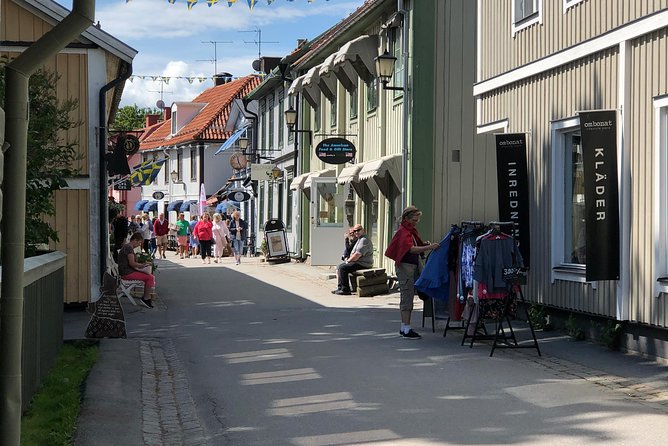
After the countryside sites, you reach Sigtuna, often described as Sweden’s first capital. The town provides a welcome change from grave fields and standing stones. Plan to buy your own lunch here, and keep an eye on the clock because the schedule allows about 40 minutes for the meal.
That is enough for a straightforward lunch, but not necessarily enough for a leisurely restaurant experience. One useful tip is to decide quickly once you arrive. The food can be part of the pleasure, and Swedish meatballs were singled out as a particularly good choice, but this is not a long midday break.
After lunch, you walk through Sigtuna’s small wooden town center. The main street still follows an old, gently curving route associated with the Viking settlement. The compact setting makes the town easy to appreciate on foot, and it gives you a sense of how an early center of power later became a quieter historic town.
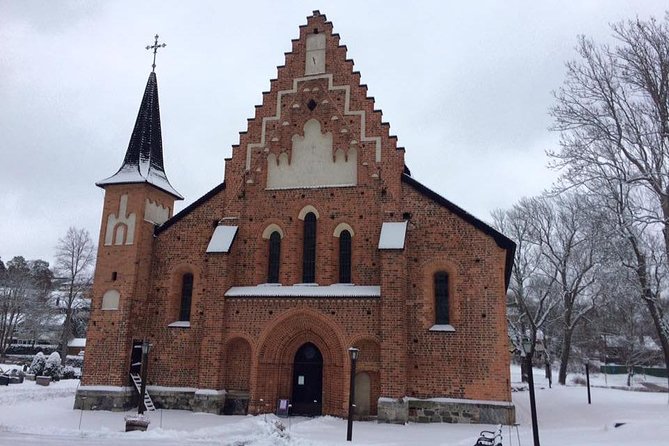
Sigtuna also adds religious history. You may visit Mariakyrkan if it is open, the remaining church ruins, and other historic points in town. Mariakyrkan is connected with a once powerful monastery outside the city. A church visit can add shelter and architectural detail after a morning spent outdoors.
The town is also a practical place for a small sweet or chocolate purchase. One guide pointed out a candy shop with reasonably priced treats, a useful stop if you want an easy gift without spending time searching.
S:t Olofs Church Ruins and the early Christian turn
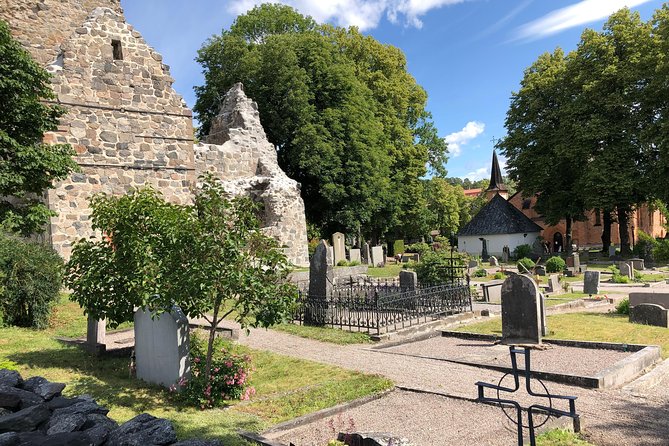
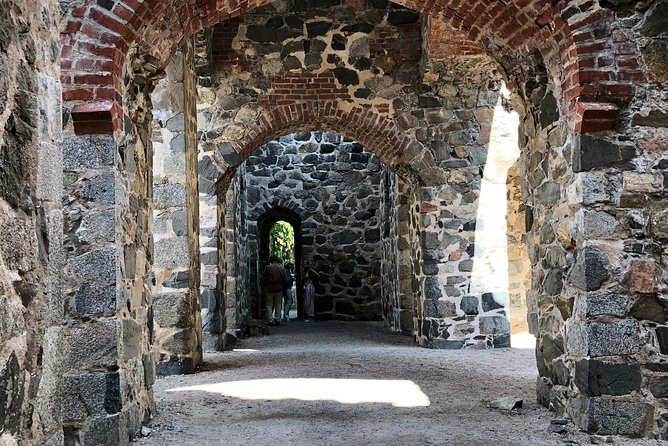
The final listed stop is S:t Olofs Church Ruins, with about 10 minutes set aside. It is described as the largest and best preserved of the three main church ruins around Sigtuna, and it is also the oldest, dating from about 1080 to 1120.
The church was built around a holy well, linking older sacred traditions with the arrival and growth of Christianity. That connection gives the ruin more meaning than its remaining walls alone might suggest. You are seeing a place tied to a major change in Swedish religious life.
Ten minutes is short, so expect an introduction rather than a long archaeological visit. Still, the stop completes the story well. The morning begins with pre-Christian burial customs, family memorials, and Viking law. The afternoon moves toward churches, monasteries, and a new religious order.
If Mariakyrkan is open, you may get an especially fortunate visit. One group was able to enter after a long renovation closure. Opening conditions can change, so treat the interior visit as a bonus rather than a promise.
What the private format is really worth
The advertised price is $532.19 per person. That is a serious amount for roughly five hours, especially since lunch is extra and the admission fees at the listed stops are free.
The price makes more sense if you are splitting it with a small group and value door to door transport, private attention, and expert interpretation. You are paying for the vehicle, the driver, the guide’s time, route planning, and access to scattered sites that are awkward to combine on your own.
The private format is also useful if your interests are specific. You can ask for more detail on runes, women in Viking society, trade, religion, or the assembly system. The guide may adapt the pace and explanation to your group. This flexibility was one of the most praised parts of the experience.
The value is weaker if you mainly want a large Viking museum, reconstructed houses, costumes, or hands on exhibits. One dissatisfied visitor felt the journey was long for a few stones and Sigtuna. That criticism is fair if your expectations are built around dramatic ruins.
I would think of this as a guided history field trip, not an attraction packed with sights. The guide is central to the experience. A great guide can turn a stone, mound, or fragment of wall into a story. Without clear explanations, the same places may feel modest.
Timing, pickup, and cruise port details
The tour returns to Stockholm in the early afternoon. Transfer times are approximate, since traffic and the time of day can change the schedule. The five hour estimate includes transport, so the time at each site is focused rather than slow.
Central hotel and port pickup is offered. Cruise passengers should check their exact pier carefully:
- At Stadsgården, meeting instructions apply mainly to S165 and S167.
- At Frihamnen, the stated meeting point is outside the terminal at F638.
- At Värtahamnen, the guide meets you near the tourist buses at V523.
- At Nynäshamn, pickup is not included because the harbor is about 50 kilometers from central Stockholm.
For Nynäshamn, the operator recommends arranging a central Stockholm meeting point and provides directions by train or cruise bus. Do not assume a ship pickup is included simply because you are arriving by cruise.
The guide carries an A4 sign marked Viking Tours at the listed port meeting points. If your ship uses another berth, follow the operator’s instructions and confirm the location with your cruise line.
Who should book this half day?
I would choose this trip if you have already seen central Stockholm and want to understand the Swedish Viking world in its original setting. It suits people who enjoy stories, archaeology, old inscriptions, and questions more than spectacle.
It is also a good fit for families with older children, couples, and small groups that want private transport. Most people can participate, and the tour is near public transportation, though the exact walking conditions at the outdoor sites are not detailed.
You may prefer a longer tour if you want more time at each location. One guide suggested considering a nine hour version because there is much more to see and learn. The half day option works as a sampler, but it cannot give every site a slow visit.
I would be cautious if you dislike outdoor stops, have limited interest in historical explanation, or expect Viking ships and large reconstructed settlements. The tour’s rewards are subtle: a name cut into stone, the shape of a road, a meeting place, and a church wall.
Free cancellation is available up to 24 hours before the start time. A minimum of two people is required, and children must be accompanied by an adult.
Should you book it?
Book this tour if you want a private, guide-led introduction to Viking Sweden and are happy to trade blockbuster sights for real sites with a quieter feel. Broby Bro and Arkils tingstad are especially worthwhile because they show family memory and public law, two subjects often lost in simple warrior stories.
Skip it if $532.19 per person feels too high for a half day or if you need a museum-style experience. Before booking, confirm your pickup address, tell the operator about any hearing concerns, and decide if five hours will be enough. For the right person, the tour offers a thoughtful and convenient way to connect Stockholm with the older world around it.
FAQ
How long is the Viking history tour from Stockholm?
The tour lasts approximately five hours, with morning pickup around 9:30 a.m. and return to Stockholm in the early afternoon.
What sites are included?
The route includes Broby Bro, Jarlabanke Runestones in Täby, Arkils tingstad, Sigtuna, S:t Olofs Church Ruins, and other historic points in Sigtuna.
Is hotel pickup included?
Pickup and drop off are included for central Stockholm hotels, ports, and accommodations within the stated range of roughly 3 to 5 kilometers from Stockholm Central Station. Confirm your exact address before booking.
Can cruise passengers join the tour?
Yes. Pickup instructions are provided for several cruise piers at Stadsgården, Frihamnen, and Värtahamnen. Pickup is not included at Nynäshamn, where you must arrange a meeting point in central Stockholm.
Is lunch included?
No. Lunch in Sigtuna is at your own expense.
Is this a private tour?
Yes. Only your group participates, with a maximum group size of 16 people. A minimum of two people per booking is required.
What language is the tour offered in?
The tour is offered in English. If you have hearing difficulties, contact the operator before booking to discuss guide assignment and communication needs.
Just added in Stockholm
- Wolf and Wildlife Tracking in Sweden★ 5.0 · 1 review
- World War II Stockholm Old Town Walking Tour and Army Museum★ 4.6 · 4 reviews
- Viking History Half-Day Tour from Stockholm★ 5.0 · 1 review
- Stockholm Old Town Walking Tour + Archipelago Cruise★ 5.0 · 1 review
- Wine tasting in Old Town Stockholm★ 5.0 · 1 review
- Wolf and Wildlife Tracking in Sweden★ 5.0 · 9 reviews
- Scandinavian Art, Architecture and Design Tour in Stockholm★ 4.5 · 11 reviews
- Voyage of the Vikings: Guided Exploration Through Sweden’s Past★ 5.0 · 2 reviews
Viking History Tours, compared.
Viking History, Runes & Countryside 9h Tour to Sigtuna & Uppsala
Read our review →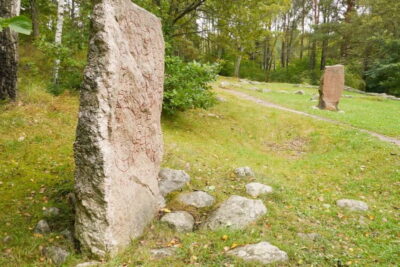
Stockholm Viking History Full Day Tour to Sigtuna + Uppsala
Read our review →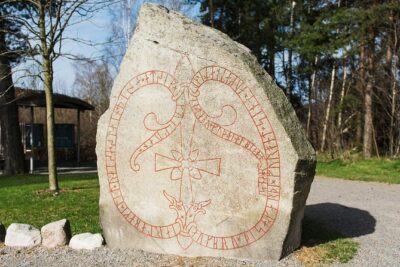
Viking History and Swedish Countryside Tour to Sigtuna & Uppsala
Read our review →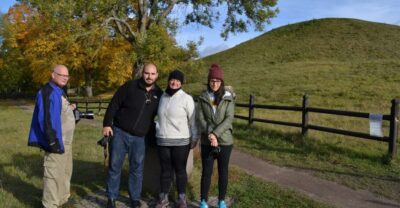
Viking History Small Group Tour from Stockholm: Half Day Including Sigtuna
Read our review →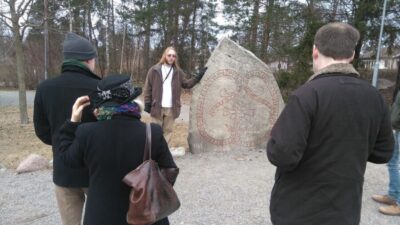

Full Day Viking Tour with Fika Swedish Coffee Break
Read our review →Browse the lists this tour appears in