
Review · VIKING HISTORY TOURS
From Stockholm: Viking Culture and Heritage Small Group Tour
Viking history is closer than you think. This three-hour trip from Stockholm takes you into the quiet countryside of Uppland, where 1,000-year-old runestones, burial grounds, ancient roads, and assembly sites still sit in the open air. I like the way the tour focuses on real places rather than movie-style Viking myths, and I like that hotel pickup, transport, guiding, and entrance costs are included in the $138 price.
The main drawback is the short running time. You cover several important sites in only three hours, so this is a strong introduction rather than a full study of Viking Sweden. You should also dress for the season. A winter outing can mean snow, frozen ground, and temperatures near minus 10 degrees Celsius.
In This Review
- Key points to know before booking
- Leaving Stockholm for Uppland’s Viking country
- Broby bro and the Jarlabanke runestones
- Crossing the reconstructed Jarlabanke Bridge
- Arkils tingstad and the Viking parliament
- What the tour gets right about Viking history
- Is $138 a fair price for three hours?
- Weather, walking, and what to bring
- Who should book this experience?
- My verdict on the Viking Culture and Heritage Tour
- FAQ
- How long is the Viking Culture and Heritage tour?
- What sites are included?
- Is hotel pickup included?
- What language is the tour conducted in?
- How large is the group?
- Is food included?
- What happens if I need to cancel?
Key points to know before booking
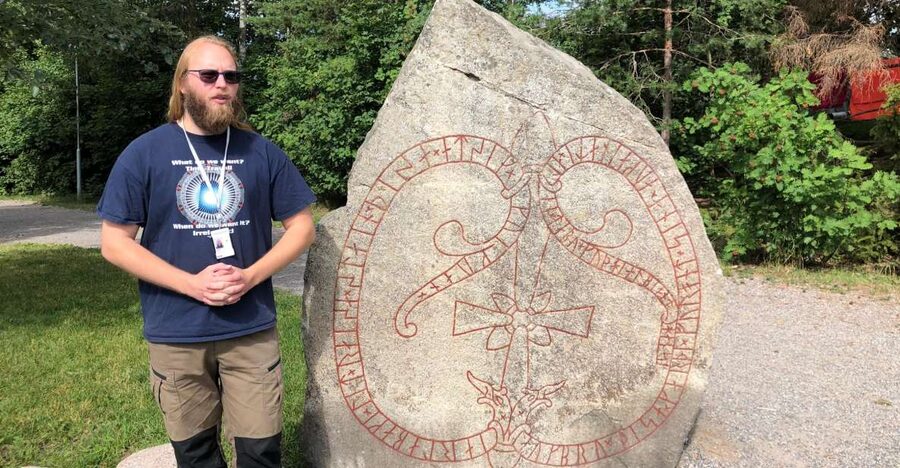
- Broby bro burial ground: Explore Viking graves and the Jarlabanke runestones while learning about pagan and Christian burial customs.
- Estrid’s story: Hear about Estrid, a powerful Viking woman whose family history is tied to the runestones around Broby bro.
- Jarlabanke Bridge: See a reconstructed Viking bridge and the raised stones connected with the local chief Jarlabanke.
- Arkils tingstad: Visit the remains of a Viking Age parliament and learn how local society made decisions.
- Small-group setting: The group is limited to 16 people, which gives you a better chance to hear the guide and ask questions.
- Central Stockholm pickup: Hotel pickup and drop-off are available for accommodations within 5 kilometers of Stockholm Central Station.
Leaving Stockholm for Uppland’s Viking country
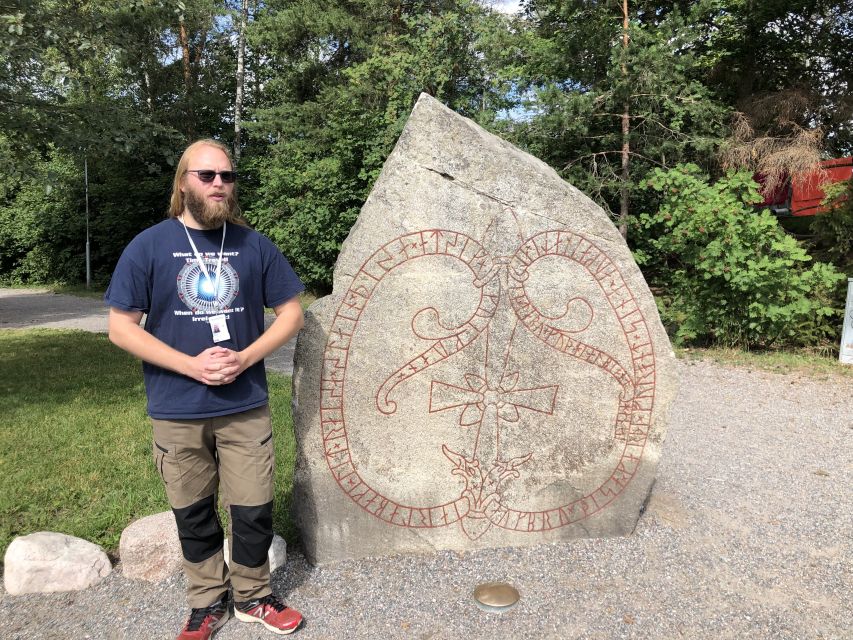
The tour begins with pickup from a hotel or accommodation within 5 kilometers of Stockholm Central Station. That simple detail matters. You do not need to work out a separate bus connection or find a countryside meeting point, and your three hours are spent visiting sites rather than waiting for public transport.
Once you leave Stockholm, the mood changes quickly. The city gives way to quiet roads and open countryside around the historic Uppland area. I like this contrast. The tour is not just a museum visit moved outdoors. You see the setting where the roads, farms, burial grounds, and local communities once connected.
Your guide drives between the stops and explains the history along the way. Recent tours have been led by Erik, who has received especially strong praise for his command of Norse and Viking Age history. His approach is fact-focused, with attention to how people lived and organized their communities rather than a steady stream of famous warriors and dramatic battles.
That distinction improves the experience. The word Viking often brings to mind longships, raids, and horned helmets, even though horned helmets belong more to modern fantasy than to the historical picture. Here, the evidence comes from stones, graves, roads, and meeting places. You get a closer look at ordinary structures and local power.
More History Tours in Stockholm
- Stockholm: Ghost Walk and Historical Tour
★ 4.7 · 2,206 reviews - The Original Stockholm Ghost Walk and Historical Tour – Gamla Stan
★ 4.5 · 1,165 reviews - Stockholm: Old Town Historical Walking Tour
★ 4.9 · 344 reviews
Broby bro and the Jarlabanke runestones
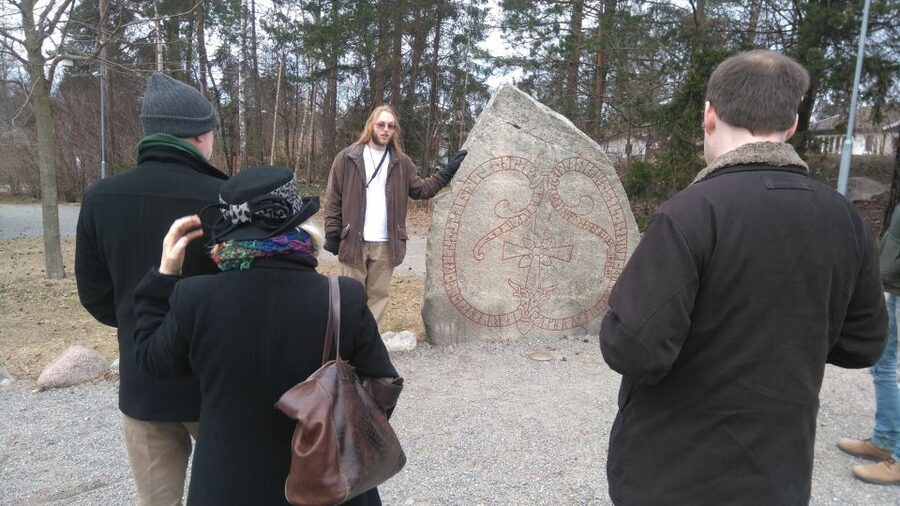
The first major stop is Broby bro, a burial ground also associated with the Jarlabanke runestones. This is one of the tour’s strongest moments because the site brings several parts of Viking life together in one place.
You learn how people marked death and remembered family members. The guide explains the difference between pagan and Christian customs, an important subject in an area where religious beliefs were changing. The stones are not simply old objects to photograph. Their inscriptions help show how families presented themselves, whom they honored, and how belief shaped public memory.
The burial ground also introduces you to Estrid, a prominent Viking woman connected with the local runestone tradition. Her story is particularly useful because it corrects the idea that Viking history is only about male chiefs and warriors. Through her family and the stones connected with her, you see how women could play an important part in property, family standing, and public remembrance.
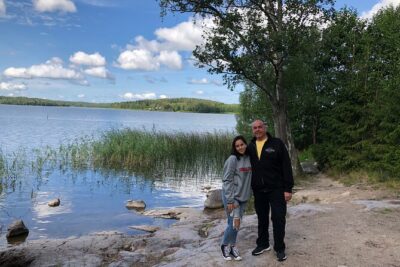
Expect an outdoor stop rather than a polished archaeological attraction. The stones and graves are part of the countryside, so the ground may be uneven, wet, snowy, or frozen depending on the season. In winter, Cristina’s experience included snow, a frozen lake, and temperatures of minus 10 degrees Celsius. You will want warm layers and sturdy waterproof footwear, especially shoes with good grip.
The site works best if you slow down and listen to the inscriptions and stories. You will not get every detail of Viking burial practice in a few minutes, but you will understand why graveyards and runestones are so important to Swedish history.
Crossing the reconstructed Jarlabanke Bridge
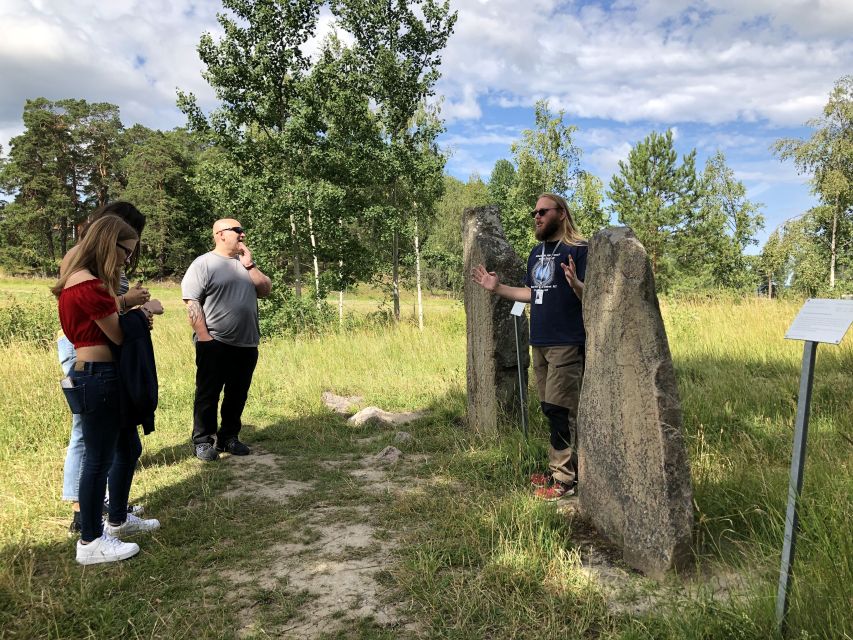
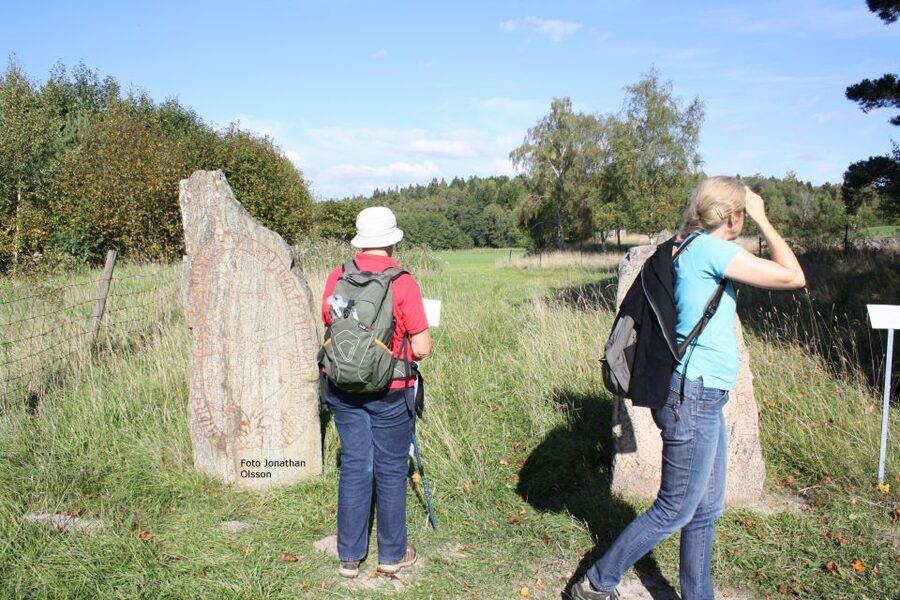
The next stop focuses on movement and power. At the entrance to the causeway, you see the reconstructed Jarlabanke Bridge and more raised runestones. The bridge helps you picture how people crossed wet ground and connected settlements before modern roads changed the countryside.
The structure is valuable because it turns an abstract history lesson into something physical. You can look at the bridge, the causeway, and the stone markers together. That combination helps explain the work involved in building roads and bridges, as well as the status claimed by the person who paid for or ordered them.
The stones here are tied to Jarlabanke, a Viking chief, and his clan. The guide explains the family story and how public construction could be used to display influence. A bridge was useful, but it could also send a message: this family had the labor, wealth, and authority to improve a route used by the wider community.
You should not expect a vast bridge complex. The interest comes from the connection between the reconstructed structure, the runestones, and the surrounding route. I find this kind of stop more rewarding than a large attraction with modern signs everywhere because the guide gives the site its meaning.
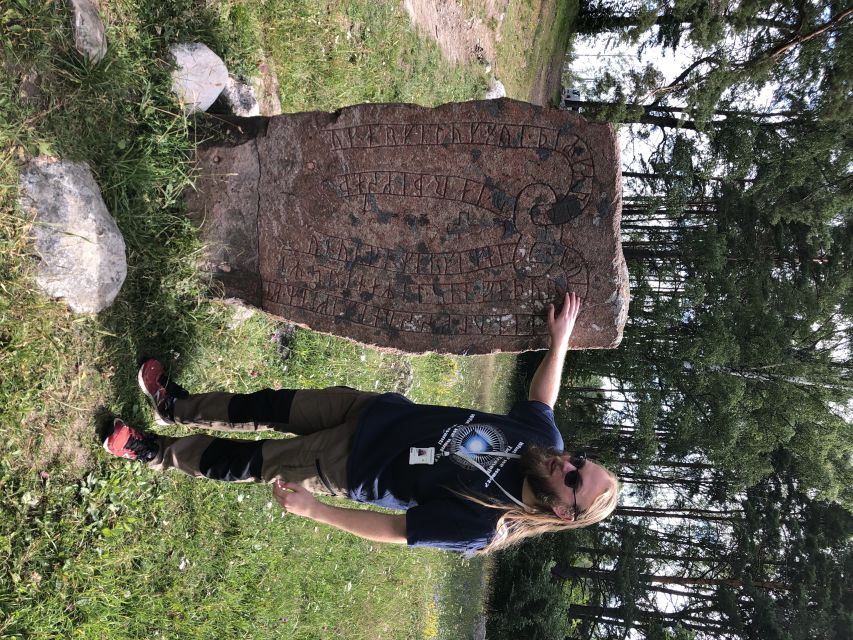
The raised stones are also a reminder that Viking Age communication was not private. Runestones were placed where people could see them. They recorded names, family connections, religious changes, and claims to importance. Even when you cannot read the runic script yourself, you can see how a stone functioned as a public announcement.
Arkils tingstad and the Viking parliament
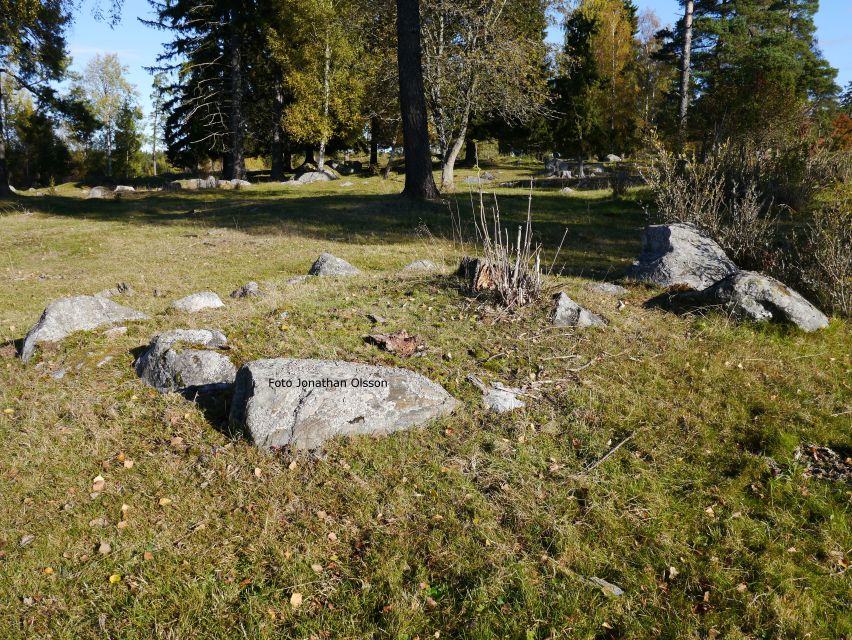
The final major site is Arkils tingstad, the remains of a Viking Age assembly place. This stop shifts the focus from burial and infrastructure to government.
The word parliament can sound too modern, but it gives you a useful starting point. Local people gathered at an assembly, known as a thing, to handle disputes, make decisions, and organize the community. The site helps explain that Viking society was not simply a collection of raiders following one powerful man. It had rules, social ranks, obligations, and public decision-making.
I especially like this part of the tour because it gives you a more complete picture of Viking life. The stones and graves show how people remembered the dead. The bridge shows how communities moved and displayed power. Arkils tingstad shows how those communities dealt with one another.
The remains are modest, so the guide matters here. Without explanation, you may see little more than an old meeting site. With context, you can picture a gathering where local leaders and community members discussed law and responsibility. The tour does not turn the place into a grand monument. Its value lies in understanding what happened there and why assemblies mattered.
This is also where the tour’s small size helps. With no more than 16 people, you should be able to hear the explanation in an outdoor setting and ask a question when a detail catches your attention. A private tour would offer more flexibility, but this group size keeps the cost lower while remaining more personal than a large bus excursion.
More Viking history tours:
- Entrance ticket to The Viking Museum
★ 4.0 · 301 reviews - Viking History, Runes & Countryside 9h Tour to Sigtuna & Uppsala
★ 4.5 · 283 reviews - Viking History and Swedish Countryside Tour to Sigtuna & Uppsala
★ 4.5 · 162 reviews - From Stockholm: Uppsala and Sigtuna Viking Sites Tour
★ 4.7 · 157 reviews
What the tour gets right about Viking history
The strongest feature is its use of authentic outdoor sites. You are not being asked to imagine everything inside a recreated hall. You see the stones, graves, bridge, causeway, and assembly remains in the places where they belong.
The tour also keeps its focus broad. You learn about death, religion, family, transport, leadership, construction, law, and community life. That range makes the experience useful for first-time visitors who want more than a single story about Viking raids.
I also appreciate the clear separation between evidence and entertainment. The experience is presented as history rather than as a theme-park performance. One German-speaking participant described it as factual and free of movie or television material, which captures the tour’s tone well.
That does not mean the stories are dry. Estrid and Jarlabanke give the guide strong human subjects, and the runestones provide direct links to people who lived around 1,000 years ago. You get names and family connections instead of only broad dates.
The countryside adds another layer. You are not just checking off monuments. You are seeing how these sites fit into rural Sweden, with roads and waterways shaping where people settled and traveled. The scenery is part of the experience, though the season will affect how much time you want to spend outdoors.
Is $138 a fair price for three hours?
At $138 per person, this is not a bargain-priced sightseeing ride. Still, the value is reasonable if you want a guided history outing without organizing transport yourself.
The price includes hotel pickup and drop-off within the stated central Stockholm area, a driver and English-speaking guide, transport between the sites, and all listed costs. Food is not included, but a three-hour tour does not require a full meal stop. You may want to eat before or after, especially if you are visiting in cold weather.
The guide is the main part of the value. Runestones do not explain themselves, and the remains at Arkils tingstad are easy to overlook without historical background. A good guide connects the physical evidence to Viking social life, which is why Erik’s explanations have been such an important part of the experience for many people.
For a group of up to 16, the format sits between a private excursion and a large coach tour. You pay less than you would for a fully private guide, while still getting a more direct experience than a crowded group. If you are mainly interested in taking quick photographs, the price may feel high. If you want to understand what you are seeing, it is easier to justify.
Weather, walking, and what to bring
This is an outdoor history tour in the Swedish countryside. The amount of walking is not specified, but you visit burial grounds, bridge remains, causeways, and an old assembly site, so comfortable shoes are a sensible choice.
Winter deserves special attention. A January or February departure can be beautiful, with snow-covered sites and frozen water, but the cold can be severe. One tour experience took place at minus 10 degrees Celsius, and the advice is practical: wear proper winter clothing and bring warm, waterproof footwear. Regular city sneakers may leave you cold and uncomfortable before the tour is over.
In milder weather, you still need clothing suitable for rural paths and open-air stops. There is no food included, so bring anything you need for the short outing if appropriate, though the tour’s main emphasis is on the sites and guide commentary.
The countryside views are one of the pleasures of the trip, but they are not the same in every season. Snow can make the setting striking. Warmer months should make outdoor stops easier, though the available information does not promise a particular type of scenery or weather.
Who should book this experience?
I would recommend this tour to you if you want a short, focused introduction to Swedish Viking history while staying in Stockholm. It suits first-time visitors, history fans, and anyone who prefers real sites to staged entertainment.
It is also a good choice if you do not have time for a full day outside the city. In three hours, you visit several connected places and return without giving up an entire day of Stockholm sightseeing.
Families with older children may enjoy the bridges, stones, and stories, particularly if the children already have an interest in Vikings. The outdoor setting is less suitable for anyone looking for a warm indoor museum experience, especially in winter.
You should think twice if you want extensive time at each monument, a long archaeological lecture, or a meal built into the outing. The tour moves at a steady pace because it has several stops to cover. Its strength is the broad picture, not exhaustive time at one site.
The tour is conducted in English. Pickup is available only from hotels and accommodations within 5 kilometers of Stockholm Central Station, so check your address before booking. Gratuities are not included, and you should plan for that separately if you feel the guide has provided a strong experience.
My verdict on the Viking Culture and Heritage Tour
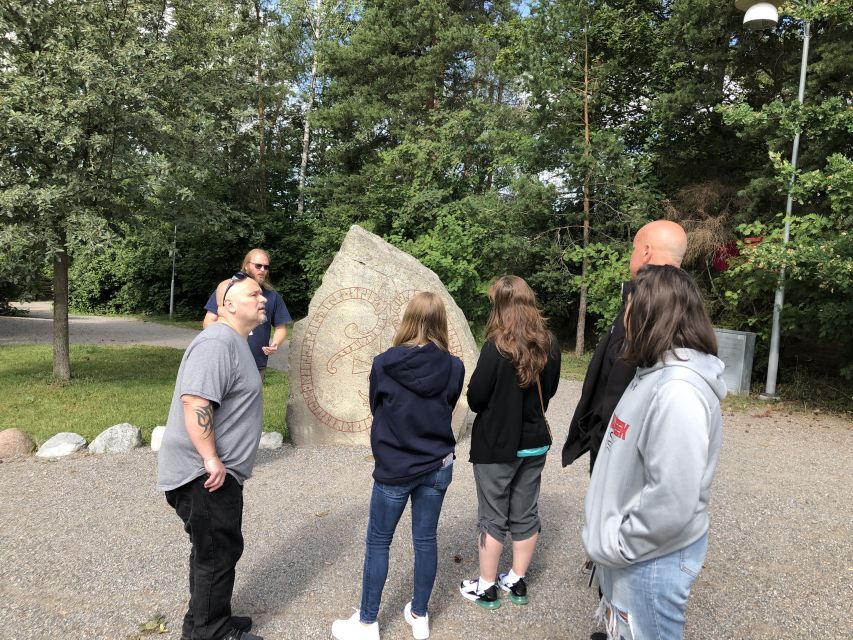
I like this tour because it gives Viking Sweden a human scale. You see where people buried family members, how a powerful clan marked its influence, how roads were built, and where local decisions were made.
The 4.7 rating from 29 bookings reflects a consistently strong response, with particular praise for the guides, the runestones, and the factual approach. Erik has been singled out for his Norse history knowledge, and his food recommendations for Swedish cuisine are a useful extra for anyone still deciding where to eat in Stockholm.
Book it if you want authentic sites, clear English explanations, and a manageable escape from the city. Skip it if you dislike cold outdoor conditions or prefer a large museum with extensive displays. For most visitors who want to understand who the Vikings really were, this is a worthwhile three-hour investment.
FAQ
How long is the Viking Culture and Heritage tour?
The tour lasts three hours, including travel between the sites outside Stockholm.
What sites are included?
The tour visits Broby bro and its burial ground, the Jarlabanke runestones and reconstructed bridge, the surrounding causeway area, and Arkils tingstad, the remains of a Viking Age assembly site.
Is hotel pickup included?
Yes. Pickup and drop-off are included for hotels and accommodations located within 5 kilometers of Stockholm Central Station.
What language is the tour conducted in?
The tour is conducted in English with a live English-speaking guide.
How large is the group?
The group is limited to no more than 16 people.
Is food included?
No. Food is not included, so you should plan to eat before or after the tour.
What happens if I need to cancel?
You can cancel up to 24 hours in advance for a full refund. The reserve-now, pay-later option also lets you hold a place without paying immediately.
Just added in Stockholm
- Wolf and Wildlife Tracking in Sweden★ 5.0 · 1 review
- World War II Stockholm Old Town Walking Tour and Army Museum★ 4.6 · 4 reviews
- Viking History Half-Day Tour from Stockholm★ 5.0 · 1 review
- Stockholm Old Town Walking Tour + Archipelago Cruise★ 5.0 · 1 review
- Wine tasting in Old Town Stockholm★ 5.0 · 1 review
- Wolf and Wildlife Tracking in Sweden★ 5.0 · 9 reviews
- Scandinavian Art, Architecture and Design Tour in Stockholm★ 4.5 · 11 reviews
- Voyage of the Vikings: Guided Exploration Through Sweden’s Past★ 5.0 · 2 reviews
Viking History Tours, compared.
Viking History, Runes & Countryside 9h Tour to Sigtuna & Uppsala
Read our review →
Stockholm Viking History Full Day Tour to Sigtuna + Uppsala
Read our review →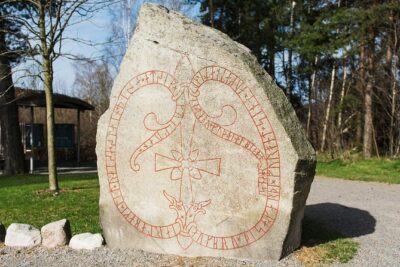
Viking History and Swedish Countryside Tour to Sigtuna & Uppsala
Read our review →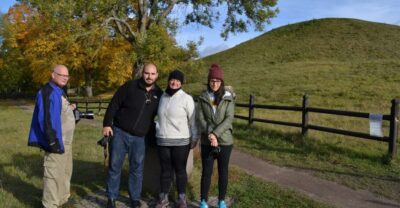
Viking History Small Group Tour from Stockholm: Half Day Including Sigtuna
Read our review →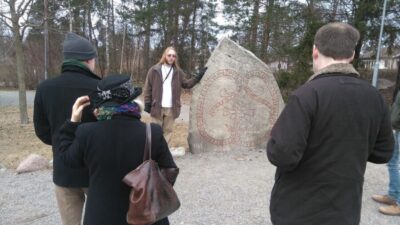
Full Day Viking Tour with Fika Swedish Coffee Break
Read our review →Browse the lists this tour appears in