
Review · WALKING TOURS IN STOCKHOLM
The Story of Stockholm and Sweden in Three Chapters, a Small Group Walking Tour
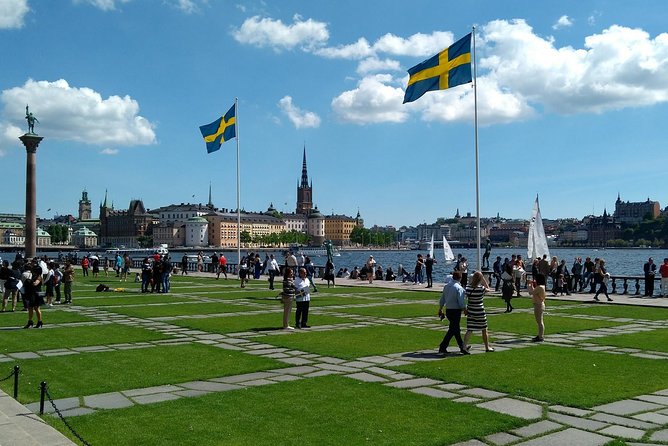
Stockholm’s story has three acts. This two-hour small-group walk links medieval beginnings, royal power, political reform, and modern Swedish enterprise in a clear route through Gamla Stan and nearby islands. I like the way it gives you a useful framework for the city instead of tossing out disconnected dates. I also like the small cap of 10 people, which should make questions and conversation easier than on a large coach tour.
The main consideration is pace. You cover several stops in a short time, and some explanations are delivered outdoors beside busy streets or public buildings. The route suits you best if you have moderate physical fitness and want a lively introduction, not a long museum-style lecture.
In This Review
- Key points to know before booking
- A short walk with a large story to tell
- Chapter One begins on Riddarholmen
- Birger Jarl and Stockholm’s first written mention
- Gustav Vasa changes the direction of Sweden
- Warrior kings beside the water
- Parliament and the long road to voting rights
- Chapter Three at the Royal Palace
- From Bernadotte to 200 years of peace
- The final stop at Stortorget
- What the $61.28 price gets you
- Who should book this walk?
- Should you book The Story of Stockholm and Sweden in Three Chapters?
- FAQ
- Where does the tour start?
- What time does the tour begin?
- How long does the tour last?
- Where does the tour end?
- What language is the tour offered in?
- How many people can join the tour?
- Is admission included?
- How physically demanding is the tour?
- Can I use a mobile ticket?
- Can I cancel for a full refund?
Key points to know before booking
- Three chapters of Swedish history: Follow the story from the first settlements and Birger Jarl to Gustav Vasa, parliamentary reform, peace, industry, Spotify, and IKEA.
- A maximum of 10 people: The small group keeps the walk personal and gives you a better chance to ask questions.
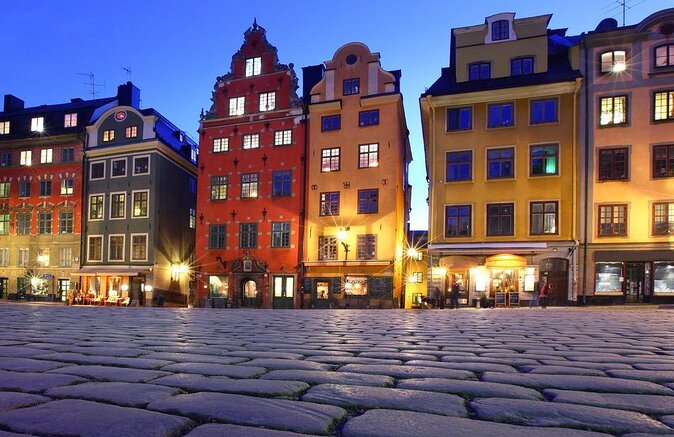
- A practical Gamla Stan route: Begin near Gamla Stan Metro station and finish at Stortorget, close to the Royal Palace and Nobel Prize Museum.
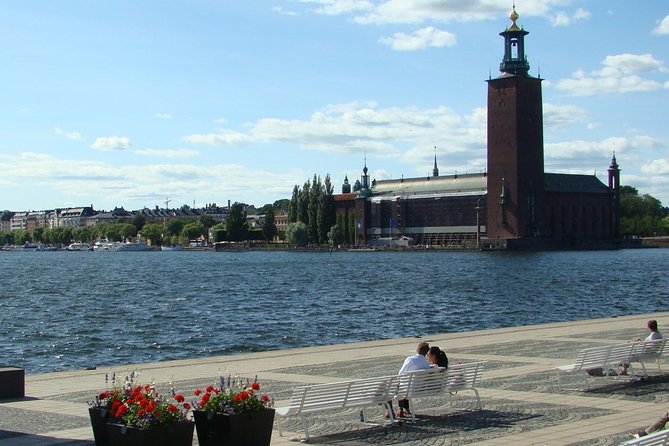
- Royal and political landmarks: See Riddarholmen Church, Riddarhuset, the Parliament Building, and the Royal Palace from key outdoor viewpoints.
- Admission included along the way: You do not need to stop for separate ticket lines during the experience, though the route focuses on open areas and exterior settings.
- Useful timing: The 10:00 a.m. start and roughly 20-minute final stop may put you near the changing of the guard at a convenient time.
A short walk with a large story to tell
At $61.28 per person, this is not the cheapest way to stroll through Stockholm. It is also not simply a guided neighborhood walk. You are paying for a structured explanation of how Sweden moved from medieval settlement to a modern, independent state with globally known companies.
That structure matters. Stockholm can feel like a set of pretty squares, stone lanes, islands, and grand buildings until someone explains how they fit together. Here, each stop belongs to one of three chapters. The format should help you remember the broad story after the tour ends.
The rating is 4.6 from seven reviews, with specific praise for the experience being fun and educational. One person had time only for a shorter version and wished they could have completed the full route, which is useful advice if your schedule is tight. Give yourself the full two hours if you can.
The tour is offered in English and uses a mobile ticket. It starts at 10:00 a.m. The meeting information gives Munkbrogatan 8 as the starting address and also describes the meeting place as inside or under Gamla Stan Metro station, in front of the Pressbyrån kiosk. Since those details describe the same general starting area in different ways, check your confirmation carefully before setting off.
More Walking Tours in Stockholm
- Stockholm: Ghost Walk and Historical Tour
★ 4.7 · 2,206 reviews - Walking Tour of Stockholm Old Town
★ 5.0 · 1,175 reviews - The Original Stockholm Ghost Walk and Historical Tour – Gamla Stan
★ 4.5 · 1,165 reviews
Chapter One begins on Riddarholmen
The opening stop is a historical marker on Riddarholmen, reached from the Gamla Stan area. This is where the guide sets the first scene: the Ice Age, the earliest settlements, and the growth of Stockholm across its islands.
That beginning is more useful than it may sound. Instead of treating Stockholm as an old town that appeared fully formed, the walk starts with the physical setting and the first human presence. You get a basic answer to a simple question: why did this place become important?
The first stop lasts about 15 minutes. You may also walk around and visit open parts of the palace during this early section. The supplied details do not promise entry into every palace room or a full palace tour, so think of this as an introduction to the area rather than a substitute for a dedicated Royal Palace visit.
The free admission listed for this stop means you are not paying an extra entrance fee at the meeting point. You still need to follow the guide’s route and timing, so this is not a chance to wander off for a long independent visit.
Birger Jarl and Stockholm’s first written mention
Outside Riddarholmen Church, the group meets a statue of Birger Jarl, the man traditionally linked with Stockholm’s foundation. The guide connects him to the first known written mention of Stockholm in 1252.
This is a compact stop, about 10 minutes, but it gives the city a firm date. The statue also helps make the story easier to picture. Rather than hearing only about a medieval ruler, you have a physical figure in front of you and a church nearby to anchor the explanation.
Riddarholmen itself is one of the better places for a history-focused walk because several important buildings sit close together. You are not spending half the tour crossing long stretches of the city. The route keeps its early story concentrated, which helps the information stick.
The tradeoff is that the tour gives you selected facts rather than a full study of medieval Stockholm. If you want church interiors, architecture in detail, or a long account of daily life in the Middle Ages, you will need extra time after the walk.
Gustav Vasa changes the direction of Sweden
At Riddarhuset, the House of Nobility, the story shifts into the second chapter. Outside, you look toward the statue of Gustav Vasa, often called the father of Sweden.
This section covers Gustav Vasa’s rise in 1523, after the Stockholm Bloodbath and an uprising against Denmark’s control of Sweden. It also explains his move from Catholicism to Lutheran Protestantism. Those events are not minor royal trivia. They helped shape Sweden as a sovereign state and changed its religious and political life.
The stop lasts about 10 minutes. I like this part because it connects a statue, a building, and a national turning point without asking you to enter a museum. Riddarhuset also gives you a sense of how aristocratic power worked before modern democracy.
You should keep one thing in mind: the treatment is designed for a walking tour, so the material is condensed. The guide can give you the main chain of events, but you will not get every battle, family connection, or religious debate in detail.
A completely different kind of day:
- Stockholm: City Archipelago Sightseeing Cruise with Guide
★ 4.3 · 10,798 reviews - Stockholm: Skansen Open-Air Museum Admission Ticket
★ 4.5 · 3,427 reviews - Stockholm: Archipelago Boat Tour
★ 4.4 · 3,110 reviews - Stockholm: Highlights Boat Tour
★ 4.3 · 2,542 reviews
Warrior kings beside the water
At Vasabron, the route follows Gustav Vasa’s heirs. The focus turns to Gustav II Adolf, described as the greatest of Sweden’s warrior kings.
His reign expanded Swedish power around the Baltic Sea until it was almost surrounded by Swedish possessions. This is an important bridge in the story. Sweden was not always known mainly for welfare policies, design, music, and technology. For a period, it was a major military power in Northern Europe.
The 10-minute stop also benefits from its location. From the bridge area, the guide can place royal ambition in relation to Stockholm’s waterways and islands. You get a better feel for the city’s geography while hearing how Sweden looked beyond its capital.
The section is short, so it works best as a broad explanation. If military history is your main interest, you may want a separate visit to a museum or a longer historical tour. For most people, this stop gives enough context to understand why later defeats mattered so much.
Parliament and the long road to voting rights
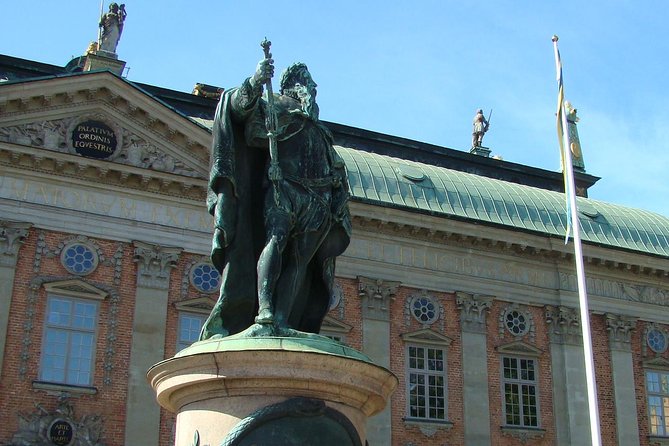
At Riksdagshuset, Sweden’s Parliament Building, the story moves from kings and armies to representative government. The guide explains the old Riksdag of the Estates, where nobility, clergy, burghers, and peasants met separately before speaking with the King.
That institution remained the highest authority after the King until its dissolution in 1866. Sweden then introduced a two-chamber parliament, but equal voting rights still did not arrive immediately. General suffrage began with the first elections in 1921, after a long political struggle led by liberals and socialists.
This may be the most valuable stop for anyone who wants more than royal history. It shows that Sweden’s modern political system developed gradually. The country’s current reputation for social democracy did not appear overnight.
The stop lasts around 10 minutes. Since you are outside the Parliament Building, the experience focuses on explanation and setting rather than an interior visit. That is efficient, but it also means you should not book this walk expecting a parliamentary tour.
Chapter Three at the Royal Palace
At Lejonbacken on the north side of the Royal Palace, the third chapter begins. The tone changes again as the walk covers Sweden’s loss of great-power status and its later move toward diplomacy, education, and peaceful development.
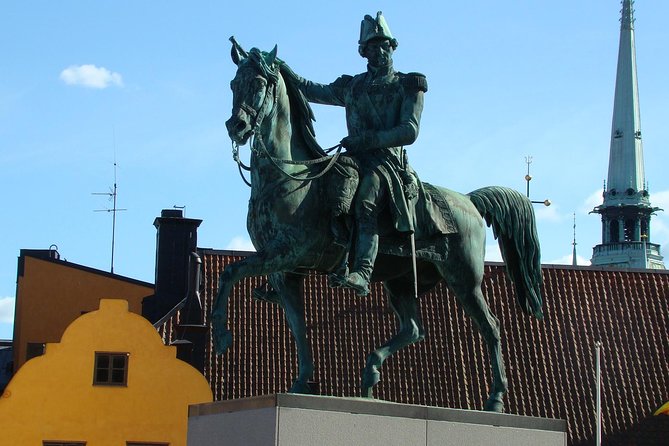
The guide uses the statue of Karl XII to explain the conflict with Russia. The king points east, toward the region where he and the Carolean army won early victories before Peter the Great defeated Sweden at Poltava in 1709.
That image gives the explanation a memorable visual cue. You can look at the statue and connect its direction with the military story. The stop also makes clear that Sweden’s great-power ambitions had limits.
The section then moves into the Age of Enlightenment and Gustav III’s interest in theatre, arts, and science. Again, the walk does not treat Swedish history as one straight line from war to modern comfort. It shows a country changing its priorities.
This palace stop takes about 10 minutes. The Royal Palace is a major Stockholm sight, but the tour does not promise a full interior visit. If palace rooms, royal collections, or ceremonial spaces are high on your list, plan a separate palace admission.
From Bernadotte to 200 years of peace
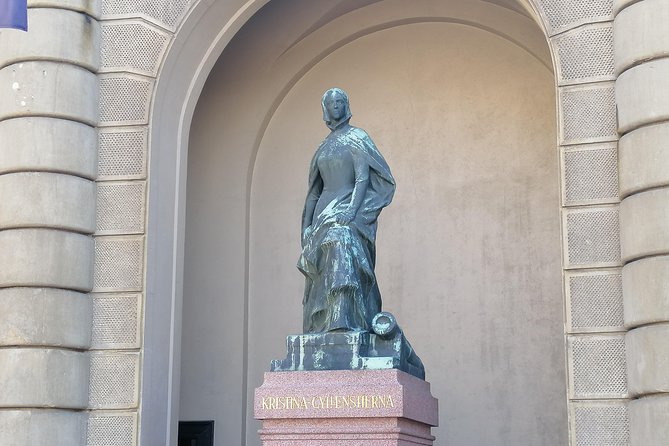
Below the statue of Carl XIV Johan, the guide continues with the first Bernadotte king. He came from France in the early 19th century, initially with the goal of helping Sweden recover territory lost to Russia.
Instead, his reign is presented through diplomacy, infrastructure, and education. In 2014, Sweden celebrated 200 years of peace. That fact gives the final chapter a sharp change of direction: the country’s influence no longer depended mainly on conquering territory.
This part also introduces the industrial revolution, Swedish natural resources, and inventions that helped create the foundation for a welfare state. The story then reaches the 20th and 21st centuries, including entrepreneurs and famous Swedish companies such as Spotify and IKEA.
I especially like the company connection because it makes the history feel current. You may already know these brands from daily life, but the tour places them within a longer story of education, invention, business, and social development.
The stop takes about 20 minutes, the longest single explanation on the route. That gives the guide more room to connect older events with the Sweden you see today.
The final stop at Stortorget
The walk ends at Stortorget, one of the most recognizable squares in Stockholm’s Old Town. The Nobel Prize Museum is here, and the guide explains the role of Sweden’s Royal Academies in selecting winners in major areas of science and art.
This is a sensible ending. The tour begins with early settlement and finishes with ideas, research, invention, and international recognition. It also leaves you in a useful part of Gamla Stan, where you can continue exploring on foot.
The final stop lasts about 10 minutes. The tour ends close to the Royal Palace, with possible timing for the changing of the guards. During the summer months, the parade may march or ride with the Music Corps to the palace’s Outer Courtyard.
Do not treat the ceremony as guaranteed entertainment at the exact moment you arrive. The information says the tour ends in perfect timing to see it, but parade schedules can depend on the day and season. Still, the location makes it a worthwhile possibility, especially if you are already interested in royal pageantry.
What the $61.28 price gets you
At $61.28, the value depends on how much context you want. If you only want attractive streets and photos, you can explore Gamla Stan on your own for free. If you want someone to connect 1252, Gustav Vasa, parliament, Poltava, Bernadotte diplomacy, and Spotify in one route, the fee is easier to justify.
The small group is a major part of that value. With no more than 10 people, the guide has a better chance to answer questions and keep the discussion focused. You also avoid the impersonal feel of a large group gathered around a guide in narrow Old Town lanes.
The walk includes admission along the way and avoids waiting in ticket lines. The listed stops are largely free outdoor locations, so the practical benefit is not a collection of expensive entry tickets. You are mainly paying for the guide’s organization, interpretation, and efficient route.
For a first morning in Stockholm, I consider it a fair price if history is important to you. The tour can give you a useful map of the city and help you decide which places deserve a longer return visit.
Who should book this walk?
I would choose this tour if you want a clear introduction to Sweden before exploring on your own. It suits people who enjoy political history, royal stories, city geography, and modern business connections in the same outing.
It also fits a short Stockholm visit. The 10:00 a.m. start, central route, and Stortorget finish leave you positioned for more Old Town sightseeing afterward.
You should think twice if you dislike outdoor lectures, need a slow pace, or want extended time inside museums and palaces. The route covers many subjects in about two hours, so expect steady movement and concise explanations.
A moderate level of physical fitness is required. The experience is offered in English, and the mobile ticket makes arrival simple once you have confirmed the exact meeting instructions.
Free cancellation is available if you cancel at least 24 hours before the local start time. Cancellations or changes made inside that window are not accepted for a refund.
Should you book The Story of Stockholm and Sweden in Three Chapters?
Book it if you want a compact historical backbone for your Stockholm visit, especially with a small group and an English-speaking guide. The best parts are the three-chapter structure, the mix of royal and political landmarks, and the modern link to companies such as IKEA and Spotify.
Skip it if your priority is palace interiors, museum admission, or a slow architectural tour. For $61.28, the strongest value comes from the explanation, not from included attractions. If that suits your style, this is a smart first walk through Stockholm.
FAQ
Where does the tour start?
The tour starts at Munkbrogatan 8, 111 27 Stockholm. The meeting instructions also identify Gamla Stan Metro station, inside or underground in front of the Pressbyrån kiosk.
What time does the tour begin?
The tour starts at 10:00 a.m.
How long does the tour last?
The tour lasts approximately two hours.
Where does the tour end?
The tour ends at Stortorget, 111 29 Stockholm, near the Royal Palace and Nobel Prize Museum.
What language is the tour offered in?
The tour is offered in English.
How many people can join the tour?
The group is capped at 10 travelers.
Is admission included?
Admission is included along the route, and the tour is designed to avoid ticket lines. The listed stops are mainly outdoor locations and open areas.
How physically demanding is the tour?
You should have a moderate level of physical fitness for this walking experience.
Can I use a mobile ticket?
Yes. A mobile ticket is available.
Can I cancel for a full refund?
Yes, if you cancel at least 24 hours before the experience start time. Cancellations or changes made less than 24 hours before the start are not accepted for a refund.
Just added in Stockholm
- Wolf and Wildlife Tracking in Sweden★ 5.0 · 1 review
- World War II Stockholm Old Town Walking Tour and Army Museum★ 4.6 · 4 reviews
- Viking History Half-Day Tour from Stockholm★ 5.0 · 1 review
- Stockholm Old Town Walking Tour + Archipelago Cruise★ 5.0 · 1 review
- Wolf and Wildlife Tracking in Sweden★ 5.0 · 9 reviews
- Scandinavian Art, Architecture and Design Tour in Stockholm★ 4.5 · 11 reviews
- Wine tasting in Old Town Stockholm★ 5.0 · 1 review
- Voyage of the Vikings: Guided Exploration Through Sweden’s Past★ 5.0 · 2 reviews
Walking Tours in Stockholm, compared.
The Original Stockholm Ghost Walk and Historical Tour – Gamla Stan
Read our review →

Best of Stockholm Walking Tour-3 Hours, Small Group max 10 people
Read our review →
Walking Tour of Stockholm’s Old Town, Gamla Stan
Read our review →
Browse the lists this tour appears in