
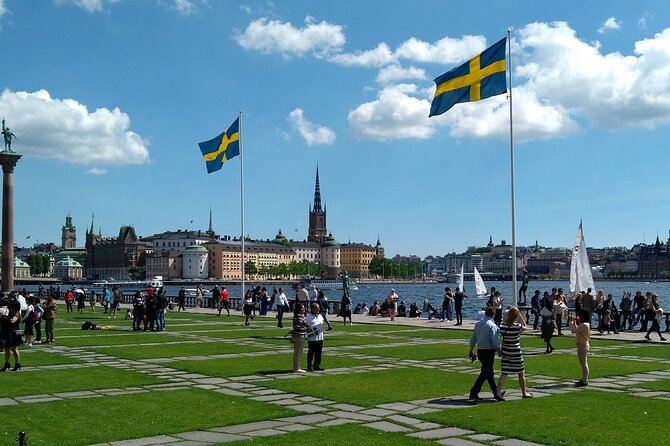
Review · OLD TOWN WALKING TOURS
The Charms of Stockholm’s Old Town with a Taste of Vikings Mead
History comes alive in Stockholm’s narrow lanes. This two-hour walking tour connects Sweden’s Viking past with the kings, inventors, Nobel Prize winners, and modern companies that shaped the country. I especially like the small maximum group of 10, which should make it easier to hear the guide, and the closing drink in a medieval cellar, where the story ends with mead or beer rather than a simple goodbye. The main drawback is that the tour moves quickly through a large amount of history, and nearly every stop is outdoors.
The price is $81.45 per person, so this is not the cheapest way to see Gamla Stan. Still, it offers a clear historical thread, royal landmarks, political context, and a drink at the end. If you want a relaxed stroll with little historical detail, this may feel too packed. If you like knowing why a square, statue, or palace matters, it offers good value.
In This Review
- Key points to know before you book
- Starting underground near Gamla Stan
- Riddarholmen and Birger Jarl’s place in the story
- Gustav Vasa, the Stockholm Bloodbath, and national power
- Parliament and the slow road to voting rights
- The Royal Palace and the end of Sweden’s great-power era
- Carl XIV Johan and two centuries of peace
- Stortorget, the Nobel Prize, and Stockholm’s public face
- Mead or beer in a medieval cellar
- Is $81.45 a fair price?
- Who will enjoy this walk most?
- Should you book The Charms of Stockholm’s Old Town?
- FAQ
- How long does the tour last?
- What time does the tour start?
- Where does the tour begin?
- Where does the tour end?
- Is a drink included?
- Are entrance tickets included?
- How large is the group?
- Do I need to be physically fit?
- Is public transportation nearby?
- Can I cancel for a full refund?
Key points to know before you book
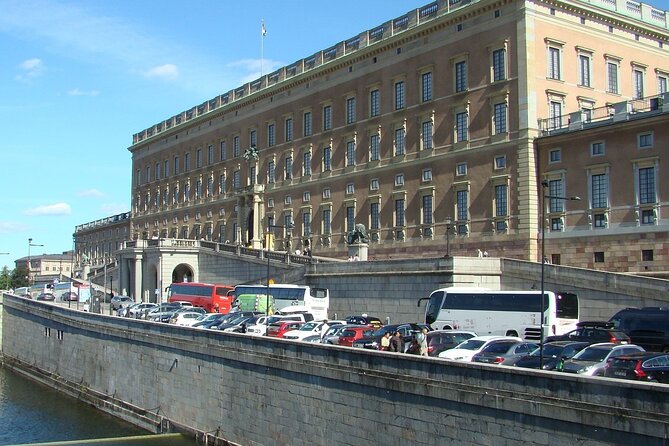
- Viking beginnings and modern Sweden: The story runs from the Ice Age and early settlements to IKEA, H&M, Spotify, and the Nobel Prize.
- Nine stops in about two hours: You visit Riddarholmen, the House of Nobility, Parliament, the Royal Palace, Stortorget, and several important streets and bridges.
- A small group of up to 10 people: This is a useful advantage on narrow Old Town lanes, where a large group can become awkward.
- Mead or beer in a medieval cellar: The tour ends at Västerlånggatan 68 with one drink included in the experience.
- A 3:00 pm start: The timing may allow you to see the changing of the guards near the end, though the parade details vary by season.
- Moderate walking is required: Expect an outdoor city walk over roughly two hours, with limited opportunity to sit.
Starting underground near Gamla Stan
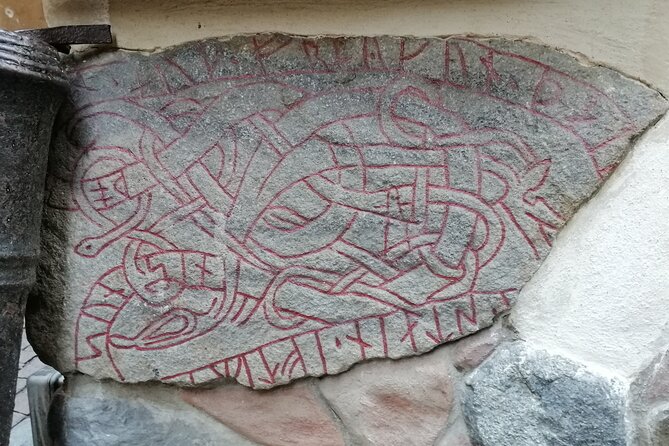
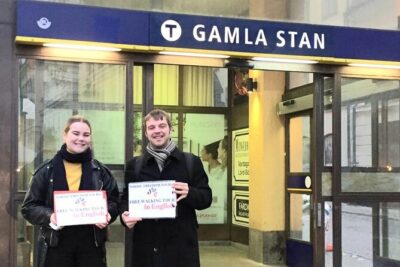
The tour begins at 3:00 pm. The directions describe the starting point as the Gamla Stan Metro station, inside or underground near the Pressbyrån kiosk, while the formal meeting address is Munkbrogatan 8. I would confirm the exact meeting point after booking so you do not waste the first minutes searching around the station and waterfront.
This small detail matters in Stockholm’s Old Town. Streets can have similar names, and the district is made up of compact lanes, bridges, courtyards, and changing street levels. A mobile ticket is convenient, but keep your phone charged and ready to show the confirmation.
The opening section sets the tone by moving far back in time. You hear about the Ice Age, the Viking age, and the first settlements on Stockholm’s islands before the story reaches the city’s recorded beginnings. This is a useful way to frame the tour because Stockholm can otherwise feel like a collection of attractive buildings without a clear timeline.
The guide is not simply pointing out façades. The goal is to explain how a city developed from scattered settlements into Sweden’s political and royal center. If you have already visited the Vasa Museum or Stockholm City Museum, this introduction can help tie those subjects together. If you are new to Stockholm, it gives you basic bearings before the walk reaches the major monuments.
More Old Town walks:
- Walking Tour of Stockholm Old Town
★ 5.0 · 1,175 reviews - The Original Stockholm Ghost Walk and Historical Tour – Gamla Stan
★ 4.5 · 1,165 reviews - Stockholm: Old Town Walking Tour with Local Guide
★ 4.7 · 719 reviews
Riddarholmen and Birger Jarl’s place in the story
The first main area is Riddarholmen, the island beside Gamla Stan. Here, the guide discusses Stockholm’s early history and the first written mention of the city in 1252.
Outside Riddarholmen Church, you meet a statue of Birger Jarl, the man commonly linked with the founding of Stockholm. The tour presents him as the presumed founder, which is a sensible distinction. Medieval origins are rarely as neat as a single date and a single person, but 1252 is an important marker because it is the first preserved written reference to Stockholm.
Riddarholmen is a good opening setting. The church, waterfront, and old stone buildings give the story a physical backdrop, and you are close to the heart of the medieval city. The stop lasts about 10 minutes after the opening historical section, so expect explanation rather than an extended visit inside the church. Admission to the listed stops is free, and the tour is conducted from public spaces.
I like this part because it gives you something useful for the rest of your stay. Once you understand that Stockholm grew across several islands, the bridges and water around the Old Town make much more sense. You are not just walking through an old quarter. You are crossing the early links between the city’s islands.
Gustav Vasa, the Stockholm Bloodbath, and national power
From Riddarholmen, the walk continues to Riddarhuset, the House of Nobility. The building is viewed from outside, along with a statue of Gustav Vasa, one of the key figures in Swedish history.
This is where the tour moves into a more political chapter. Gustav Vasa came to power after the Stockholm Bloodbath, in which his father and many other noblemen were killed. He led an uprising against Denmark’s control of Sweden and entered Stockholm in 1523. The tour also explains his role in shifting Sweden from Catholicism to Lutheran Protestantism.
That combination of politics, religion, and conflict helps explain why Gustav Vasa is often called the father of Sweden. He was not simply a heroic founder. He was a forceful ruler who helped create a sovereign Swedish state and changed its religious structure. A short walking tour cannot explore every side of his rule, but this stop gives you the essentials.
The next point, near Vasabron, follows Gustav Vasa’s heirs. The story turns to Gustav II Adolf, remembered as Sweden’s greatest warrior king. During his reign, Swedish possessions spread around much of the Baltic Sea, making the waterway almost an inland sea within Swedish-controlled territory.
This section is particularly useful if you are interested in Sweden’s military past. Modern Stockholm often feels peaceful and orderly, so it can be surprising to learn how strongly the country once pursued power around the Baltic. The guide uses statues, bridges, and nearby buildings as prompts, which keeps the information connected to the streets rather than turning the tour into a classroom lecture.
Parliament and the slow road to voting rights
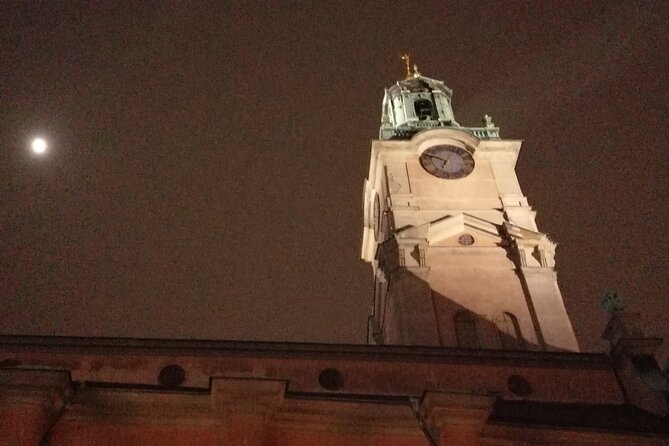
The route then reaches the Parliament Building, or Riksdagshuset. Here, the guide explains how Swedish political representation developed.
The older Riksdag of the Estates brought together nobles, clergy, burghers, and peasants. Each group met separately before meeting the king. This system lasted until 1866, when a two-chamber parliament replaced it, though voting rights were still far from equal.
General suffrage arrived only after a long political struggle, with the first elections under universal voting rights held in 1921. The point is easy to miss if you only admire Stockholm’s royal buildings. Sweden’s modern democratic system did not appear all at once. It grew through institutional change and pressure from liberal and socialist movements.
I value this stop because it broadens the tour beyond kings and battles. You get a view of ordinary political participation, class divisions, and the gradual expansion of rights. The Parliament Building is also a practical orientation point between the older royal quarter and the city’s modern government district.
The limitation is time. This stop is scheduled for about 10 minutes, so you should expect a brisk explanation from outside, not a parliamentary visit or a detailed account of Swedish party politics.
More Viking history tours:
- Entrance ticket to The Viking Museum
★ 4.0 · 301 reviews - Viking History, Runes & Countryside 9h Tour to Sigtuna & Uppsala
★ 4.5 · 283 reviews - Viking History and Swedish Countryside Tour to Sigtuna & Uppsala
★ 4.5 · 162 reviews - From Stockholm: Uppsala and Sigtuna Viking Sites Tour
★ 4.7 · 157 reviews
The Royal Palace and the end of Sweden’s great-power era
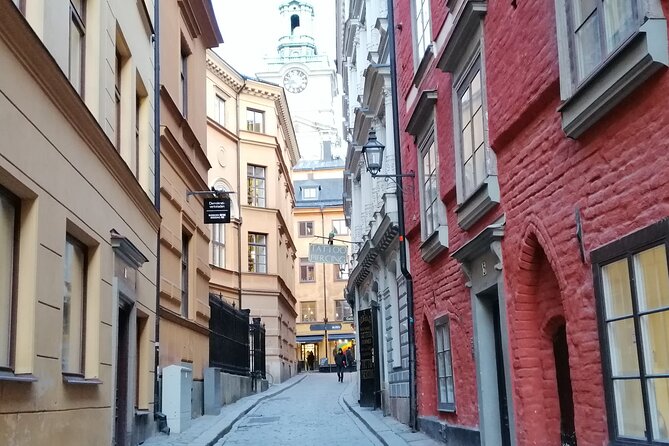
At Lejonbacken, on the north side of the Royal Palace, the story reaches another major turning point. Sweden’s dream of becoming the dominant power in Northern Europe ended after defeats by Russia.
The guide focuses on Karl XII, the last of Sweden’s warrior kings, whose statue points east. His armies achieved early victories, but the campaign eventually ended in defeat against Peter the Great at Poltava in 1709. That battle changed the balance of power around the Baltic and marked the decline of Sweden as a major European power.
The palace setting gives this history weight. You are looking at the center of royal authority while hearing how military ambition overextended the country. The statue’s direction adds a memorable visual detail, and you can use it as a simple reminder of the old eastern rivalry.
The story then moves into the Enlightenment, when interest in science, art, and theatre grew. Gustav III receives attention as an enlightened despot with a strong interest in theatre and the arts. This is a useful change of mood after the military section. Sweden’s story is not only about armies and royal succession. It is also about institutions, culture, education, and ideas.
The Royal Palace area is one of the tour’s strongest stops, but it can also be crowded. Since the activity stays outside, your experience depends partly on how easy it is to hear the guide near the palace. The small group limit helps, but you should still stay close.
Carl XIV Johan and two centuries of peace
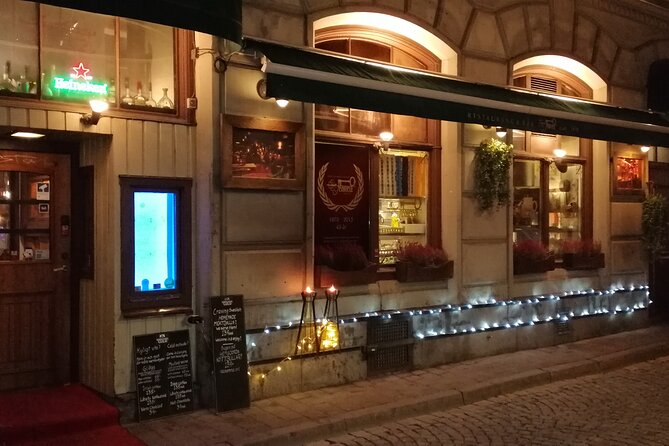
Below the statue of Carl XIV Johan, the tour moves into the 19th century and Sweden’s more peaceful modern direction.
Carl XIV Johan was the first Bernadotte king, brought from France in the early 19th century. The original hope was that he would help Sweden recover territory lost to Russia. Instead, he focused on diplomacy, infrastructure, and education.
That change in priorities is one of the most interesting ideas in the tour. A ruler brought in for military recovery helped guide Sweden toward stability and development. By 2014, Sweden was celebrating 200 years of peace, a remarkable contrast with the earlier chapters about Baltic wars and royal campaigns.
The guide then connects industrialization, natural resources, Swedish inventions, and the growth of the welfare state. The story continues into the 20th and 21st centuries through entrepreneurs and internationally known companies such as IKEA, H&M, and Spotify.
I like this transition because it links old Stockholm with the country you see today. It explains why Sweden can be associated at once with royal tradition, social policy, design, manufacturing, and technology. You may not get detailed company histories, but you do get a clear sense of how the country’s modern identity developed.
Stortorget, the Nobel Prize, and Stockholm’s public face
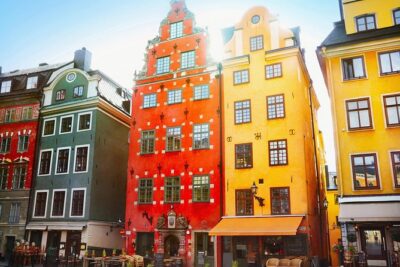
The walk reaches Stortorget, the colorful central square of Gamla Stan and the location of the Nobel Prize Museum. The Swedish Royal Academies select winners in major fields of science and art, so this is a natural place to discuss Sweden’s international intellectual reputation.
Stortorget also gives you one of the Old Town’s most recognizable settings. Narrow historic buildings frame the square, making it easy to understand why Gamla Stan often feels like a storybook district. The tour uses the square as a bridge between royal history and modern global influence.
Do not expect admission to the Nobel Prize Museum to be included. The stop is an outdoor explanation, and the listed attraction is a reference point rather than a museum visit. If the museum interests you, you can return later with a separate ticket and more time.
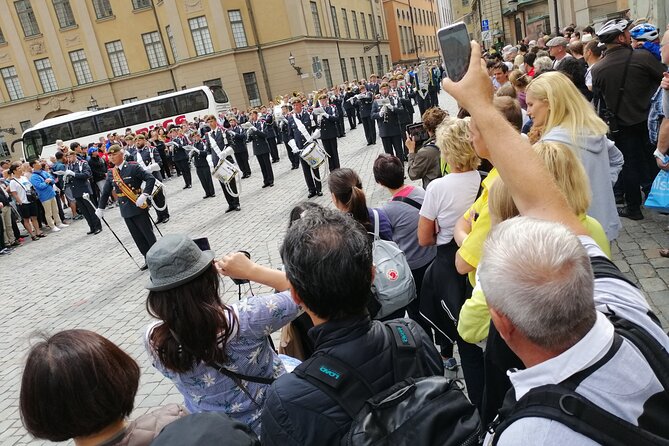
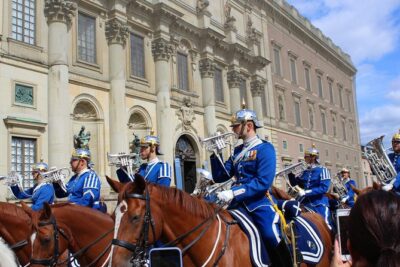
The final palace-area timing may also work well for the changing of the guards. The tour is described as ending near the Royal Palace in time to see the ceremony. During summer, the parade may march or ride with the Music Corps through the palace’s outer courtyard. Exact schedules can vary, so treat this as a possible bonus rather than the sole reason to book.
Mead or beer in a medieval cellar
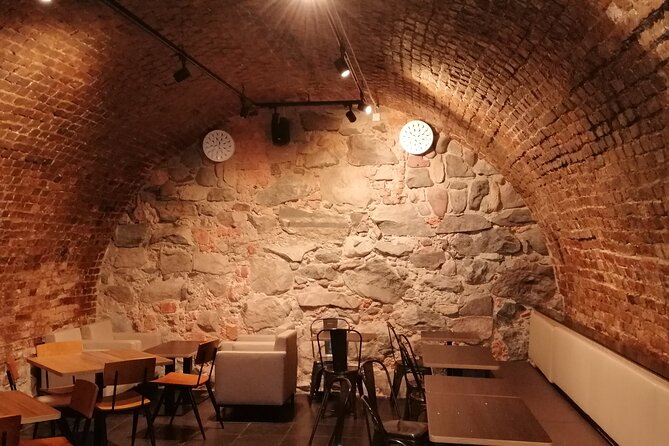
The walk ends on Västerlånggatan, at number 68, in a medieval cellar restaurant. You receive a glass of mead or beer, bringing the Viking theme back into the present.
Mead is the more distinctive choice. It gives the experience a direct link to the tour’s early chapters and makes the finish feel like part of the story. Beer offers the familiar alternative if you prefer it. The supplied information does not specify the brand, style, serving size, or food pairing, so I would not book this expecting a full meal or a tasting flight.
This final drink is valuable because it gives you time to pause after a history-heavy walk. Two hours of dates, rulers, battles, religious change, parliament, industry, and technology is a lot to absorb. Ending indoors with a drink makes the experience feel social rather than purely instructional.
The cellar is also the final destination, not just a quick photo stop. That makes the end point easy to use for your next plan in Gamla Stan. You should still allow for the tour to run slightly beyond the approximate two-hour schedule if the group has questions or the palace ceremony affects the timing.
Is $81.45 a fair price?
At $81.45 per person, this tour costs more than a basic self-guided walk through Gamla Stan. You can see Riddarholmen, Stortorget, the palace exterior, Parliament, and the House of Nobility without paying admission to those outdoor locations.
The value comes from the structure and the human explanation. Instead of reading isolated plaques, you get one continuous account of Sweden from early settlement to modern business. The included mead or beer adds a small tangible benefit, while the group limit of 10 gives the guide a better chance to speak with you directly.
I would consider the price fair if you are visiting Stockholm for a short stay and want a historical orientation early in your trip. It is less compelling if you already know Swedish history well, plan to spend hours inside the major museums, or mainly want photographs of Gamla Stan.
The mobile ticket and free cancellation up to 24 hours before the 3:00 pm start make planning easier. If you cancel less than 24 hours before the start time, the fee is not refunded. The tour also requires a minimum number of participants, so a cancellation by the operator for that reason results in another date, another experience, or a full refund.
Who will enjoy this walk most?
I would recommend it to first-time visitors who want context before exploring Stockholm alone. It suits anyone interested in royal history, political change, the Nobel Prize, Swedish inventions, or the connection between Viking culture and modern Sweden.
The small group should appeal to you if you prefer a more personal setting than a large city walk. It may also suit families with older children who can follow a fast-moving historical story, though the material includes war, executions, religion, and political conflict.
You should have a moderate level of physical fitness. The activity lasts about two hours and takes place around the Old Town, with no promise of extended seated breaks. Wear practical walking shoes and dress for outdoor conditions. The tour is near public transportation, so reaching the area and continuing afterward should be straightforward.
This is not the right choice if you need a fully indoor activity, want extensive access inside the palace or Nobel Prize Museum, or prefer a slow food-focused tour. The drink comes at the end, and the main purpose is history.
Should you book The Charms of Stockholm’s Old Town?
Book it if you want Stockholm explained as one connected story. You will move from Birger Jarl and the first written mention of Stockholm to Gustav Vasa, Karl XII, parliament, the Bernadotte dynasty, the Nobel Prize, and modern Swedish brands. The medieval cellar drink gives the route a fitting final note.
Skip it if you only want free sightseeing or already have a detailed plan for Stockholm’s museums and royal sites. At $81.45, the cost depends on how much you value a guide’s narrative and a small group.
For most first-time visitors with two free hours at 3:00 pm, I would choose it as an orientation walk. Just confirm the meeting point, keep your phone charged for the mobile ticket, and leave room in your schedule for the possible changing of the guards.
FAQ
How long does the tour last?
The tour lasts approximately two hours.
What time does the tour start?
It starts at 3:00 pm local time.
Where does the tour begin?
The formal meeting address is Munkbrogatan 8, 111 27 Stockholm. The directions also describe meeting inside or under the Gamla Stan Metro station, in front of the Pressbyrån kiosk, so confirm the precise location after booking.
Where does the tour end?
It ends at Västerlånggatan 68, 111 29 Stockholm, in a medieval cellar restaurant near the Royal Palace.
Is a drink included?
Yes. The tour ends with a glass of mead or beer.
Are entrance tickets included?
The listed stops have no admission ticket charge. The experience is an outdoor walking tour, and entry to places such as the Nobel Prize Museum is not listed as included.
How large is the group?
The tour allows a maximum of 10 participants.
Do I need to be physically fit?
A moderate level of physical fitness is recommended because the experience is a walking tour lasting about two hours.
Is public transportation nearby?
Yes. The tour begins near public transportation, at the Gamla Stan Metro area.
Can I cancel for a full refund?
Yes, if you cancel at least 24 hours before the start time. Cancellations or changes made less than 24 hours before the start are not refunded or accepted.
Just added in Stockholm
- World War II Stockholm Old Town Walking Tour and Army Museum★ 4.6 · 4 reviews
- Wolf and Wildlife Tracking in Sweden★ 5.0 · 1 review
- Viking History Half-Day Tour from Stockholm★ 5.0 · 1 review
- Stockholm Old Town Walking Tour + Archipelago Cruise★ 5.0 · 1 review
- Wine tasting in Old Town Stockholm★ 5.0 · 1 review
- Wolf and Wildlife Tracking in Sweden★ 5.0 · 9 reviews
- Scandinavian Art, Architecture and Design Tour in Stockholm★ 4.5 · 11 reviews
- Voyage of the Vikings: Guided Exploration Through Sweden’s Past★ 5.0 · 2 reviews
Old Town Walking Tours, compared.
The Original Stockholm Ghost Walk and Historical Tour – Gamla Stan
Read our review →
Walking Tour of Stockholm’s Old Town, Gamla Stan
Read our review →
Old Town Guided Walking Tour (English / Deutsch)
Read our review →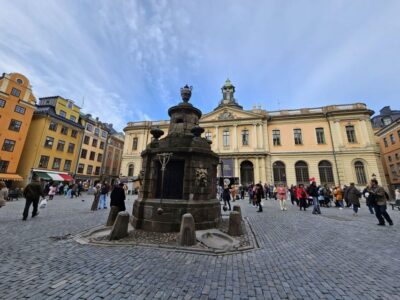
Secrets of Gamla Stan Guided Tour w/ Fika Option
Read our review →Browse the lists this tour appears in