
Review · MOOSE AND WILDLIFE SAFARIS
Stockholm: Wildlife Safari
The forest wakes when Stockholm slows down. This five-hour evening safari takes you beyond the city by van, then into Swedish woodland on foot, with stops at several wildlife areas. I like the small group, limited to eight people, and the mix of quiet tracking, sunset views, and campfire food. The main catch is simple: wild animals follow their own schedule, so a moose sighting is never promised.
I also like that this is not just a drive-by animal hunt. You learn about tracks, habitat, diets, and behavior, then use binoculars and a large torch after dark to search for movement. Guides such as Daniel, Andrew, Saga, Lucas, and Alex have made a strong impression with their patience, humor, and care.
You should also expect a bit of rough weather and uncertainty. Fog can hide the woods, snow can change the walk, and some outings may produce deer rather than moose or beavers. That is the honest price of seeing wildlife in its own home instead of at a zoo.
In This Review
- Key points at a glance
- Leaving Stockholm for the evening woods
- How the wildlife search works
- Moose, deer, boar, and the luck factor
- Walking through the forest at dusk
- Campfire food, coffee, and a warm pause
- After sunset, the forest changes
- Guides and the small-group feel
- Is $151 a fair price?
- What to bring for a comfortable evening
- Who should book this safari?
- FAQ
- Where does the Stockholm wildlife safari begin and end?
- How long does the safari last?
- What animals might I see?
- Are binoculars provided?
- Is dinner included?
- What should I bring?
- Can I cancel or pay later?
- Should you book it?
Key points at a glance
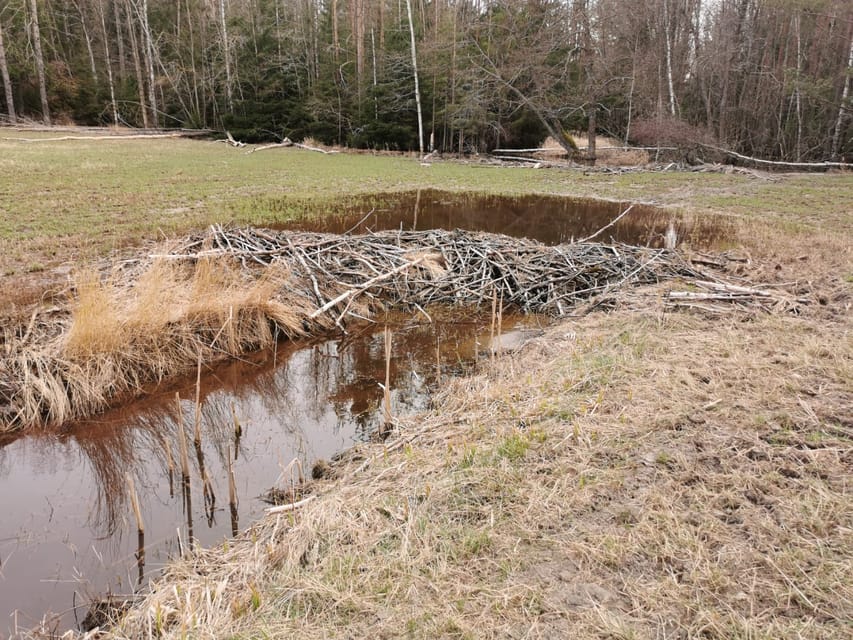
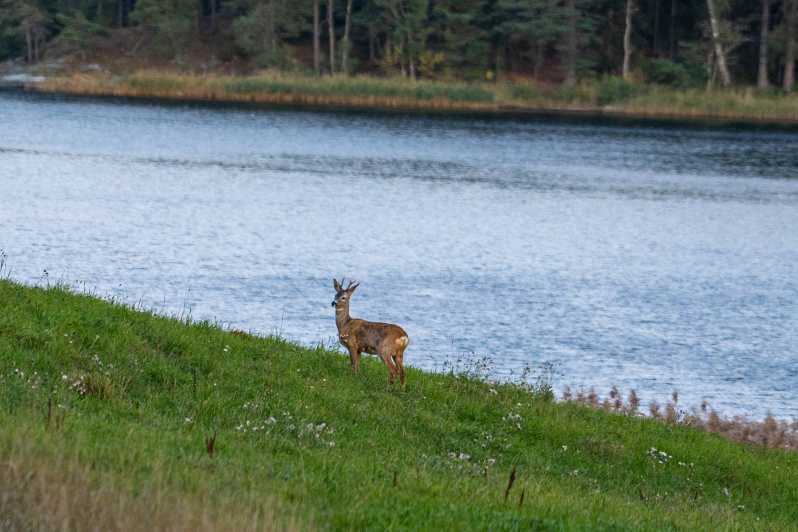
- Moose are possible, not guaranteed: You may also see roe deer, fallow deer, wild boar, beavers, cranes, hares, birds of prey, and other forest life.
- Small groups make tracking easier: With no more than eight people, the guide can answer questions and keep the search calm and quiet.
- Several sighting areas improve your odds: A van carries you between places where animals are often active, rather than relying on one location.
- The campfire is part of the experience: Expect food, Swedish cook-coffee, and campfire mud cake during time near the woods or a lake.
- Night adds a different mood: After sunset, a large torch helps the group look for animals in the dark.
- It is a real outdoor outing: Bring hiking shoes, weather-ready clothing, a daypack, and a camera.
Leaving Stockholm for the evening woods
The safari begins at the True Nature Sweden office at Urban Basecamp, Tideliusgatan 62, in Stockholm. You return to the same meeting point after roughly five hours, which keeps the outing easy to fit into a city break.
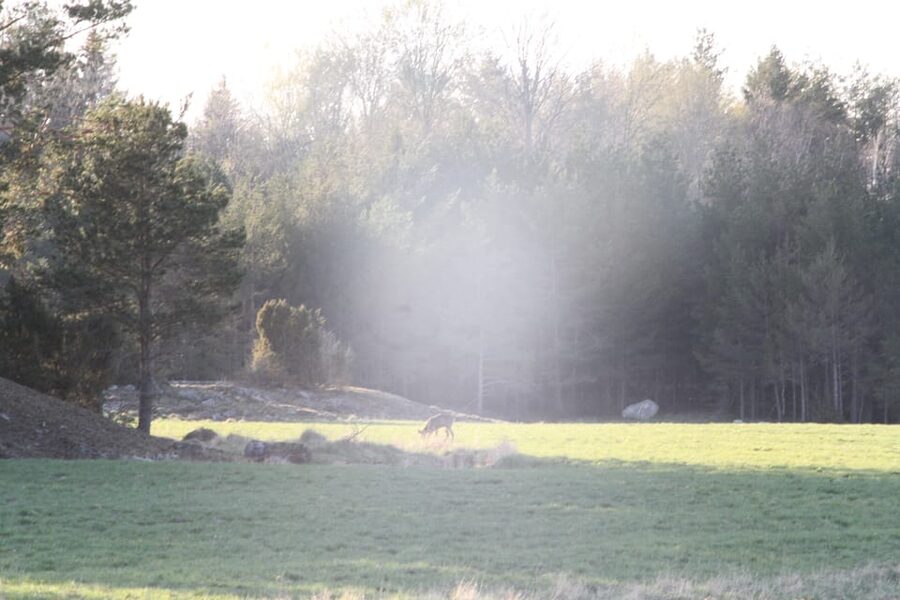
The timing matters. This is an evening trip because many animals become more active around dusk and after sunset. You are not simply checking off animals in daylight. You are watching the forest change as the light fades, listening for movement, and looking through binoculars for shapes that can disappear quickly among the trees.
The air-conditioned van is practical rather than scenic transport. It lets the guide cover several possible sighting areas and follow current animal movement. That flexibility is valuable because a single patch of woods may be quiet while another has deer, cranes, or wild boar nearby.
The group size is capped at eight. I would choose this over a large coach outing if you care about hearing the guide clearly or moving quietly through the forest. A small group also feels less disruptive during a hike, though everyone still needs to follow instructions and keep voices low when animals are close.
More wildlife safaris in Stockholm:
- From Stockholm: Moose & Wildlife Safari with Campfire Dinner
★ 4.5 · 269 reviews - Evening Wildlife Safari with Campfire Dinner from Stockholm
★ 4.5 · 155 reviews - Stockholm: Evening Wildlife Safari with Midsummer Meal
★ 4.2 · 130 reviews
How the wildlife search works
The guide leads the search, but this is not a staged feeding session. The animals are not fed or lured in, so the guide cannot simply point to a guaranteed moose at a fixed time. Instead, the team uses local experience and keeps track of animal movement to choose promising areas.
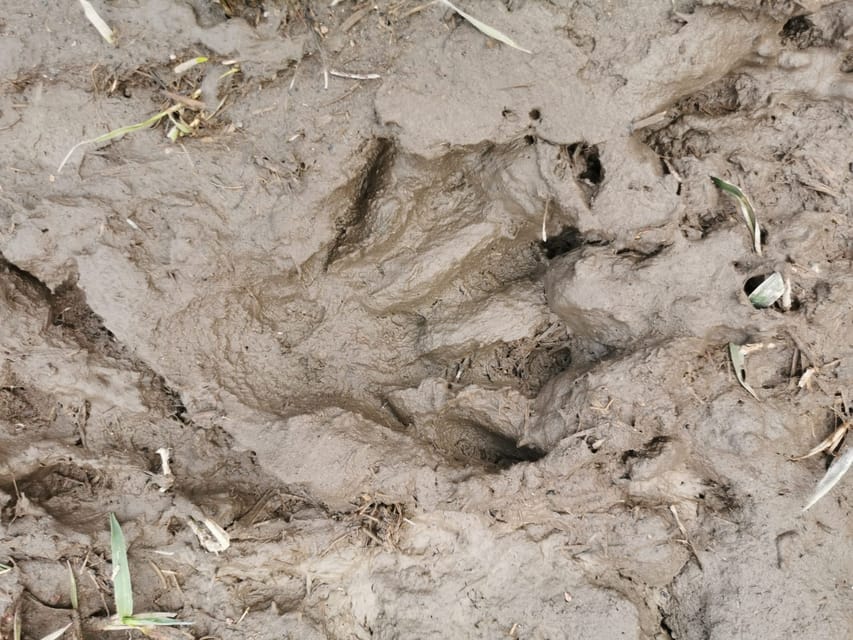
You may stop by van at several wildlife hotspots, then get out for a short hike or a closer look. The outing can include tracking signs such as footprints, droppings, feeding marks, or other evidence of animals nearby. The supplied details do not promise a set walking distance, so expect a nature walk rather than a demanding trek.
A guide may explain why certain habitats suit moose, deer, beavers, or wild boar. You can also learn about diet and behavior, along with the difference between spotting an animal and finding proof that it passed through recently. That turns a quiet stretch of forest into part of the lesson.
Binoculars are supplied, which is a useful saving and one less thing to pack. Bring your own camera, but do not expect every sighting to produce a clear photograph. Wildlife may be distant, partly hidden, or visible for only a few seconds.
Moose, deer, boar, and the luck factor
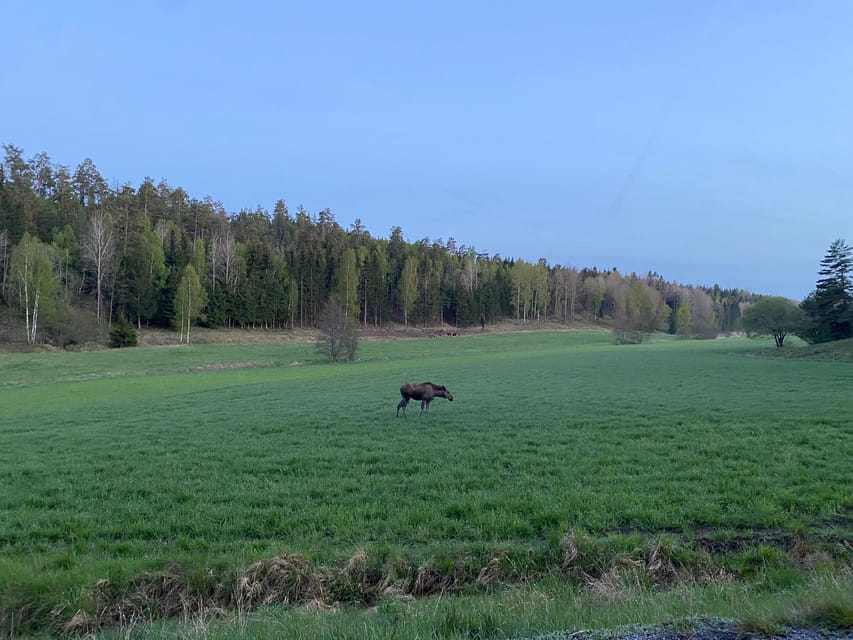
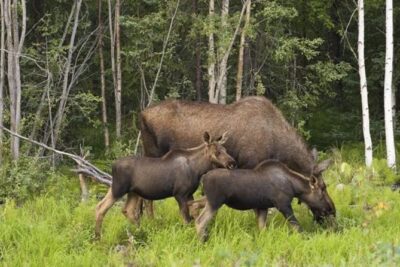
Moose are the headline attraction, and rightly so. Sweden’s largest land animal has a strong presence even when you see only part of it between the trees. The safari also searches for roe deer and fallow deer, wild boar, foxes, beavers, birds of prey, and other animals.
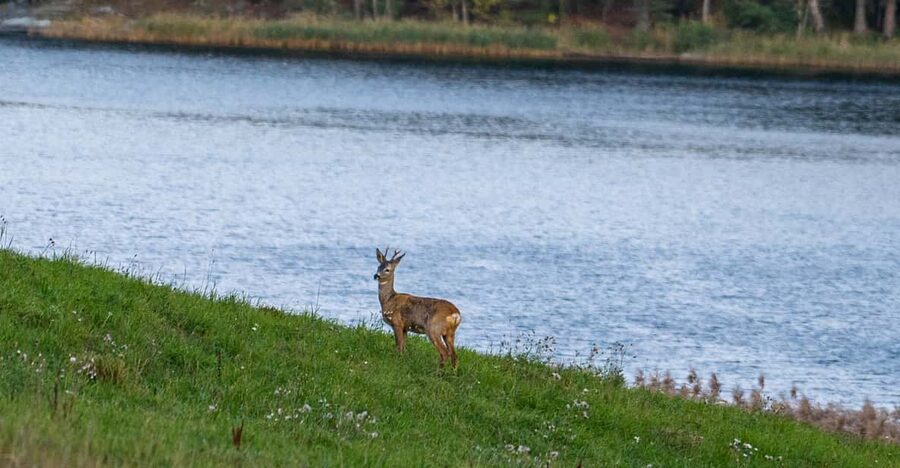
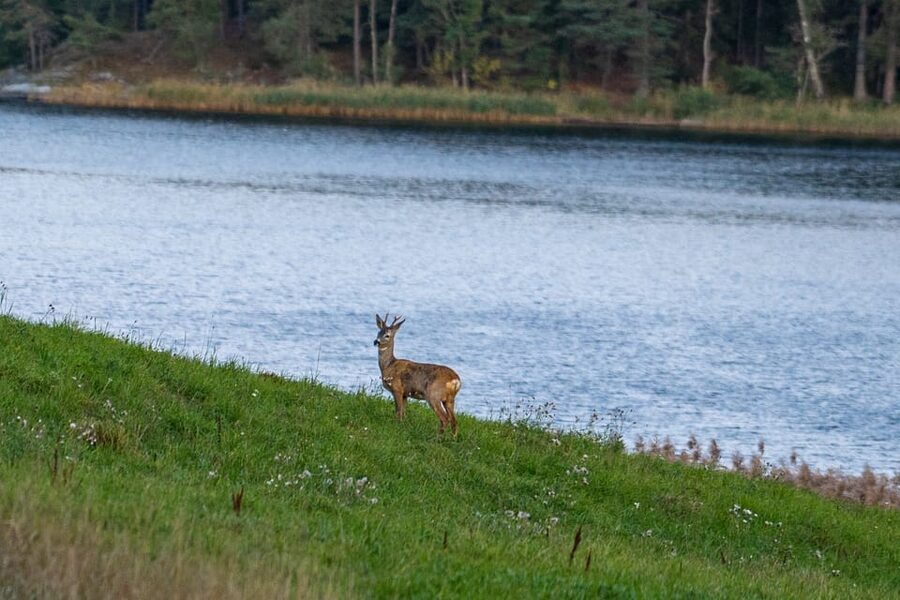
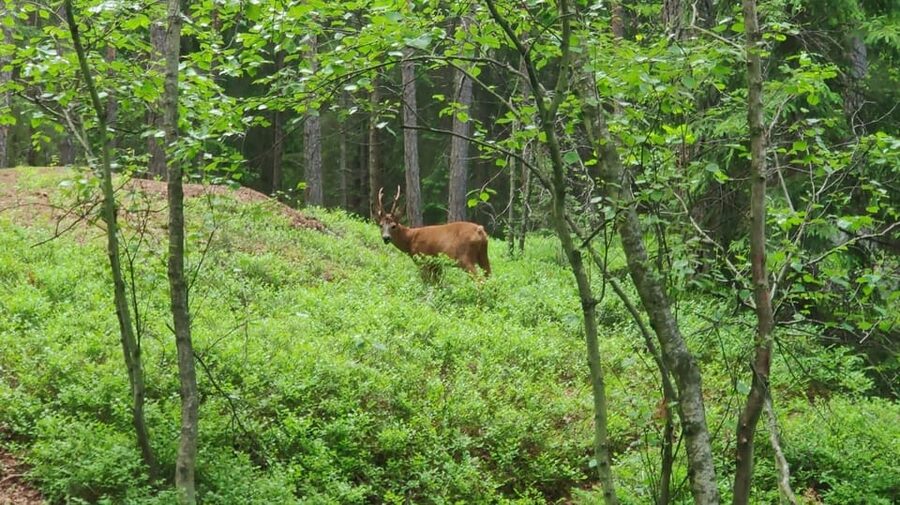
Past outings have produced a varied list: moose, fallow deer, roe deer, wild boar, beavers, cranes, geese, hares, lapwings, toads, and signs of salmon. Wolves and lynxes are possible subjects of discussion and distant searching, but you should treat them as very unlikely bonuses rather than expected sightings. The same applies to woodpeckers and eagles.
This is where the experience asks for the right attitude. One outing produced two moose at the end of the drive home. Another saw only deer, while fog limited the view. A family outing in snow brought deer, frozen-lake scenery, and forest time but no moose. None of this means the trip failed. It means nature did not follow a script.
If seeing a moose is your only goal, you may leave disappointed. If you enjoy reading tracks, learning how animals use the forest, and accepting surprise, the trip offers much more. The quiet itself can be a reward, especially after several days among Stockholm’s streets and museums.
Walking through the forest at dusk
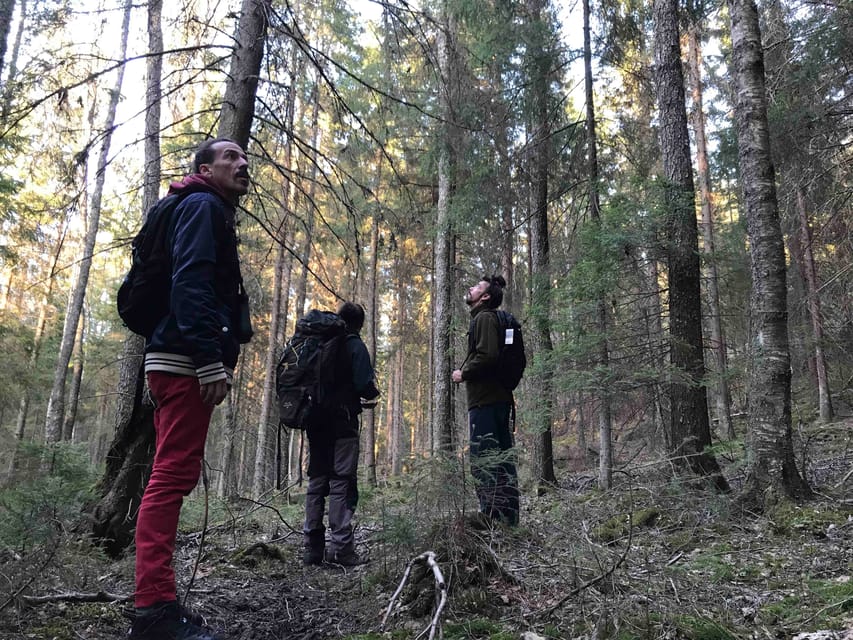
The hike is an important part of the safari. You are not kept in the van for the entire evening. The guide may lead you toward a lake, through old-growth forest, or along ground where animal signs are easier to spot.
The walking has been described as relatively gentle, but the exact route can change with weather and animal activity. Frozen ground, snow, fog, or wet paths can make a short walk feel more demanding. Hiking shoes or boots are essential, and personal clothing and footwear are not included.
The forest can be most attractive when the animals stay out of sight. A walk to a lake, the quiet of an old forest, or a frozen shoreline gives the evening a slower pace. One outing included a peaceful hike to a lake in thick fog, and another involved walking on a frozen lake in winter conditions. These moments are part of the appeal, but they also show why warm layers matter.
You may learn how to make a fire with a knife and flint. That practical touch fits the setting better than a long classroom talk. It gives you something to do while the light fades and connects the meal to the woodland around you.
More things to do in Stockholm:
- Stockholm: City Archipelago Sightseeing Cruise with Guide
★ 4.3 · 10,798 reviews - Stockholm: Skansen Open-Air Museum Admission Ticket
★ 4.5 · 3,427 reviews - Stockholm: Archipelago Boat Tour
★ 4.4 · 3,110 reviews - Stockholm: Highlights Boat Tour
★ 4.3 · 2,542 reviews
Campfire food, coffee, and a warm pause
The campfire meal gives the safari a welcome break from standing, walking, and watching. The food is described as eco-friendly, with a do-it-yourself wrap and a range of fillings available. That format is useful for a small group because you can choose what suits you rather than receiving one fixed plate.
Swedish cook-coffee is included, along with campfire mud cake. Tea and hot chocolate have also been available on outings. The coffee is a local tradition and a fitting drink for a forest fire, while the cake adds a simple, cheerful finish.
Do not expect a restaurant meal. The food is camp cooking, and the point is the setting as much as the menu. I would eat a light meal before leaving if you need a large dinner, especially since the timing and exact food service may vary.
The information lists craft beers among the inclusions but also says alcoholic drinks are not included. Because those details conflict, confirm the current drink arrangement before booking if a beer matters to you. The dependable inclusions are the campfire food, cook-coffee, and mud cake.
After sunset, the forest changes
The final part of the outing can feel more mysterious than the daylight search. A large torch is used after sunset to scan the woods and nearby areas. Eyeshine, movement, and silhouettes can reveal animals that would be easy to miss in ordinary darkness.
Night searching also has limits. A torch may show an animal briefly, but it does not turn the forest into a bright viewing area. The group needs to stay quiet and follow the guide’s directions. A camera may struggle in low light, so bring it for the landscape, campfire, and lucky clear sightings rather than expecting perfect night photographs.
This is also a good reason to avoid bright, flashy clothing if you have a choice. The supplied instructions ask for weather-appropriate clothing rather than a special color, so do not treat this as a strict rule. The practical priorities are warmth, dry feet, and freedom to walk.
Guides and the small-group feel
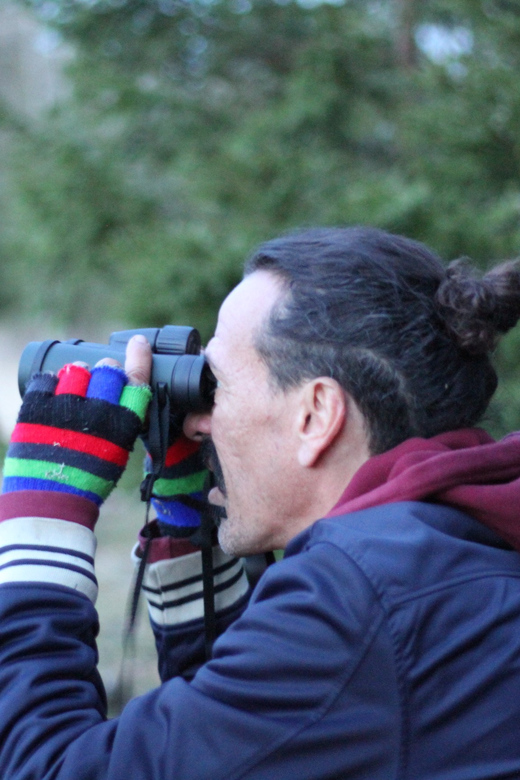
The guide is central to the quality of this experience. Daniel has been praised for explaining both Swedish culture and nature, while Andrew brought warmth and clear explanations during an evening affected by fog. Saga guided a gentle nature walk, and Lucas put serious effort into finding and explaining what the group saw. Alex added humor and helped make a deer-filled evening enjoyable.
The guide also manages expectations. A good safari leader does not pretend that every track means an animal is waiting around the corner. Instead, you learn to separate likely signs from hopeful guesses and understand why the group is changing locations.
An English-speaking live guide leads the tour. With only eight participants, you can ask about animal behavior, Swedish forest practices, fire-making, or anything you notice on the walk. Families have enjoyed the outing, including children who liked the woods, snow, wildlife lessons, and frozen lake. Still, parents should judge the evening timing and outdoor conditions for their own children.
Is $151 a fair price?
At $151 per person, this is not a cheap add-on. You are paying for about five hours, round-trip transport from central Stockholm, a professional English guide, binoculars, several search locations, a hike, campfire cooking, food, and hot drinks.
The value depends on what you want. If you want a guaranteed animal encounter, the price may feel high because nature can deliver only deer, tracks, or birds. If you value a small group, transport into the countryside, local interpretation, and a full evening outside the city, the package is easier to justify.
I would compare it with the cost and hassle of arranging rural transport yourself. You would need to locate suitable public access, understand where wildlife is active, carry binoculars, organize food, and get back after dark. This tour handles those pieces and adds a guide who follows animal movement.
The 4.4 rating from 83 reviews suggests a generally strong experience with some variation. That variation is not surprising for a real wildlife outing. The best value comes when you see the campfire, tracking, forest walk, and changing light as part of the product, not just the animals.
Free cancellation is available up to 24 hours before departure, and you can reserve now and pay later. Those terms help if your Stockholm schedule is still shifting.
What to bring for a comfortable evening
Pack a camera, a daypack, and hiking shoes or boots. Dress for the forecast, but remember that evenings in the woods can feel colder than the city, especially when you stop near a lake or campfire.
Use layers rather than one heavy item. You can adjust as the van, walk, fire, and sunset each change the temperature. Weather-ready clothing is listed as essential, and the trip does not provide your personal hiking clothes or footwear.
The supplied binoculars mean you do not need to bring your own. A camera with a zoom lens may help, but it is not required. The most useful item is likely a comfortable pair of shoes that you can trust on uneven or damp ground.
Who should book this safari?
I would recommend it to you if you want a clear break from Stockholm’s urban sights and enjoy being outdoors without planning a rural expedition. It suits people who like natural history, photography, forest walks, campfire meals, and the thrill of not knowing what will appear.
It is also a good choice for a family that can handle an evening outdoors. Children have enjoyed the fire, snow, walking, and animal signs, though the five-hour length and weather deserve thought.
I would hesitate if you need guaranteed sightings, dislike darkness or uneven paths, or want a polished dinner. This is a patient search in a real forest. Some of the best moments may be a beaver sign, cranes across a wet area, fog around a lake, or a sudden moose beside the road.
FAQ
Where does the Stockholm wildlife safari begin and end?
It begins and ends at the True Nature Sweden office at Urban Basecamp, Tideliusgatan 62, 118 69 Stockholm.
How long does the safari last?
The activity lasts five hours. Starting times vary, so check availability for the date you want.
What animals might I see?
Possible sightings include moose, roe deer, fallow deer, wild boar, beavers, foxes, hares, cranes, birds of prey, woodpeckers, and other wildlife. Wolves and lynxes may also be searched for, but no animal sighting is guaranteed.
Are binoculars provided?
Yes. Quality binoculars are included in the safari.
Is dinner included?
Campfire cooking, eco food, Swedish cook-coffee, and campfire mud cake are included. Alcoholic drinks are listed as not included, so confirm the current arrangement for craft beer before booking.
What should I bring?
Bring a camera, hiking shoes or boots, weather-appropriate clothing, and a daypack. Personal clothing and footwear are not provided.
Can I cancel or pay later?
You can cancel up to 24 hours in advance for a full refund. You can also reserve your place and pay later.
Should you book it?
Book this safari if you want a small, personal evening in the Swedish woods and can accept that nature makes the final decision. The strongest parts are the patient guides, the chance to track wildlife on foot, the van rides between sighting areas, and the campfire pause with coffee and mud cake.
Go for the whole experience, not just the moose. If a moose appears, it may become the evening’s headline. If it does not, you can still come away with forest knowledge, animal signs, deer, birds, firelight, and a welcome taste of Sweden beyond the city.
Just added in Stockholm
- Wolf and Wildlife Tracking in Sweden★ 5.0 · 1 review
- World War II Stockholm Old Town Walking Tour and Army Museum★ 4.6 · 4 reviews
- Viking History Half-Day Tour from Stockholm★ 5.0 · 1 review
- Stockholm Old Town Walking Tour + Archipelago Cruise★ 5.0 · 1 review
- Wine tasting in Old Town Stockholm★ 5.0 · 1 review
- Wolf and Wildlife Tracking in Sweden★ 5.0 · 9 reviews
- Scandinavian Art, Architecture and Design Tour in Stockholm★ 4.5 · 11 reviews
- Voyage of the Vikings: Guided Exploration Through Sweden’s Past★ 5.0 · 2 reviews
Moose and Wildlife Safaris, compared.
Evening Wildlife Safari with Campfire Dinner from Stockholm
Read our review →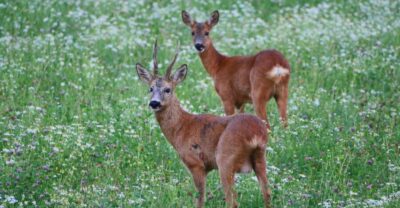

Explore the Norwegian Fjords and the Wildlife From Abisko
Read our review →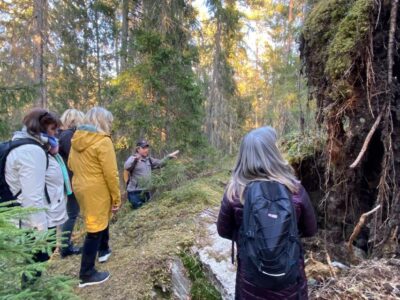
Browse the lists this tour appears in