
Review · SWEDISH FOOD TOURS AND FIKA
Stockholm Food Tour
Come hungry, and leave with a map of tastes. This four-hour Stockholm food tour links seven stops across Östermalm and Old Town, using meatballs, fish, cheese, candy, coffee, and local stories to introduce Sweden’s food culture. I especially like the full-meal amount of food and the chance to visit two food halls, specialty shops, markets, bars, and restaurants in one outing.
I also like that the tour begins outside the usual Old Town circuit, at Östermalm Food Hall, then finishes in the historic center. The main caution is the amount of walking: you cover about 2 miles, or 3.5 kilometers, often at a fairly quick pace, and several tastings may be eaten standing up.
In This Review
- Key points at a glance
- Starting at Östermalm Food Hall
- What makes the Swedish meatballs and game meats useful
- Walking from Östermalm toward the city center
- Fish soup, salmon, and Stockholm’s seafood tradition
- The licorice stop, where Swedish taste gets serious
- Cheese, candy, and the value of explanation
- Finishing with fika in the Old Town
- Is $126.21 a fair price?
- Who will enjoy this food walk?
- Practical details before you book
- Should you book the Stockholm Food Tour?
- FAQ
- Where does the Stockholm Food Tour begin?
- Where does the tour end?
- How long is the tour?
- How far do you walk?
- What foods are included?
- What happens if the tour is canceled?
Key points at a glance
- Seven tasting stops: Food halls, specialty shops, farmers markets, restaurants, and bars create a varied route rather than one long restaurant meal.
- Enough food for lunch: Tastings can include meatballs, fish soup, cured meats, cheese, salmon, licorice, pastries, coffee, and beer or wine.
- A useful Östermalm start: You see an elegant food hall and an important part of Stockholm beyond the Old Town.
- Swedish flavors with a few surprises: Bear, moose, and reindeer may appear alongside more familiar meatballs and cinnamon pastries.
- About 3.5 kilometers on foot: This suits people who enjoy city walking, but it may not suit anyone with limited mobility.
- Strong guide reports overall: Guides named Cotton, Teresa, Quiva, and Fritz have been praised for warmth, humor, food knowledge, and cultural explanations.
Starting at Östermalm Food Hall
The tour begins at Östermalmsgatan, outside Östermalms Food Hall. This is a smart starting point because it puts you in Östermalm, an attractive central district that feels different from the cobbled lanes of Gamla Stan, Stockholm’s Old Town.
Food halls are especially useful in Stockholm. They let you see how local food is sold, presented, and eaten, all under one roof. Instead of beginning with a generic restaurant plate, you start among counters filled with prepared dishes, meats, fish, cheeses, sweets, and other Swedish specialties.
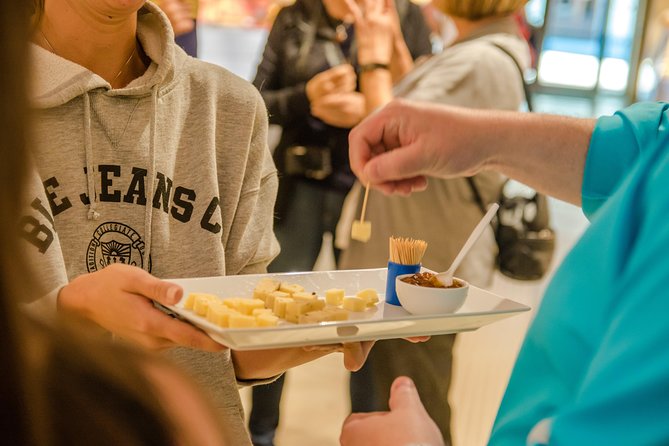
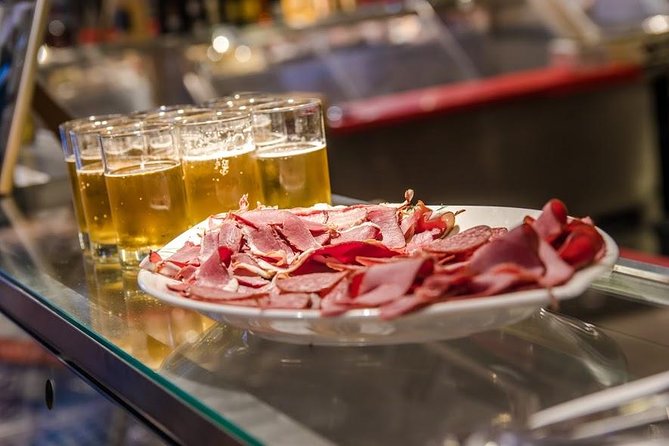
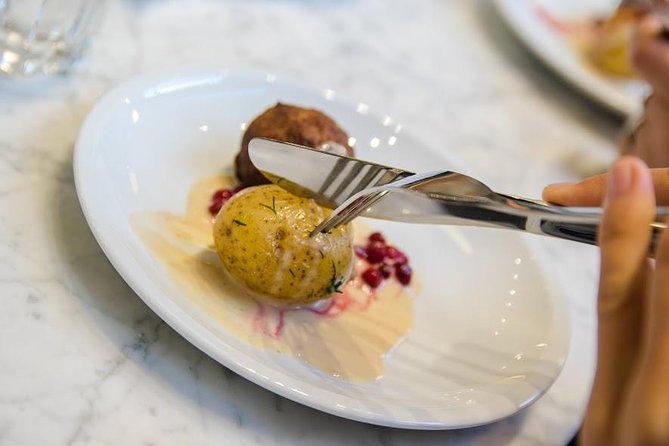
The first tasting sequence can be substantial. You might receive several cheeses, cured meats, crackers, jam, Swedish meatballs, and a drink such as beer. Some groups have also sampled unusual game meats, including bear and reindeer. That is one reason this tour works well as an introduction: you can try foods you would probably not order on your own.
Your guide gives the food a cultural frame. Meatballs become more than a familiar export. Cured meats connect to northern ingredients and preservation traditions. Cheese, fish, and berries help explain how Swedish cooking developed around a cool climate and long winters.
Portions vary somewhat by day and by the arrangements at each stop, but the tastings are intended to add up to a full meal. Several people finish comfortably full, so avoid booking this immediately after breakfast or alongside another major lunch.
More Food Tours in Stockholm
- The Nordic Food Walk Stockholm
★ 4.5 · 642 reviews - Stockholm: Secrets of Gamla Stan Guided Tour w/ Fika Option
★ 4.7 · 282 reviews - Stockholm Small Group Food Tour with 7 Classic Food Tastings
★ 5.0 · 168 reviews
What makes the Swedish meatballs and game meats useful
Swedish meatballs are an obvious crowd-pleaser, but they are not the whole point of the tour. The better value comes from tasting them alongside less familiar products and hearing how each item fits into Swedish food culture.
Cured meats may include bear, moose, or reindeer. You might not love every flavor, but sampling them gives you a direct way to understand the country’s connection to game and northern food traditions. Bear, in particular, is not an everyday dish for most international visitors, which makes it a memorable tasting when available.
The food is generally served in small portions, although some groups have received generous plates. You may eat at a counter, share a platter, or sample items as the guide explains them. Do not expect every stop to provide a chair and table.
That standing format is one of the tour’s weaknesses. If you prefer a slow, seated meal, the pace can feel tiring. If you enjoy grazing through a market and moving on before a dish becomes repetitive, it feels more natural.
Walking from Östermalm toward the city center
Between tastings, the route carries you through Stockholm’s streets toward the Old Town. The walking is not simply a way to burn off lunch. It gives the guide time to discuss Swedish customs, daily life, local neighborhoods, and the reasons Stockholm has become an important food city.
The stated distance is about 2 miles, or 3.5 kilometers, but several people have felt that the walk was longer because of the route, the pace, and time spent moving between food halls. One account described at least 3 miles. Treat the four-hour outing as an active city walk with food stops, not as a seated tasting session connected by short hops.
You should wear comfortable shoes and keep the group in sight. Stockholm sidewalks can be crowded, and the guide may walk ahead while leading the group. Most participants can manage the route, but the tour is not a good match for someone who cannot walk a fairly substantial distance at a brisk pace.
The walk also means you get a taste of Stockholm beyond the most photographed streets. One appealing feature is seeing an area outside the Old Town before finishing in the center’s older quarters. That broader view helps you understand the city as a collection of districts, not just a postcard of colorful buildings.
Fish soup, salmon, and Stockholm’s seafood tradition
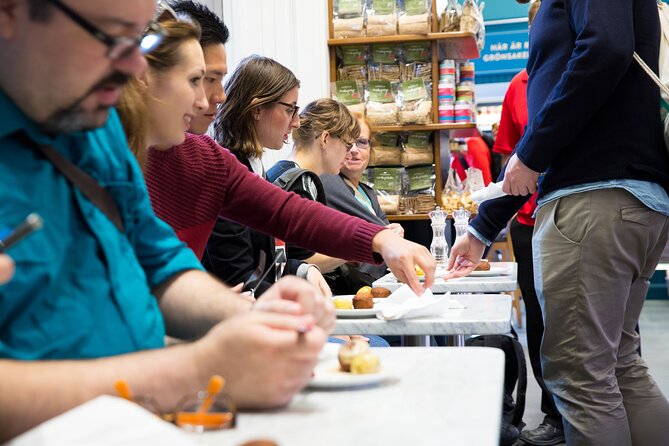
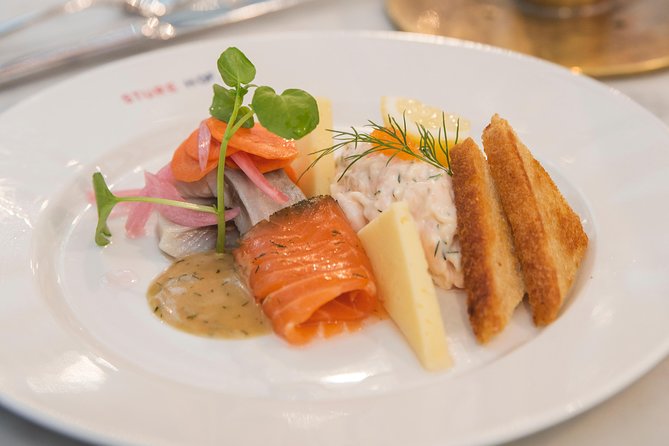
A later stop often focuses on fish. This part may take place in another food hall or an underground fish market area, where the selection can include fish soup, cured salmon, and other small seafood dishes.
For many people, this is one of the best parts of the route. Swedish cooking makes strong use of fish, and a soup or salmon tasting gives you something more distinctive than another serving of meat. The food can be served as several small courses, with the guide explaining preparation methods and the place of fish in Swedish cooking.
The setting matters, too. A food hall offers a glimpse of how locals buy and eat seafood, even if it does not have the open-air market atmosphere some people expect. If you picture a traditional outdoor market, adjust your expectations. The fish market portion may be indoors or underground.
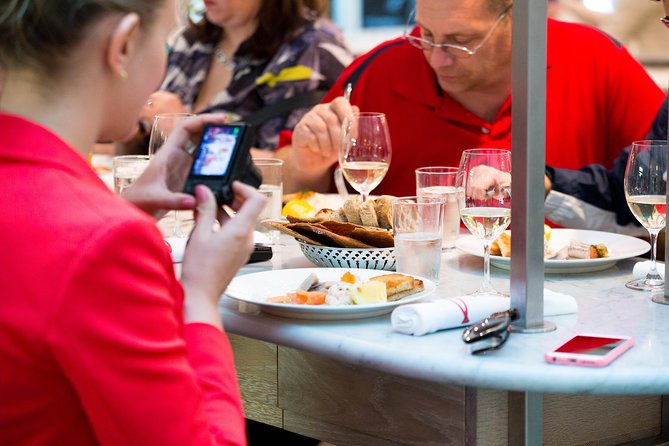
Some groups have enjoyed reserved seating and plates already waiting at a few stops. Others have had limited seating and eaten while standing. The exact arrangement may depend on the group and the day, so assume a mix rather than a restaurant-style meal from start to finish.
A completely different kind of day:
- Stockholm: City Archipelago Sightseeing Cruise with Guide
★ 4.3 · 10,798 reviews - Stockholm: Skansen Open-Air Museum Admission Ticket
★ 4.5 · 3,427 reviews - Stockholm: Archipelago Boat Tour
★ 4.4 · 3,110 reviews - Stockholm: Highlights Boat Tour
★ 4.3 · 2,542 reviews
The licorice stop, where Swedish taste gets serious
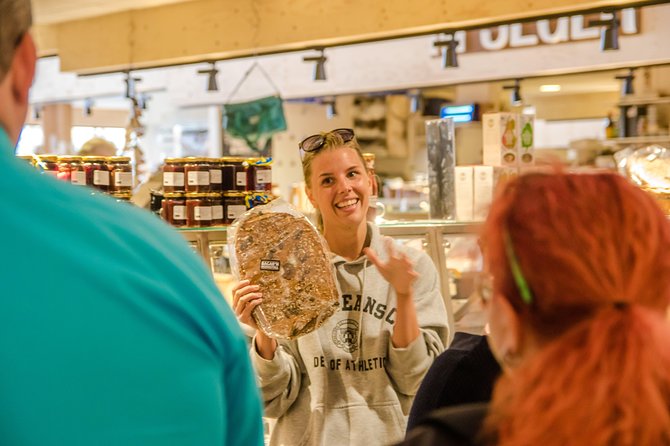
Swedish licorice is not a small side note here. It gets its own explanation and several samples, including the salty varieties that surprise many first-time visitors.
Sweet licorice is familiar to much of the world. Salty black licorice, often made with ammonium chloride, is a different experience. The salt and mineral flavor can be intense, and one tasting may be far too strong for your palate. That is part of the fun, although the most forceful samples have been described as nearly inedible by some people.
I like this stop because it shows that food tours should not only serve easy crowd favorites. A food tradition becomes memorable when it challenges you a little. Try the samples, but do not feel obliged to finish every piece. The guide may explain how licorice fits into Swedish candy culture and why flavors that seem extreme to outsiders remain popular locally.
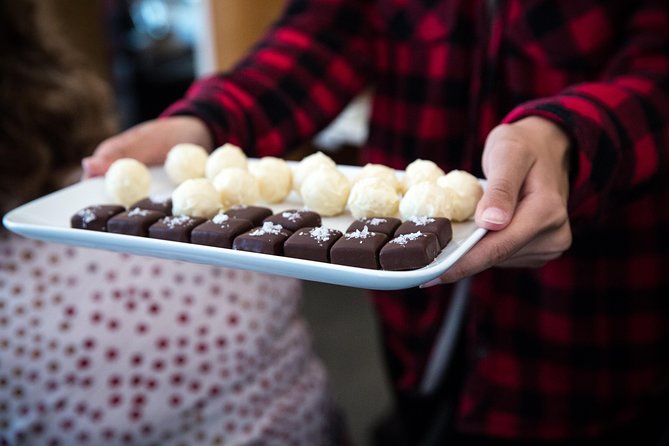
You may also taste peppermint or other sweets at a specialty shop. This provides a pleasant contrast to the fish and cured meats, while keeping the food story moving from savory to sweet.
Cheese, candy, and the value of explanation
The best guides add meaning to simple bites. A cheese sample is more useful when you know how it is made or why it is served with a particular meat. A pastry is more memorable when you understand its place in Swedish coffee culture.
Guides Cotton, Teresa, Quiva, and Fritz have received particularly warm praise for their approach. Cotton has been described as funny, generous with information, and able to recommend restaurants for later meals. Teresa has been praised for keeping a good pace and looking after the whole group. Quiva has been singled out for patiently explaining how foods are made and why they matter. Fritz has been appreciated for answering questions and adapting to the group.
That said, guide quality can vary. A small number of participants have encountered guides who seemed distant, walked too far ahead, or failed to keep the group together carefully. Another complaint involved an allergy not being handled well at the first stop. If you have a serious food allergy, state it clearly at booking and repeat it to the guide before the first tasting. The tour information says most people can participate, but it does not promise a fully customized allergy-safe menu.
The maximum group size is 20. That is not an intimate private tour, and a large group can make conversation and movement harder. Still, it is small enough to feel like a guided walk rather than a bus excursion.
Finishing with fika in the Old Town
The route ends at Kindstugatan 1 in Old Town. The final stop may feature a Swedish pastry and coffee, giving you a classic fika moment after the more unusual savory tastings.
Fika is the Swedish habit of taking time for coffee and something sweet. It is not just a quick caffeine break. It is a social pause, and the pastry stop provides a fitting finish to a tour built around everyday food and local habits.
One group found that the planned pastry was unavailable and received a substitute instead. That is worth keeping in mind. Food tours depend on restaurant supply and daily availability, so the final item may change. The larger experience remains intact, but you should not treat every listed food as guaranteed.
The Old Town ending is convenient. You can continue sightseeing, find a nearby restaurant, or simply use the tour’s recommendations to plan a later meal. Since you begin in Östermalm and finish in Gamla Stan, the route also helps you connect two important parts of central Stockholm.
Is $126.21 a fair price?
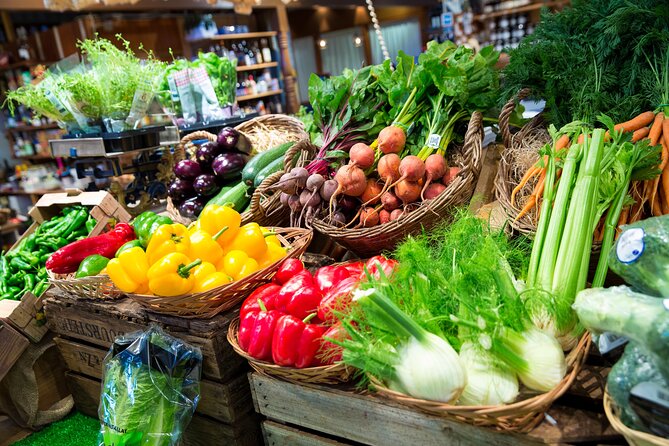
At $126.21 per person, this is not a cheap snack walk. The price makes the most sense if you count the food as lunch and value the guide’s explanations, vendor connections, and route planning.
You may taste enough food to replace a full meal: meatballs, several cheeses, cured meats, fish soup, salmon, candy, licorice, pastry, coffee, and perhaps beer or wine. If you bought a similar spread independently at restaurants and food halls, the total could add up quickly, especially in Stockholm.
The tour also saves you from researching which food halls and specialty counters are worth your time. That matters on a short stay. You get a broad first look, then you can return to the places you liked best.
The value drops if you want long seated tastings, large main-course portions, or a deeply local neighborhood tour with very little time indoors. Some groups have felt that too much of the outing took place in food halls, with too little exploration of surrounding neighborhoods. The food quality has also varied by stop, with most tastings praised but an occasional item described as mediocre or unpleasant.
Group discounts are available, and the experience is offered in English, though the guide may be multilingual. The price is easiest to justify for first-time visitors who want context as well as food.
Who will enjoy this food walk?
You are a good match if you like trying unfamiliar foods, walking through a city, asking questions, and eating several small portions instead of one large dish. It is also useful for you if you have only a few days in Stockholm and want a quick orientation to Swedish flavors and dining customs.
Food-focused couples, curious families, and friends who enjoy markets should find plenty to like. The route gives you both familiar choices, such as meatballs and pastries, and more adventurous bites, such as salty licorice and game meats.
You should think twice if you have limited mobility, dislike standing while eating, or want a quiet and leisurely lunch. The walking can be fast, the group may spread out, and the tour does not promise a seat at every stop.
It is also not ideal for an extremely selective eater. The guide may offer alternatives in some situations, but the experience is designed around tasting the foods presented. A serious allergy requires advance attention, and you should not assume every stop can accommodate last-minute dietary changes.
Practical details before you book
The tour lasts about four hours and covers roughly 3.5 kilometers. It starts at Östermalms Food Hall and ends in Old Town, so plan your day around that one-way route rather than expecting to return to the starting point.
Wear comfortable walking shoes. Eat a light breakfast, bring water, and arrive ready to keep moving between stops. Since much of the food may be served in market or shop settings, a small bag and flexible clothing are more useful than formal restaurant attire.
Confirmation is provided when you book. The tour is near public transportation, and the maximum group size is 20 people. It requires good weather and a minimum number of participants. If poor weather or low enrollment cancels the outing, you are offered another date or a full refund.
You can cancel for a full refund up to 24 hours before the start time. Changes or cancellations inside that window are not accepted for a refund.
Should you book the Stockholm Food Tour?
I would book this tour if you want a filling, practical introduction to Swedish food and do not mind walking for your lunch. The strongest reasons are the range of tastings, the two food hall visits, the unusual game meats, and the chance to finish in Old Town after seeing more of central Stockholm.
I would skip it if your priority is a relaxed seated meal or a small, highly personal group. The route can feel long, some stops may be crowded, and the licorice tasting is a genuine test of nerve rather than a guaranteed crowd-pleaser.
For most curious eaters, the tour offers good value at $126.21 because it combines food, local context, and city orientation. Book it early if it fits your schedule, since it is commonly reserved well ahead of time, and contact the operator promptly about any serious food allergy.
FAQ
Where does the Stockholm Food Tour begin?
It begins at Östermalms Food Hall on Östermalmsgatan, 114 39 Stockholm, Sweden.
Where does the tour end?
The tour ends at Kindstugatan 1 in Stockholm’s Old Town.
How long is the tour?
The tour lasts approximately four hours.
How far do you walk?
The stated walking distance is about 2 miles, or 3.5 kilometers.
What foods are included?
Food tastings may include Swedish meatballs, fish soup, cured salmon, cheeses, cured meats, game meats such as bear, moose, or reindeer, salty licorice, chocolate, pastries, and coffee. Tastings are intended to add up to a full meal.
What happens if the tour is canceled?
If poor weather or an insufficient number of participants causes cancellation, you are offered a different date or experience, or a full refund. You can also cancel up to 24 hours before the start time for a full refund.
Just added in Stockholm
- World War II Stockholm Old Town Walking Tour and Army Museum★ 4.6 · 4 reviews
- Wolf and Wildlife Tracking in Sweden★ 5.0 · 1 review
- Viking History Half-Day Tour from Stockholm★ 5.0 · 1 review
- Stockholm Old Town Walking Tour + Archipelago Cruise★ 5.0 · 1 review
- Wine tasting in Old Town Stockholm★ 5.0 · 1 review
- Wolf and Wildlife Tracking in Sweden★ 5.0 · 9 reviews
- Scandinavian Art, Architecture and Design Tour in Stockholm★ 4.5 · 11 reviews
- Voyage of the Vikings: Guided Exploration Through Sweden’s Past★ 5.0 · 2 reviews
Swedish Food Tours and Fika, compared.
Skip the Line: Disgusting Food Museum Entrance Ticket
Read our review →
Secrets of Gamla Stan Guided Tour w/ Fika Option
Read our review →
Stockholm Small Group Food Tour with 7 Classic Food Tastings
Read our review →
Winter Kayaking, Swedish Fika and hot Sauna Experience
Read our review →
Stockholm Archipelago RIB Speed Boat Tour with Swedish Fika
Read our review →
Kayaking tour around Vaxholm Archipelago with Fika
Read our review →Browse the lists this tour appears in