
Review · OLD TOWN WALKING TOURS
Private blood, ghosts and folklore Old Town 2h Stockholm tour
Dark stories hide in plain sight.
This private Stockholm walk turns Old Town streets, palace corners, church doors, and waterways into settings for tales of executions, curses, ghosts, trolls, and Swedish folklore. I like the private format, which lets you ask questions and keep the pace suited to your group. I also like the focus on lesser-known folk beliefs, including the Swedish Tomte, Näcken, and the dangerous Skogsrået. The main consideration is that the tour may feel light on documented historical detail if you expect a long parade of gruesome Stockholm events.
The route is listed as about one hour and 30 minutes, although the title describes it as a two-hour tour. It begins at the Nobel Prize Museum in Stortorget and finishes near Saint Jacob’s Church, just north of Old Town. You cover several short stops, with a guide handling the navigation, but the experience is primarily an outdoor storytelling walk rather than a museum visit or theatrical ghost show.
In This Review
- Key points to know before booking
- A spooky walk through Stockholm’s oldest streets
- Stortorget: executions, blood, and magical body parts
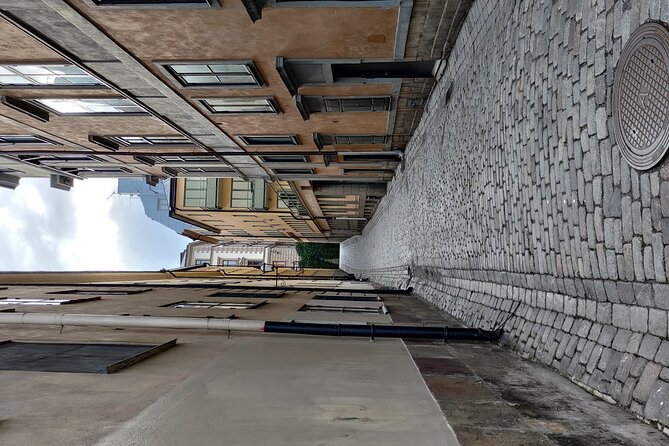
- Prästgatan and the old quarter called Hell
- Doorways, iron, and the Swedish Tomte
- Logårdstrappan and Stockholm’s water spirits
- Kungsträdgården and the creatures of the forest
- Saint Jacob’s Church and the power of the church door
- What the private format adds
- Price, duration, and overall value
- Who should book this Stockholm walk?
- Should you book the Blood, Ghosts and Folklore tour?
- FAQ
- Where does the tour start?
- Where does the tour end?
- How long does the tour last?
- Is this a private tour?
- Are entrance tickets included?
- Can I cancel for a full refund?
Key points to know before booking
- Stortorget sets the grim tone: Learn about executions, the Stockholm Bloodbath era, and old beliefs about the magical use of human remains.
- Swedish folklore is the star: Stories feature the Tomte, Näcken, bäckahästen, Sjörå, Skogsrå, and the undead Myrling.
- The route crosses Old Town and Kungsträdgården: You finish outside the historic core, about a 10-minute walk from the starting point.
- Private guiding adds flexibility: Only your group takes part, so questions and pacing are easier to manage.
- The storytelling can be uneven: One account found the content too thin, while another praised the host’s friendly approach and strong command of Stockholm history.
- The price needs a group calculation: At $188.16 per person, this makes the most sense for a small group that values a dedicated guide.
A spooky walk through Stockholm’s oldest streets
I like this tour because it does not treat Stockholm’s past as a row of dates and royal names. Instead, it asks what people feared, how they explained death, and what they did to protect homes and children from unseen forces.
That distinction matters. You are not signing up for a standard Old Town orientation walk with a few ghost stories added at the end. The route gives much of its time to Swedish folklore and old protective customs. Some stories connect to actual events, while others belong to the world of spirits, curses, water beings, and household creatures.
The private setup should make the walk feel more personal than a large group tour. You can stop to ask what a Swedish term means, request more history about a place, or tell the guide which subjects interest you most. I would use that freedom early. If you want more historical detail about executions, royal violence, or Stockholm’s famous bloodshed, say so before the stories move on.
The tour is also a good choice if you have already seen the main Old Town sights and want a different way to read the streets. The buildings remain the same, but the stories change how you look at them.
More Old Town walks:
- Walking Tour of Stockholm Old Town
★ 5.0 · 1,175 reviews - The Original Stockholm Ghost Walk and Historical Tour – Gamla Stan
★ 4.5 · 1,165 reviews - Stockholm: Old Town Walking Tour with Local Guide
★ 4.7 · 719 reviews
Stortorget: executions, blood, and magical body parts
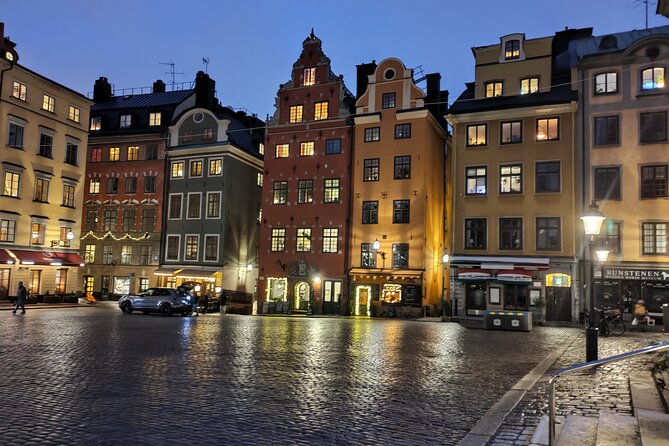
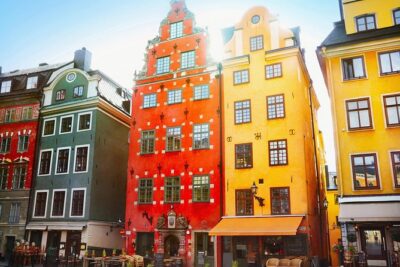
The opening stop is Stortorget, the square beside the Nobel Prize Museum and one of the most recognizable places in Stockholm’s Old Town. Here, the guide discusses the execution of around 90 people during the period when the Danish King Kristian seized Stockholm.
That gives the tour a solid historical anchor. The square is not simply a pretty gathering place with colorful facades. It is connected to political violence, public punishment, and the use of death as a warning to the living.
The darker material concerns folk beliefs about the bodies of the dead. You hear how blood could be used in curses, how parts of the gallows were believed to help brew a good drink, and how other remains were given magical uses. This is the sort of material that explains how fear and superstition shaped everyday thinking.
I would expect this stop to be graphic in subject, but not necessarily theatrical in presentation. The guide’s storytelling style will matter a great deal. One account found the tour too restrained and expected more gruesome tales. The provider’s response pointed to many other bloody Stockholm stories that can be included, such as the Stockholm Bloodbath, the killing of King Gustav III, a lynch mob, the death of a nobleman, and tales involving the executioner.
That exchange offers useful advice: ask for the full historical context if the opening feels too brief. Stortorget can support a much larger story than a single ghost anecdote.
Prästgatan and the old quarter called Hell
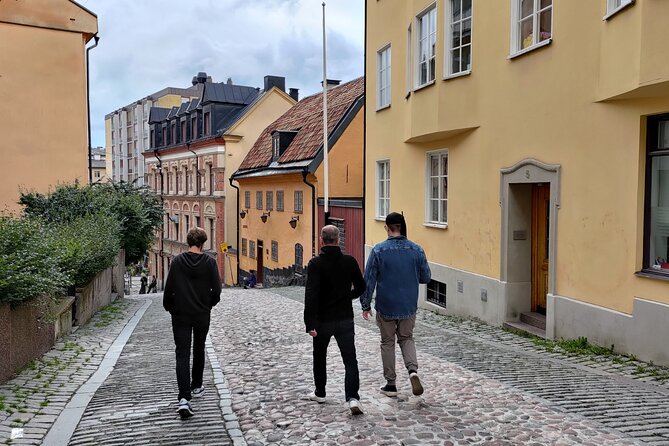
From Stortorget, the walk continues along Prästgatan. The focus here is the section once called Hell, connected with the people who lived there.
This is a short stop, but it helps show how Stockholm’s old streets carried social meaning as well as practical names. A place name can preserve a memory of who lived nearby, how an area was viewed, or what kind of work and life took place there.
Do not expect a major monument or a long indoor visit at this point. The value comes from listening while walking through the street itself. I find that approach useful in Stockholm, where narrow lanes and old walls often make the setting feel more effective than a modern presentation would.
Because the tour spends only about 10 minutes here, you should think of Prästgatan as a scene in the larger story rather than a full historical stop. It helps connect the public violence of Stortorget with the private fears of ordinary households.
Doorways, iron, and the Swedish Tomte
The next Old Town stop shifts from human violence to protection against supernatural threats. At a house door, the guide explains the use of iron against vaesen, a broad Swedish term for supernatural beings.
The stories include elves who arrive with the mist, described here as souls that have not found rest. You also learn about the Swedish Tomte, a household spirit that belongs to Swedish folklore but is often softened in modern popular culture.
The door itself becomes important. The guide discusses protection for the entrance, along with the danger faced by a newborn before baptism. In these beliefs, an unbaptized child lacked the protection that baptism was thought to provide, leaving the baby exposed to trolls and the Devil.
This is one of the more distinctive parts of the walk because it links folklore to ordinary domestic life. The subject is not just a monster in the woods. It is a door, a child, a family, and the measures people believed could keep danger outside.
I would pay close attention to the practical customs described here. The tour asks what protections you should use, which gives the stop a playful edge. It also offers a useful glimpse into how religious belief, local folklore, and family rituals overlapped.
More things to do in Stockholm:
- Stockholm: City Archipelago Sightseeing Cruise with Guide
★ 4.3 · 10,798 reviews - Stockholm: Skansen Open-Air Museum Admission Ticket
★ 4.5 · 3,427 reviews - Stockholm: Archipelago Boat Tour
★ 4.4 · 3,110 reviews - Stockholm: Highlights Boat Tour
★ 4.3 · 2,542 reviews
Logårdstrappan and Stockholm’s water spirits
At Logårdstrappan, the subject turns to beings connected with water. This is a natural setting for stories about creatures that lure people into rivers, lakes, or the sea.
You hear about Näcken, the bäckahästen, the Swedish version of the Kelpie, the Sjörå, and the skepps-rå. Each belongs to a world where water is beautiful but dangerous, and where drowning could be explained through the actions of a supernatural being.
Näcken is associated with water and temptation. The bäckahästen is presented as a Swedish counterpart to the Kelpie, while Sjörå and skepps-rå connect the stories to the sea and ships. The common thread is clear: these beings could lure people toward the deep and cause them to drown.
This stop should appeal to anyone who likes folklore more than standard haunted-house stories. The tales are not all about dead people returning to frighten the living. They also explain natural dangers and give human qualities to water, mist, woods, and darkness.
The location adds atmosphere, but keep your expectations practical. Admission to every stop is free, and the guide speaks outside rather than bringing you into a special attraction. If you need a theatrical production with sound effects, costumes, or staged scares, this is not that kind of experience.
Kungsträdgården and the creatures of the forest
The longest stop takes place in Kungsträdgården, where the guide introduces more Swedish folklore beings. This section lasts about 20 minutes, giving it more room than most earlier stops.
The Skogsrået, also called the Huldra, is one of the key figures. She is described as dangerous, alluring, and connected with the forest. The story fits a wider pattern in European folklore, where the woods are not empty spaces but places controlled by beings with their own rules.
The guide also covers the Myrling, an undead child associated with tragedy and death. Other creatures are described as spreading death or sucking blood. These stories add a harsher side to folklore that is sometimes presented today as cute or harmless.
I like the way this section broadens the walk beyond Stockholm’s political past. You are not simply hearing which king did what. You are hearing how people imagined illness, death, lost children, and the dangers beyond the town.
Kungsträdgården also marks a shift in the route. The walk moves toward the area north of Old Town, and the final stop will be outside the historic quarter. If you are meeting friends afterward, remember that the ending is not back at Stortorget.
Saint Jacob’s Church and the power of the church door
The final stop is outside Saint Jacob’s Church on Västra Trädgårdsgatan. Here, the guide discusses church doors, weak points in the church, exorcism during baptism, and ways to punish a worst enemy.
The church door is a fitting place to finish. Earlier, the tour examined protection at the entrance to a home. Now the focus shifts to the church as another building that needed protection from evil and supernatural forces.
The baptism story returns to the vulnerability of children before they were formally protected by the church. The discussion of exorcism makes this stop darker and more unsettling than a typical church-history talk.
The final subject, how to punish an enemy, also shows how folklore could be used actively. These were not only stories told for entertainment. They included instructions, warnings, and imagined methods for dealing with danger or hostility.
The tour ends just outside Old Town, beside Kungsträdgården. From there, it is about a 10-minute walk back to the starting point. I see this as a minor benefit if you plan to continue toward central Stockholm, but it is worth remembering if you expect a circular route.
What the private format adds
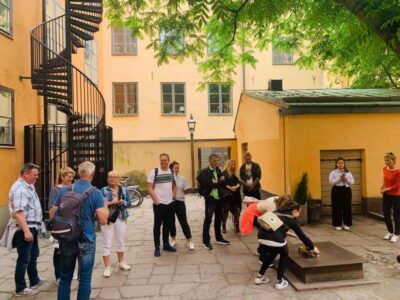
A private tour is useful here because folklore invites questions. Terms such as Näcken, Sjörå, Tomte, and Skogsrået can blur together when presented quickly to a large group. With only your party present, you can ask the guide to explain the differences or return to a story that caught your attention.
The guide also handles navigation through Old Town and toward Kungsträdgården. That saves you from juggling a map while trying to follow the story. The route uses public streets and outdoor sites, so you can focus on the buildings and the guide’s explanation.
One strong account described the host as friendly, accommodating, and well informed about Stockholm history. That is important here because the quality of the tour depends heavily on the person leading it. A warm guide who welcomes questions can turn a short stop into a memorable conversation.
At the same time, private does not automatically mean theatrical or highly detailed. A private guide can adjust the experience, but you need to speak up if you want more historical background or bloodier stories. I would not book this expecting a scripted performance.
Price, duration, and overall value
The listed price is $188.16 per person, which is a serious cost for a walk lasting about 90 minutes. The title refers to two hours, so I would confirm the expected length when booking. The route itself lists roughly 75 minutes of stop time, with the rest presumably spent walking between locations.
The price makes more sense for a small private group that would otherwise book several people onto a guided walk. You are paying for a dedicated guide, flexible questions, and a themed route rather than entrance tickets. No admission fees are included because the stops are public outdoor locations.
For a solo visitor or a couple, the cost may feel high compared with a standard group walk. For a family or group of friends sharing the experience, the private format may offer better value, especially if everyone enjoys folklore and wants to ask questions.
The tour includes the guide, accepts mobile tickets, allows service animals, and operates near public transportation. Most people can participate. Free cancellation is available up to 24 hours before the start time, but cancellations or changes inside that window are not refunded or accepted.
Who should book this Stockholm walk?
I would recommend it to you if you enjoy:
- Folklore about spirits, trolls, household beings, and water creatures
- Dark stories connected with real places
- A private guide rather than a large group
- Outdoor walking through Old Town
- Asking questions and shaping the conversation
- A lighter, story-based look at Stockholm’s past
I would be more cautious if you want a detailed chronological history of Stockholm, a theatrical ghost tour, or a long list of documented crimes at every stop. One person found the experience too thin and expected many more gruesome tales. That criticism is fair if the guide focuses heavily on general folklore without adding enough local history.
The best way to improve your odds is to tell the guide what you want at the start. Ask for more about the Stockholm Bloodbath, Gustav III, the executioner, and other documented events if those subjects interest you. The route has room for them, and the provider has indicated that such stories belong within the tour’s wider theme.
Should you book the Blood, Ghosts and Folklore tour?
Book it if you want a private folklore walk with real Stockholm locations as its backdrop. The strongest material concerns old beliefs about death, protection, water spirits, forest beings, and the uneasy border between religious practice and superstition.
Skip it if you want a polished scare show or guaranteed nonstop gore. The experience depends on the guide’s storytelling choices, and the mixed feedback shows that expectations matter. At $188.16 per person, I would choose it for a small group with a clear interest in Swedish folklore, then ask for extra historical detail to make the price worthwhile.
FAQ
Where does the tour start?
The tour starts at the Nobel Prize Museum, Stortorget 2, 103 16 Stockholm, Sweden.
Where does the tour end?
It ends outside Saint Jacob’s Church at Västra Trädgårdsgatan 2A, 111 53 Stockholm, Sweden, on the north side of Old Town beside Kungsträdgården.
How long does the tour last?
The experience is listed as approximately one hour and 30 minutes, while the title refers to two hours. Confirm the expected duration when booking.
Is this a private tour?
Yes. Only your group takes part, and the private format allows you to ask the guide questions during the walk.
Are entrance tickets included?
The listed stops have free admission, and the experience includes a guide. The tour takes place at outdoor public locations.
Can I cancel for a full refund?
Yes, if you cancel at least 24 hours before the experience start time. Cancellations or changes made less than 24 hours before the start are not refunded.
Just added in Stockholm
- Wolf and Wildlife Tracking in Sweden★ 5.0 · 1 review
- World War II Stockholm Old Town Walking Tour and Army Museum★ 4.6 · 4 reviews
- Viking History Half-Day Tour from Stockholm★ 5.0 · 1 review
- Stockholm Old Town Walking Tour + Archipelago Cruise★ 5.0 · 1 review
- Wine tasting in Old Town Stockholm★ 5.0 · 1 review
- Wolf and Wildlife Tracking in Sweden★ 5.0 · 9 reviews
- Scandinavian Art, Architecture and Design Tour in Stockholm★ 4.5 · 11 reviews
- Voyage of the Vikings: Guided Exploration Through Sweden’s Past★ 5.0 · 2 reviews
Old Town Walking Tours, compared.
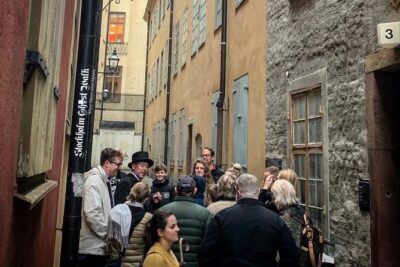
The Original Stockholm Ghost Walk and Historical Tour – Gamla Stan
Read our review →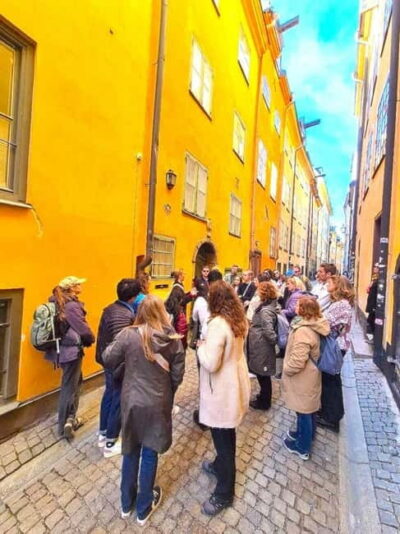
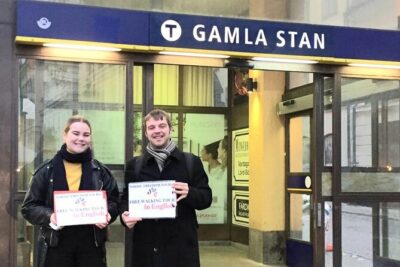
Walking Tour of Stockholm’s Old Town, Gamla Stan
Read our review →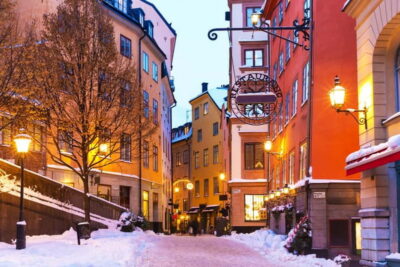
Old Town Guided Walking Tour (English / Deutsch)
Read our review →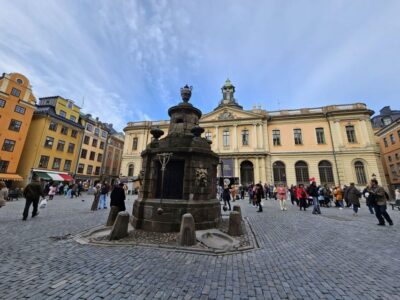
Secrets of Gamla Stan Guided Tour w/ Fika Option
Read our review →Browse the lists this tour appears in