
Review · WALKING TOURS IN STOCKHOLM
Magical “Stockholm by Night” Photo Walk
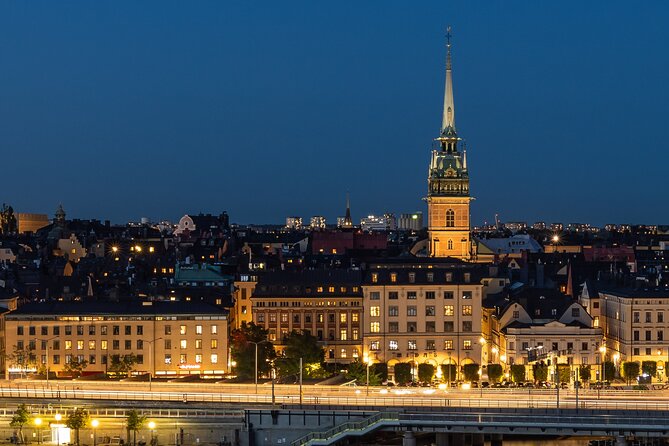
City lights make Stockholm a different place. This private two-hour walk begins just after sunset, when the last daylight fades and lamps, windows, cars, and trains start shaping the city. I like the hands-on photography lessons, especially the chance to practice long exposure and capture light trails. I also like the traditional Swedish fika, coffee with a cinnamon bun, which gives the evening a warm local touch.
The main consideration is the price: $159.07 per person is a serious spend for a two-hour walk, even with private guiding and snacks included. You also need to bring your own camera or phone, and a tripod is recommended for the best low-light results.
In This Review
- Key points to know before booking
- Why Stockholm looks best after sunset
- Starting at Stockholm City Museum
- Old Town: familiar streets in unfamiliar light
- Riddarholmen: room for wider views
- Mariaberget: the best chance for a memorable outlook
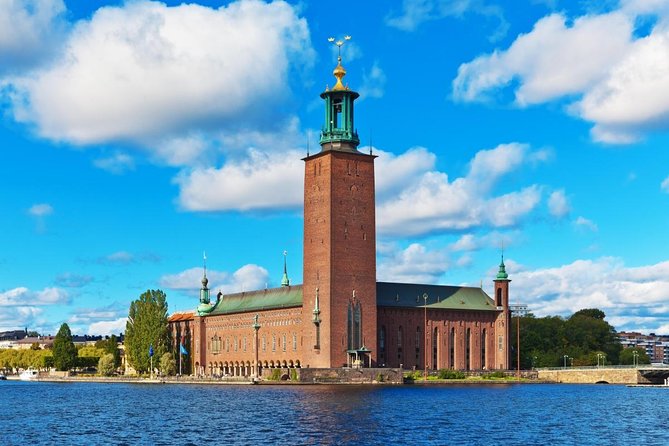
- Stockholm City Hall: a fitting final stop
- Learning long exposure without feeling rushed
- Fika adds a welcome Swedish pause
- What the private format is worth
- Camera, phone, and tripod advice
- Who will enjoy this most
- Should you book the Stockholm by Night Photo Walk?
- FAQ
- How long does the Stockholm by Night Photo Walk last?
- Where does the photo walk begin?
- Where does the experience end?
- Do I need to bring a tripod?
- Is fika included?
- Is the experience private and what language is offered?
Key points to know before booking
- Light trails are the creative focus: You learn how to use long exposure to show the movement of cars and trains.
- The route covers four scenic Stockholm areas: Old Town, Riddarholmen, Mariaberget, and City Hall.
- The walk is private: Your group receives a route adjusted to your experience level and interests.
- Phone photographers are welcome: You do not need a high-end camera or tripod to take part.
- Fika is included: Coffee and a traditional Swedish cinnamon bun make a pleasant break during the walk.
- The guide teaches, not just points: You receive composition advice, low-light tips, local insight, and an eBook after the tour.
Why Stockholm looks best after sunset
Stockholm is a fine city for night photography because darkness adds shape and contrast. During the short period just after sunset, the sky is not yet completely black. That fading blue light can keep buildings visible while streetlights begin to glow.
This timing matters. A walk that began much later might give you strong artificial light but less detail in the sky. Starting just after sunset gives you a changing scene, so your pictures can look different from one stop to the next.
The guide’s main lesson is how to work with low light instead of treating it as a problem. You learn how shutter speed, light, and darkness affect a photograph. With long exposure, moving headlights and taillights can become bright lines across the image, while a stationary building remains sharp if the camera is held steady.
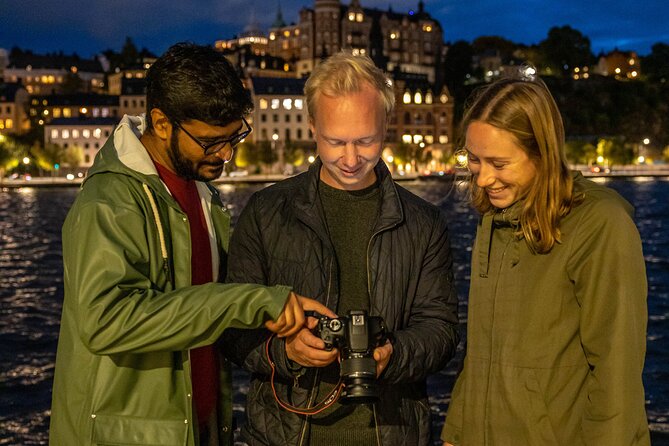
You do not need to arrive as an expert. The route is tailor-made to your experience level, and the guide can work with a camera or mobile phone. One particularly useful part of the experience is phone instruction. Julien demonstrated iPhone features that one participant had never used, along with simple ways to improve composition.
More Walking Tours in Stockholm
- Stockholm: Ghost Walk and Historical Tour
★ 4.7 · 2,206 reviews - Walking Tour of Stockholm Old Town
★ 5.0 · 1,175 reviews - The Original Stockholm Ghost Walk and Historical Tour – Gamla Stan
★ 4.5 · 1,165 reviews
Starting at Stockholm City Museum
The meeting point is Stockholm City Museum at Ryssgården, 116 46 Stockholm. The walk ends back at the same meeting point, which makes planning easier than a tour that leaves you in another part of the city late at night.
The evening begins after sunset, but the exact light will depend on the date and weather. Good weather is required, so the activity can be moved or canceled with a full refund if conditions are poor. If you want a particular evening, booking ahead makes sense. It is commonly reserved about 30 days in advance.
Because this is a private experience, you are not placed with a large group of strangers. That matters for photography. You can stop to adjust settings, ask questions, and repeat a shot without worrying that a guide must hurry a whole busload of people along.
The guide supplies flashlights, which are practical when working in darker areas or checking camera controls. Bring clothing suited to an evening walk, though the supplied information does not specify a dress code or weather gear.
Old Town: familiar streets in unfamiliar light
The first stop is Stockholm Old Town, the historic center of the city. After sunset, its streets offer a different photographic problem from the open viewpoints later in the walk. Here, you are likely to work with close architectural details, street lighting, and the contrast between bright windows and darker passages.
The value of having a photographer guide you here is not simply finding a famous street. It is learning where to place the frame and how to balance bright and dark areas. A guide can point out landmarks and suggest angles that you might pass without noticing.
Old Town is also a good place to start because it gives you a chance to settle into the camera before attempting more difficult long exposures. You can test your settings, check how your phone handles the fading light, and get comfortable with the pace of the walk.
One limitation is that a two-hour tour must keep moving. You should not expect a full historical tour of Old Town, museum visits, or extended time at every viewpoint. The focus is photography and local orientation, not a detailed survey of Stockholm’s past.
Riddarholmen: room for wider views
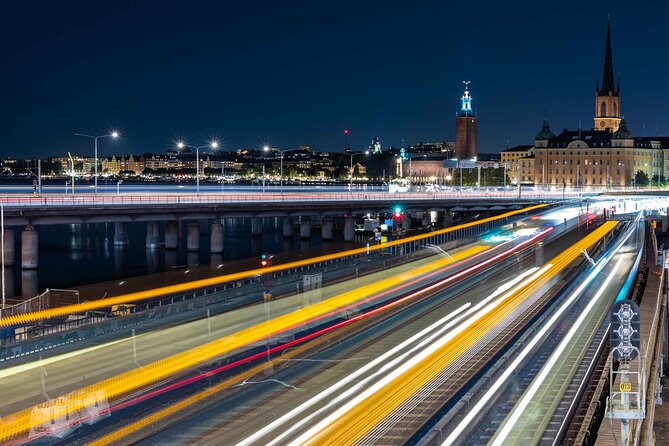
From Old Town, the walk continues to Riddarholmen. This area gives you a broader setting than the enclosed streets of the old center. It is especially useful for learning how to compose a wider city photograph, with buildings, open water, and evening light sharing the frame.
Riddarholmen also helps show why night photography is more than simply raising the brightness. Too much artificial light can flatten a scene. The guide can help you decide what should remain dark, what should be sharp, and where the strongest points of light should sit in your composition.
This is where a tripod becomes useful. Long exposure requires the camera to remain still, especially when you want a clean image of a building with smooth light trails or a steady evening view. A tripod is recommended but not included. You may still join with only a camera or mobile phone, but your creative options may be narrower.
If you are using a phone, the guide can still help you make better use of its night and exposure controls. The experience is not limited to people carrying interchangeable-lens cameras.
A completely different kind of day:
- Stockholm: City Archipelago Sightseeing Cruise with Guide
★ 4.3 · 10,798 reviews - Stockholm: Skansen Open-Air Museum Admission Ticket
★ 4.5 · 3,427 reviews - Stockholm: Archipelago Boat Tour
★ 4.4 · 3,110 reviews - Stockholm: Highlights Boat Tour
★ 4.3 · 2,542 reviews
Mariaberget: the best chance for a memorable outlook
Mariaberget is one of the most appealing stops for the city views. From this higher area of Södermalm, you can take in a wider stretch of Stockholm and look for layers of lights rather than a single building or street.
This is also the part of the route that appears to have made the strongest impression on people looking for unusual night viewpoints. The guide has shown participants parts of Södermalm they would not have found alone, including some of the best places for evening photographs.
A viewpoint can make a strong picture, but it can also tempt you to point the camera at the skyline and press the shutter repeatedly. The useful lesson here is composition. You can work on how much sky to include, how to use foreground shapes, and how to keep a cluster of lights from becoming a flat mass of white spots.
The name of the guide appears as Julie in one account and Julien in another, so I would confirm the guide’s name when you book. The important point is the teaching style: feedback describes a patient guide who explains technique and adjusts the walk to the person holding the camera.
Stockholm City Hall: a fitting final stop
The last listed stop is Stockholm City Hall, one of Stockholm’s most recognizable buildings. At night, its illuminated forms can give you a strong final subject, especially after you have practiced with smaller details, wider views, and moving lights.
City Hall is also a good place to bring together the evening’s main ideas. You can consider the direction of the light, the relationship between the building and its surroundings, and the effect of a longer shutter speed. If trains or cars are visible from the chosen viewpoint, they may provide another chance to create light trails.
The route ends back at Stockholm City Museum rather than at City Hall. That return adds walking time, but it also gives the experience a clear beginning and end. Since the activity lasts about two hours, you should expect an introduction to several locations rather than a long session at one landmark.
Learning long exposure without feeling rushed
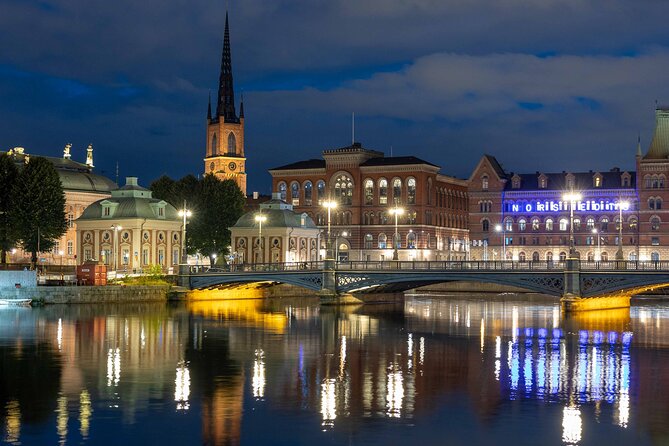
Long exposure is the signature technique here. In plain terms, the shutter stays open longer, allowing moving lights to stretch into lines. Cars and trains become graphic elements instead of distractions.
The technique can be tricky in city darkness. A slow shutter can blur the whole image if the camera moves. Bright lamps can also become overexposed, and the result may not look right on the first attempt. That is why direct guidance has real value. You can ask what to change rather than guessing through a series of random settings.
The guide can also help with composition, not just camera controls. One participant specifically learned ways to improve framing and discovered iPhone features that had gone unused. This is useful because a technically sharp photograph can still be dull if the subject sits poorly in the frame.
You should think of the walk as a practical lesson, not a guaranteed photo shoot where every picture turns out perfectly. Weather, darkness, traffic, and your own equipment will affect the results. The goal is to leave with techniques you can keep using after the evening ends.
Fika adds a welcome Swedish pause
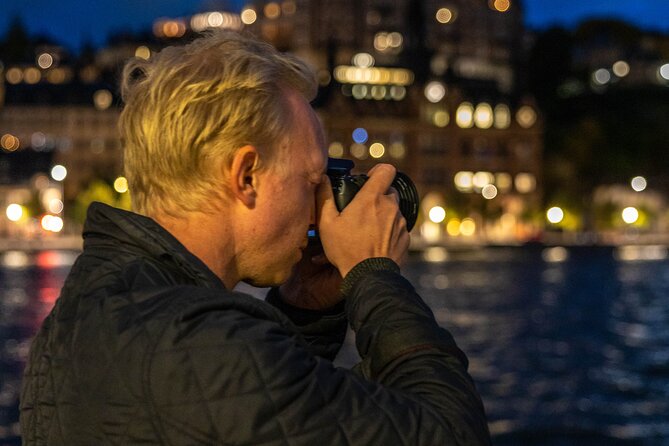
Traditional Swedish fika is included, with coffee and a cinnamon bun. This is more than a snack squeezed into the schedule. A short pause gives you time to review pictures, ask about settings, and warm up if the evening is cool.
It also gives the experience a local character that a standard photography class might lack. The food is simple, but it connects the activity to Swedish daily life. For many people, this may be the most relaxed part of the evening.
The supplied information does not specify exactly when or where the fika takes place. You should not assume it is a full meal. Have dinner separately if you need more than coffee and a bun.
What the private format is worth
At $159.07 per person, the cost depends heavily on how much you value personal instruction. You are paying for a professional photographer and guide, a private route, local insight into Stockholm and Swedish culture, flashlights, fika, and an eBook about city photography after the tour.
For a beginner who wants someone to explain low-light settings in real conditions, that package can be worthwhile. It saves you from working out night photography alone and gives you several different settings in one evening. A private format is also useful for a couple or small group with different skill levels because the route can be adjusted.
The value is weaker if you already know long exposure, composition, and night photography well. In that case, you may be paying mainly for company, viewpoints, and local guidance. Two hours is not a long time for a private photography session, so experienced photographers may want to compare the price with a longer private shoot.
The eBook adds some value after the walk. You can refer back to the advice when you are editing or taking city photographs elsewhere. Still, the main benefit is the live correction and local route, not the digital material alone.
Camera, phone, and tripod advice
You must bring your own camera or mobile phone. The activity does not provide photography equipment.
A tripod is optional, but I would bring one if you have a compact model that is easy to carry. It gives you more control during long exposures and reduces the chance of blurred buildings. A large, heavy tripod could make a two-hour walk less pleasant, so portability matters.
If you only have a phone, do not rule yourself out. The guide has demonstrated iPhone features and composition techniques, and the tour welcomes participants with mobile phones. Your phone may automatically handle some low-light work, but you will still benefit from learning how to frame moving lights and city views.
The guide provides flashlights. That helps with practical tasks in low light, but it does not replace a tripod or camera. The eBook arrives after the tour, giving you something useful to keep once the evening is over.
Who will enjoy this most
I would recommend the walk to:
- Beginners who want patient help with camera settings
- Couples looking for a private evening activity
- Phone photographers who want stronger night images
- Visitors who prefer local viewpoints over a standard sightseeing route
- People who enjoy learning a skill while seeing the city
- Photographers interested in light trails and long exposure
It is less suitable if you want a broad historical tour, a large number of landmarks, or a long professional photo session at each stop. It is also not ideal for anyone unwilling to walk outdoors after dark or accept a weather-dependent schedule.
The experience is offered in English. Most people can participate, service animals are allowed, and the meeting point is near public transportation. Confirmation is provided at booking, and free cancellation is available up to 24 hours before the start time. Changes or cancellations made inside that window are not refunded.
Should you book the Stockholm by Night Photo Walk?
Book it if you want more than pretty night views. The strongest reason to choose this experience is the combination of a private route and usable instruction. You can photograph Old Town, Riddarholmen, Mariaberget, and City Hall while learning how to handle difficult light, moving subjects, and composition.
The price is easier to justify for beginners, couples, and small groups who want personal attention. Bring a camera or phone, add a tripod if you own one, and arrive ready to walk. If your main goal is a formal sightseeing tour or advanced photography instruction, the two-hour format may feel brief.
For a relaxed evening that mixes Stockholm views, practical photo skills, and coffee with a cinnamon bun, this is a well-focused choice.
FAQ
How long does the Stockholm by Night Photo Walk last?
The experience lasts approximately two hours.
Where does the photo walk begin?
It begins at Stockholm City Museum, Ryssgården, 116 46 Stockholm, Sweden.
Where does the experience end?
The walk ends back at the meeting point at Stockholm City Museum.
Do I need to bring a tripod?
A tripod is recommended for difficult low-light conditions and long exposures, but it is optional. You can join with a camera or mobile phone.
Is fika included?
Yes. Traditional Swedish fika is included, with coffee and a cinnamon bun.
Is the experience private and what language is offered?
Yes. Only your group participates, and the experience is offered in English.
Just added in Stockholm
- Wolf and Wildlife Tracking in Sweden★ 5.0 · 1 review
- World War II Stockholm Old Town Walking Tour and Army Museum★ 4.6 · 4 reviews
- Viking History Half-Day Tour from Stockholm★ 5.0 · 1 review
- Stockholm Old Town Walking Tour + Archipelago Cruise★ 5.0 · 1 review
- Wine tasting in Old Town Stockholm★ 5.0 · 1 review
- Wolf and Wildlife Tracking in Sweden★ 5.0 · 9 reviews
- Scandinavian Art, Architecture and Design Tour in Stockholm★ 4.5 · 11 reviews
- Voyage of the Vikings: Guided Exploration Through Sweden’s Past★ 5.0 · 2 reviews
Walking Tours in Stockholm, compared.
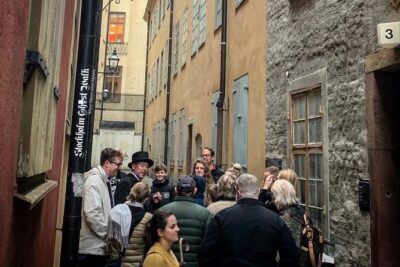
The Original Stockholm Ghost Walk and Historical Tour – Gamla Stan
Read our review →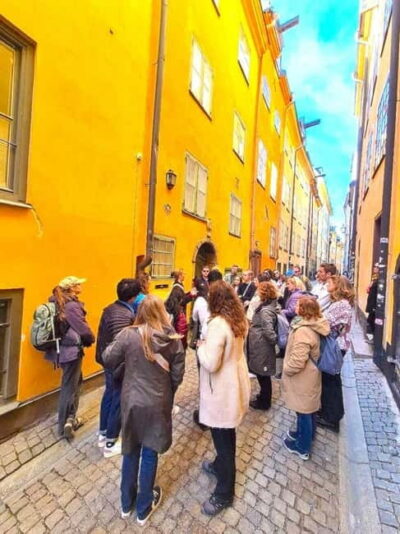
Best of Stockholm Walking Tour-3 Hours, Small Group max 10 people
Read our review →
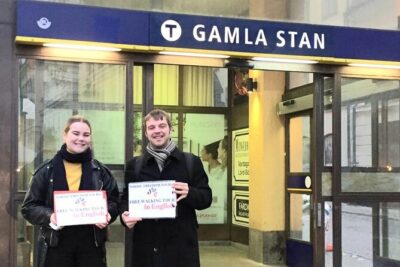
Walking Tour of Stockholm’s Old Town, Gamla Stan
Read our review →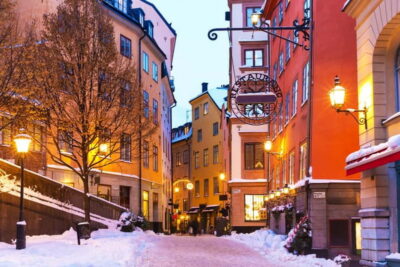
Browse the lists this tour appears in