
Review · WALKING TOURS IN STOCKHOLM
Classic Stockholm Small Group Walking Tour | 3 Hours
Stockholm’s past is hiding in plain sight. This three-hour walk links Södermalm, Gamla Stan, Riddarholmen, Helgeandsholmen, and City Hall, giving you a useful first look at the city’s history, politics, architecture, and daily life. I especially like the route’s mix of major sights and tiny details, from the 36 steps of Mårten Trotzigs Gränd to the coin-covered Iron Boy statue.
I also like the local touch provided by guides such as Kenneth and Rachel, who answer questions as you walk and offer advice on cafés, restaurants, transport, and places to visit afterward. The main consideration is pace: you cover a lot of ground in three hours, often on cobblestones, and the advertised maximum of 100 people is larger than most people would expect from the phrase small group.
In This Review
- Key points to know before booking
- Starting at Södermalm and Slussen
- Iron Square and the narrowest lane in Gamla Stan
- German Church, rune stone, and the Nobel Prize Museum
- Saint George, the Iron Boy, and the Finnish Church
- The Royal Palace and Stockholm’s royal past
- Riddarholmen, the House of Nobility, and Sweden’s courts
- Parliament, Rosenbad, and the modern Swedish state
- Finishing at Stockholm City Hall
- Guides, group size, and the human touch
- Price, pace, and practical value
- Who should book this Stockholm walk?
- FAQ
- How long is the Classic Stockholm Small Group Walking Tour?
- Where does the tour begin?
- Where does the tour end?
- Is the tour offered in English?
- Are museum and attraction entry fees included?
- Is the Royal Palace included inside the tour?
- How much does the tour cost?
- What level of fitness is needed?
- Can I cancel for a full refund?
- Should you book it?
Key points to know before booking

- A broad Stockholm introduction: The route moves from Södermalm through Gamla Stan and onward to City Hall, rather than focusing on just one square or neighborhood.
- Local guides with personal stories: Kenneth grew up in Stockholm and often adds memories from his childhood, while Rachel is praised for her warm, flexible approach.
- Many exterior sights, no museum admissions: You see the Royal Palace, Nobel Prize Museum, churches, Parliament, and City Hall from outside unless you arrange separate entry.
- A strong first-day choice: The walk helps you decide which museums, neighborhoods, restaurants, and viewpoints deserve more of your time.
- Cobblestones and moderate walking: Wear steady shoes and expect a fair amount of standing, walking, and uneven ground.
- Helpful follow-up advice: The guide can help you find lunch, navigate public transport, or reach your next stop after the formal tour ends.
Starting at Södermalm and Slussen
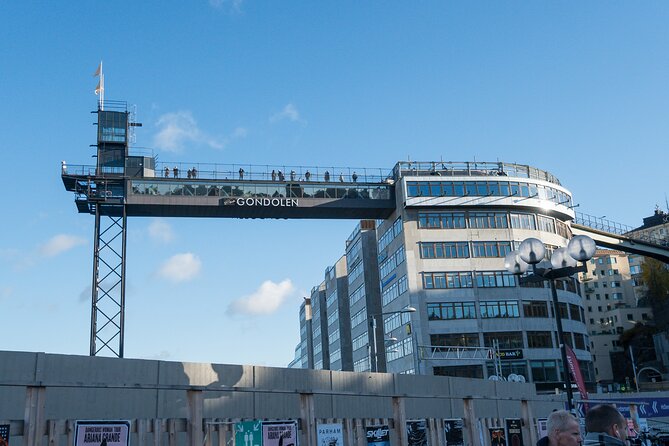
The walk begins near Södermalmstorg, at the east entrance of the Stockholm City Museum on Götgatan 1. You receive detailed meeting instructions by email before the start, along with a phone number for help if you have trouble finding the guide.
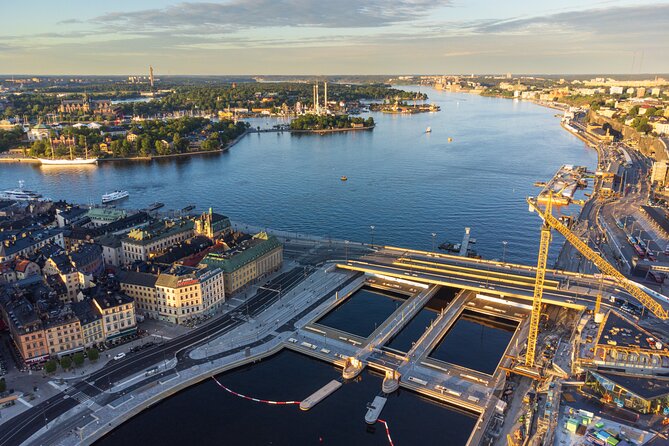
This is a practical starting point because Södermalm gives you an immediate sense of Stockholm as a city built across islands. You are not dropped straight into a single old-town lane. Instead, you begin near Slussen, the major connection between Södermalm and Gamla Stan.
Slussen means the lock, referring to the water passage between Lake Mälaren and the Baltic Sea. Your guide explains how this area helped shape Stockholm’s growth and points out major structures and the long redevelopment project that ran from 2016 to 2025.
The Slussen portion is brief, only about five minutes, but it gives useful context. You learn why this busy junction matters before walking toward the Old Town. The drawback is that the area is more about infrastructure and urban change than pretty postcard views, so visitors looking only for medieval streets may need to be patient at the start.
More Walking Tours in Stockholm
- Stockholm: Ghost Walk and Historical Tour
★ 4.7 · 2,206 reviews - Walking Tour of Stockholm Old Town
★ 5.0 · 1,175 reviews - The Original Stockholm Ghost Walk and Historical Tour – Gamla Stan
★ 4.5 · 1,165 reviews
Iron Square and the narrowest lane in Gamla Stan
Järntorget, or Iron Square, brings the story back to commerce. Its name recalls the trade and processing of iron, and the square later became linked with banking, restaurants, and cultural landmarks. Your guide uses the buildings around the square to explain how Gamla Stan shifted from a trading center to a modern historic district.
This is also where you are introduced to an important Swedish poet. The supplied details do not name the poet, so you may want to ask your guide for the full story and recommendations on where to learn more.
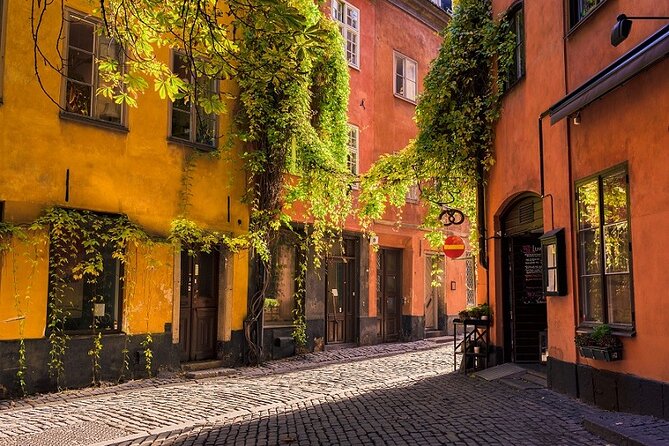
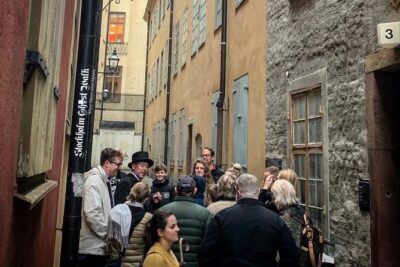
From there, the route turns into Mårten Trotzigs Gränd, one of Stockholm’s most memorable lanes. It is so narrow that you feel the shape of old Stockholm in your shoulders as much as in your eyes. The lane was connected with a German merchant named Mårten Trotzig in the 16th century, then later restored and preserved.
You climb 36 steps through the passage. That sounds minor on paper, but the combination of stairs, uneven stone, and a busy walking route makes good shoes important. This is a short stop, about ten minutes, yet it often becomes one of the most memorable parts of the walk because it feels very different from the grand squares nearby.
German Church, rune stone, and the Nobel Prize Museum
S:ta Gertrud, better known as the German Church, introduces Stockholm’s long connection with German-speaking merchants and residents. In 1571, King Johan III granted Germans the right to form their own congregation. By 1607, they had exclusive use of a church building that had previously been shared with the Finnish-speaking parish.
The guide explains how the church reflects the international character of medieval and early modern Stockholm. You do not enter the church on this tour, so the value comes from the exterior, the story, and the surrounding streets rather than an interior visit.
A short stop at Rune Stone U 53 connects present-day Stockholm with the Viking era. The stone is not treated as an isolated object. Instead, it becomes a way to discuss how older Swedish history remains part of the modern city.
At Stortorget, the oldest square in Stockholm, the focus shifts to national drama and cultural memory. The square was the center around which the city developed, and it was the site of the Stockholm Bloodbath in November 1520.
The surrounding buildings provide a quick lesson in architecture and urban history. The Stock Exchange Building houses the Nobel Prize Museum, while the Runestone House, Schantzska House, Seyfridtzska House, Scharenbergsska House, and Grillska House add a varied collection of façades.
You also hear smaller stories, including the cannonball tale connected with Stortorgs Källaren and the ABBA photograph taken by the fountain in 1976. These details are useful because they keep the stop from becoming a list of dates. You get medieval politics, Swedish cultural life, and popular music in one square.
The Nobel Prize Museum itself is not included. The museum opened in 2001 in the historic Stock Exchange Building, and you can return later if the displays interest you. The tour’s 15-minute stop is an introduction, not a museum visit.
Saint George, the Iron Boy, and the Finnish Church
Saint George and the Dragon is one of Stockholm Cathedral’s best-known works. The original wooden sculpture was placed in the cathedral in 1489, and it is commonly linked to Sten Sture the Elder and his victory over Christian I at the Battle of Brunkeberg in 1471.
The sculpture represents more than a familiar medieval legend. The guide explains its political meaning, with Saint George’s victory connected to Sweden’s struggle with Denmark. The original is inside Stockholm Cathedral, while a bronze and granite replica can also be seen in the city.
Again, you are not buying an admission ticket as part of this tour. If you want to see the sculpture inside the cathedral, plan a separate visit and confirm entry arrangements.
Then comes one of Stockholm’s smallest attractions, Järnpojken, or the Iron Boy. This tiny sculpture has gained affection far beyond its size. People leave coins, pat its head, and sometimes knit small winter clothes for it.
I like this stop because it slows the tour down. After churches, royal buildings, and national institutions, you get a simple piece of local public art. It is also a reminder that a city’s character is often found in small habits, not only famous monuments.
The Finnish Church adds another community story. Its building began as a royal tennis court before becoming a place of worship for Stockholm’s Finnish congregation. The church may be less grand than the German Church, but its change of purpose says a lot about how immigrant communities created lasting institutions in the city.
A completely different kind of day:
- Stockholm: City Archipelago Sightseeing Cruise with Guide
★ 4.3 · 10,798 reviews - Stockholm: Skansen Open-Air Museum Admission Ticket
★ 4.5 · 3,427 reviews - Stockholm: Archipelago Boat Tour
★ 4.4 · 3,110 reviews - Stockholm: Highlights Boat Tour
★ 4.3 · 2,542 reviews
The Royal Palace and Stockholm’s royal past
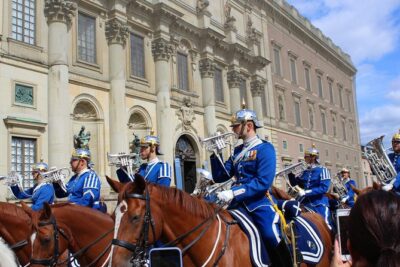
The Royal Palace receives about 15 minutes, enough for an exterior introduction and an explanation of the statues and royal figures around it. The palace began as part of the medieval Tre Kronor castle complex, named for the Three Crowns.
The original castle was destroyed by fire in 1697, after which the current palace developed into the large residence and ceremonial center you see today. The guide discusses the Hall of State, Royal Chapel, royal apartments, banquet rooms, and Gustav III’s Museum of Antiquities, though these interiors are not part of the walking tour.
You also hear about statues of Karl XIV Johan, Gustav III, Olaus Petri, also known as Master Olof, and Kristina Gyllenstjerna. These figures help connect the building to religious reform, monarchy, warfare, and political life.
Sweden’s current royal family moved to Drottningholm Palace in 1981, which now serves as its private residence. The Stockholm palace remains an official and ceremonial site.
The listing marks Royal Palace admission as not included, and the general tour information says attractions are not entered. Read this carefully before booking. If you want palace rooms, the Nobel Prize Museum, or church interiors, add those visits separately.
Riddarholmen, the House of Nobility, and Sweden’s courts
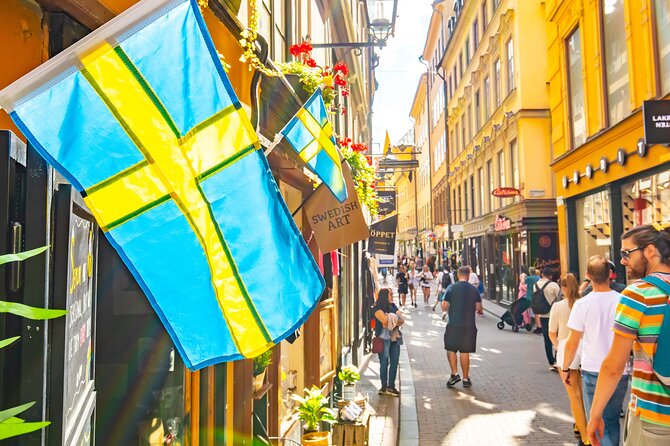
Riddarholmen gives the walking tour a calmer historical chapter. The Grey Friars Monastery was built here in the 1200s, making the island one of the oldest parts of Stockholm. After the Tre Kronor fire, government agencies and courts gradually moved in, changing the island from a religious center into an administrative one.
The guide points out Riddarholm Church and the statue of poet Evert Taube. This part of the route is especially useful if you want to understand how Stockholm’s old religious and royal districts later became places of law and government.
At Riddarhuset, the House of Nobility, you see a palace built between 1641 and 1674. It is owned and managed by Sweden’s knighthood and nobility, and its architecture reflects the influence of Sweden’s powerful aristocratic class.
Nearby, Bonde Palace is now home to the Supreme Court. The building links Sweden’s judicial present with the grand palaces of its past. You do not enter either building, but the guide helps you read them as working parts of the city rather than frozen monuments.
This is one of the tour’s strongest stretches for architecture and civic history. It also shows why a walking tour can be more useful than a quick sightseeing bus ride. You move slowly enough to notice how churches, palaces, courts, and public offices fit together.
Parliament, Rosenbad, and the modern Swedish state
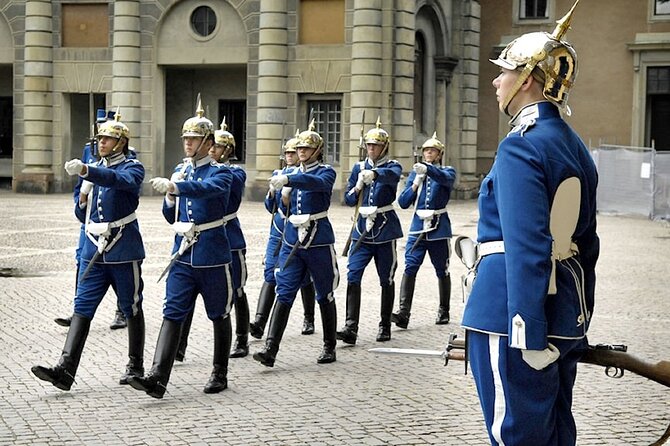
The route continues to Helgeandsholmen and the Parliament Building, Riksdagshuset. Built between 1895 and 1904, the complex originally included a building for Sweden’s central bank.
Sweden changed from a bicameral to a unicameral parliament in 1971. The former bank section was then changed to hold the new plenary chamber, giving the building a clear physical link to political reform.
The guide may also point out the statue called The Homeless Fox and discuss Greta Thunberg in connection with the building and Sweden’s contemporary political life. This is a useful change of pace after the medieval center. You see how the same compact city holds royal power, courts, parliament, and public debate within a short walk.
Rosenbad, the seat of the Swedish government, continues that civic theme. It is the place where ministers and public officials carry out national work. Since 1995, the Prime Minister’s official residence has been Sergelska Palatset, another detail that helps you understand the difference between government offices and private or official residences.
These stops are brief, usually five to 15 minutes. You should not expect an inside look at Swedish government. The benefit is orientation: after the tour, you will recognize the major institutions and have a better sense of how the city functions today.
Finishing at Stockholm City Hall
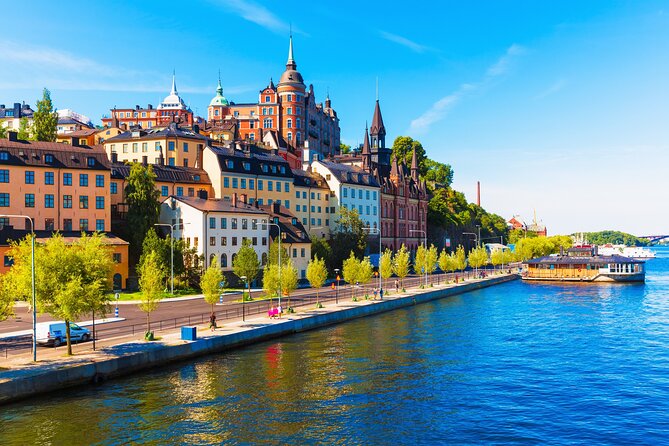
The tour ends at Stockholm City Hall, one of Stockholm’s most recognizable buildings. Its design combines Italian Renaissance and Nordic Gothic influences within the National Romantic style.
You hear about the Blue Hall and Golden Hall, the famous spaces used for events including the Nobel Banquet. The building is a fitting end because the route has moved from Viking-era traces and medieval trade to monarchy, law, parliament, and modern national ceremony.
The City Hall stop is listed as free on the walking tour, but the attractions are not entered. If you want to see the interiors, arrange a separate visit. The tour gives you the outside setting and the story, then leaves you near a major destination for the rest of your day.
A particularly useful feature is the guide’s help after the official finish. Kenneth and Rachel have helped people find restaurants, reach museums, understand trams, and get to their next destination. One guide even helped a couple regroup after their rideshare dropped them at the wrong place.
That kind of practical help matters on a first day in Stockholm. The walk does not simply end with a goodbye. You can ask for lunch advice, public transport directions, or suggestions for the next part of your visit.
Guides, group size, and the human touch
Kenneth is the guide most often named in the supplied feedback, and his strengths are clear. He grew up in Stockholm, answers questions during the walk rather than postponing them, and adds memories from his childhood in the city.
Rachel receives similar praise for her friendly manner, local recommendations, photo help, and ability to adjust the discussion to a group’s interests. One architectural professional appreciated that she pointed out design details, while another person with bad knees found the pace manageable.
Several bookings became private walks when only one or two people had reserved a place. That is a pleasant possibility, but it is not guaranteed. The stated maximum is 100 participants, so you should confirm the expected group size if a small party is essential to your decision.
The English delivery is the main option presented, with guides also offering Swedish. The best part of the guiding style is the mix of facts, humor, questions, and local advice. You are not simply marched from one photo stop to the next.
Price, pace, and practical value
At $66.52 per person, this is not the cheapest way to see Stockholm’s Old Town. Still, the value is reasonable if you want a three-hour orientation with a local guide, rather than a short stroll around Stortorget.
You cover several districts and a wide range of subjects: Viking traces, medieval trade, religious communities, royal power, Swedish politics, architecture, public art, and food suggestions. A self-guided walk costs less, but it will not answer your questions in the moment or help you connect the buildings to one another.
The walk requires moderate physical fitness. Cobblestones, stairs, standing, and a steady route through several neighborhoods are part of the experience. Wear comfortable shoes, especially for Mårten Trotzigs Gränd and the older lanes of Gamla Stan.
The tour is offered in English, uses a mobile ticket, and is near public transport. Service animals are allowed. Transport to the meeting point, gratuities, attraction tickets, and any museum or special-site entry cost extra.
Free cancellation is available if you cancel at least 24 hours before the local start time. Cancellations or changes made within 24 hours are not refunded or accepted.
Who should book this Stockholm walk?
I would choose this tour early in a Stockholm visit. It gives you enough background to make smarter decisions about the Royal Palace, Nobel Prize Museum, City Hall, Drottningholm, ABBA Museum, Vasa Museum, restaurants, and nearby neighborhoods.
It suits first-time visitors, history fans, architecture lovers, and anyone who prefers conversation to a recorded audio guide. It also works well for people who want local food advice and practical help with the next part of their day.
You may want a different experience if you dislike uneven streets, want interior access to every major sight, or prefer a tightly focused tour of Gamla Stan alone. The route is broad, and some stops are short. You will see many places, but you will need separate visits for the interiors.
With 96 reviews averaging five stars and 100 percent recommendation among the supplied ratings, the strongest pattern is clear: the guides make the experience work. Kenneth’s personal connection to Stockholm, Rachel’s flexibility, the useful restaurant suggestions, and the willingness to answer questions are the main reasons to pay for this walk.
FAQ
How long is the Classic Stockholm Small Group Walking Tour?
The tour lasts approximately three hours.
Where does the tour begin?
It begins at the east entrance of the Stockholm City Museum near Södermalmstorg. The listed meeting address is Götgatan 1, 116 46 Stockholm, Sweden.
Where does the tour end?
The walk ends at Stockholm City Hall, in a different location from the meeting point.
Is the tour offered in English?
Yes. The experience is offered in English, and the guides also offer Swedish.
Are museum and attraction entry fees included?
No. The tour does not include admission to museums or special sites, and the attractions are not entered during the walk.
Is the Royal Palace included inside the tour?
No. The guide introduces the Royal Palace and its history, but admission is not included.
How much does the tour cost?
The listed price is $66.52 per person.
What level of fitness is needed?
A moderate level of physical fitness is recommended. Expect walking on cobblestones, some stairs, and periods of standing.
Can I cancel for a full refund?
Yes, if you cancel at least 24 hours before the experience begins. Cancellations or changes made less than 24 hours before the start are not accepted, and the payment is not refunded.
Should you book it?
Book this tour if you want a friendly, story-led introduction to Stockholm before exploring on your own. The route covers far more than Gamla Stan, and the guide’s advice can save you time later.
I would especially choose it for a first or second day in the city, when you still need to understand the layout. Just bring good shoes, remember that interiors cost extra, and confirm the likely group size if the small-group promise is central to your plans.
Just added in Stockholm
- World War II Stockholm Old Town Walking Tour and Army Museum★ 4.6 · 4 reviews
- Wolf and Wildlife Tracking in Sweden★ 5.0 · 1 review
- Viking History Half-Day Tour from Stockholm★ 5.0 · 1 review
- Stockholm Old Town Walking Tour + Archipelago Cruise★ 5.0 · 1 review
- Wine tasting in Old Town Stockholm★ 5.0 · 1 review
- Wolf and Wildlife Tracking in Sweden★ 5.0 · 9 reviews
- Scandinavian Art, Architecture and Design Tour in Stockholm★ 4.5 · 11 reviews
- Voyage of the Vikings: Guided Exploration Through Sweden’s Past★ 5.0 · 2 reviews
Walking Tours in Stockholm, compared.
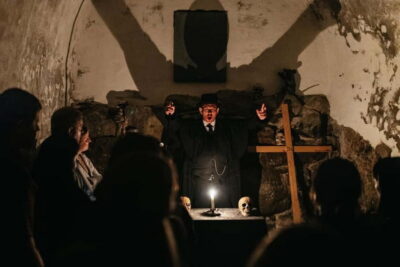
The Original Stockholm Ghost Walk and Historical Tour – Gamla Stan
Read our review →
Best of Stockholm Walking Tour-3 Hours, Small Group max 10 people
Read our review →
Walking Tour of Stockholm’s Old Town, Gamla Stan
Read our review →
Browse the lists this tour appears in