
Review · STOCKHOLM TOURS
Bloody Stockholm 2h – ghosts, horror and Dark Folklore Tour
Old Stockholm has a sinister side. This walking tour leads you from Stortorget through Gamla Stan and toward Kungsträdgården, mixing grim events, Swedish folklore, executions, curses, and supernatural creatures. I like the way it uses real streets and old buildings as the setting, rather than treating Stockholm as a stage for a standard ghost story.
I especially like the focus on old Swedish beliefs, including the Tomte, Näcken, Skogsrået, and the undead Myrling. I also like the strong historical material at Stortorget, where the tour explores executions connected to the Danish takeover of Stockholm. The main thing to consider is that the tour may lean more toward dark history than pure ghost hunting, and the advertised duration is approximately 1 hour 30 minutes, despite the Bloody Stockholm 2h name.
The tour is at its best when your guide connects a charming alley or church door with the fears once attached to that place. Past sessions have featured guides such as Jonathan and Åsa, both praised for clear storytelling, humor, and a willingness to answer questions. If you enjoy unsettling history more than jump scares, this is a good way to see the Old Town from a different angle.
In This Review
- Key points at a glance
- Starting at Stortorget with Stockholm’s bloodiest chapter
- Prästgatan and the alley once called Hell
- Iron, doors, and the danger facing newborns
- Logårdstrappan and the spirits beneath the water
- Kungsträdgården and the forest’s less friendly residents
- Saint Jacob’s Church and the weak points in sacred space
- How the guide shapes the experience
- Is the dark folklore stronger than the ghost stories?
- Timing, weather, and practical value
- Who will enjoy Bloody Stockholm?
- Should you book this Stockholm ghost tour?
- FAQ
- How long is Bloody Stockholm?
- Where does the tour begin?
- Where does the tour end?
- Is the tour offered in English?
- What does the tour include?
- How large can the group be?
- Can I cancel for a full refund?
Key points at a glance
- Stortorget’s executions: Learn about the deaths of around 90 people after King Christian’s seizure of Stockholm, along with old beliefs about using body parts in magic.
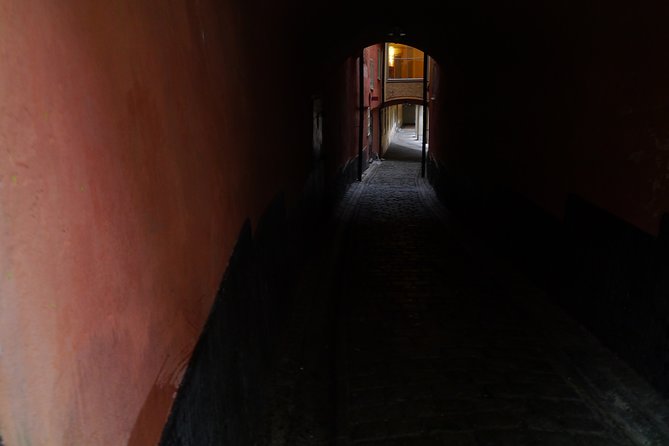
- Prästgatan’s former Hell: Walk through an alley once associated with the name Hell and the people who lived there.
- Swedish protective folklore: Hear why iron, doors, baptism, and household customs mattered when people feared elves, trolls, the Devil, and restless souls.
- Water spirits and forest creatures: Meet Näcken, Bäckahästen, Sjörå, Skeppsrå, Skogsrået, and the unsettling Myrling.
- A small-group walking format: The maximum group size is 30, though some sessions have been much smaller.
- A useful route: The walk begins at the Nobel Prize Museum and ends beside Saint Jacob’s Church near Kungsträdgården, about a 10-minute walk from the starting area.
Starting at Stortorget with Stockholm’s bloodiest chapter
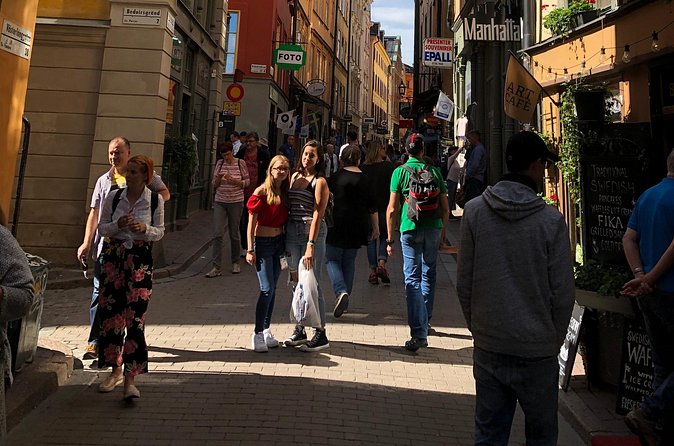
The tour begins outside the Nobel Prize Museum at Stortorget, the broad square at the heart of Stockholm’s Old Town. This is a convenient meeting point, but it is also the right place for the subject matter. The square is attractive and well known, yet its past includes one of the city’s most chilling episodes.
Here you hear about the executions of around 90 people connected with the Danish King Christian’s capture of Stockholm. The guide also discusses the folk beliefs surrounding death and the human body. Blood from the dead could be linked with curses, while parts of the gallows and other remains were believed to have magical uses.
That material gives the tour a sharper edge than a simple walk through picturesque streets. You are not just hearing that an area is haunted. You are learning how people once explained sickness, bad luck, revenge, and supernatural danger.
I find this opening especially effective for setting expectations. The tour is not only about ghosts appearing in windows. It is about death as a physical and social presence, and about the practical ways people once tried to control forces they did not understand.
The stop lasts about 10 minutes. Since it takes place outdoors, your ability to hear will depend on the group and street conditions. Stay close to the guide, especially if the square is busy.
More things to do in Stockholm:
- Stockholm: City Archipelago Sightseeing Cruise with Guide
★ 4.3 · 10,798 reviews - Stockholm: Skansen Open-Air Museum Admission Ticket
★ 4.5 · 3,427 reviews - Stockholm: Archipelago Boat Tour
★ 4.4 · 3,110 reviews
Prästgatan and the alley once called Hell
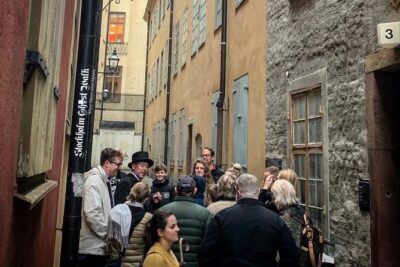
From Stortorget, the route continues along Prästgatan. The focus here is a section once known as Hell, connected with the people who lived in this part of the Old Town.
This is a short stop, but it shows one of the tour’s best ideas: names and places can preserve old fears. A narrow lane that now looks like a pleasant part of Gamla Stan once carried a much darker association. You get a sense of how folklore grew from the physical character of the city and from the lives of ordinary residents.
The stop takes about 10 minutes. Do not expect a dramatic performance at every corner. The appeal is the contrast between the calm appearance of the alley and the disturbing ideas once attached to it.
If you enjoy local stories that connect language, buildings, and daily life, this part should work well. If you want a constant stream of murders and apparitions, it may feel quieter.
Iron, doors, and the danger facing newborns
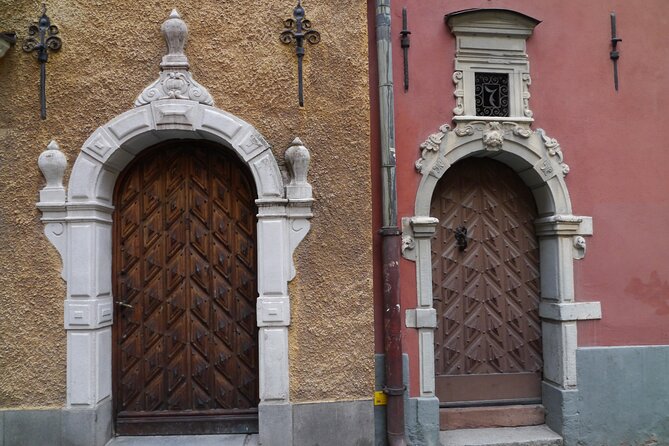
At a house in the Old Town, the guide turns to protective customs. Iron was used against dangerous supernatural beings, including elves associated with mist and souls that had not found rest. You also hear about the Swedish Tomte, a household spirit with a much older and stranger role than the friendly Christmas figure familiar to many people today.
The discussion then moves to doors and newborn children. Before baptism, a baby was believed to lack full protection from trolls and the Devil. The guide explains the kinds of safeguards people thought could protect the home and child.
This section is valuable because it shows folklore as part of ordinary life. Supernatural beliefs were not just stories told for entertainment. They could shape how a family treated a doorway, guarded a child, or responded to strange weather and illness.
The tour gives you a look at protective folklore, not only stories about monsters attacking people. That makes the subject more useful for understanding the old Swedish worldview.
The stop is scheduled for about 10 minutes. Some of the material may be unfamiliar, so this is a good place to ask questions. Guides on this tour have been praised for being open to humor and questions, which helps keep the subject from becoming too solemn.
Logårdstrappan and the spirits beneath the water
At Logårdstrappan, the subject changes from streets and houses to water. The guide introduces several Swedish water beings, including Näcken, Bäckahästen, Sjörå, and Skeppsrå.
Näcken is linked with water and danger. Bäckahästen is described as the Swedish counterpart to the Kelpie, a creature associated with luring people toward the water. Sjörå and Skeppsrå belong to the folklore of the sea and ships.
The common thread is temptation. These beings could draw people into deep water, drown them, or punish those who failed to respect the natural world. The stories reflect a real fear of lakes, rivers, and the sea, especially when people had little protection against cold water or sudden accidents.
This is one of the most unusual parts of the walk for visitors who know the usual Scandinavian legends but have not heard much Swedish folklore. The names may be difficult to remember, but the guide’s explanations make the different creatures easier to separate.
The stop lasts about 10 minutes. It is also a reminder that this tour is not limited to Stockholm’s documented crimes. It uses local folklore to explain how people once understood dangerous places.
A completely different kind of day:
- Stockholm: Highlights Boat Tour
★ 4.3 · 2,542 reviews - Stockholm Pass: Save up to 50% – Includes Vasa Museum Ticket
★ 4.1 · 2,392 reviews - Stockholm: Ghost Walk and Historical Tour
★ 4.7 · 2,206 reviews - Walking Tour of Stockholm Old Town
★ 5.0 · 1,175 reviews
Kungsträdgården and the forest’s less friendly residents
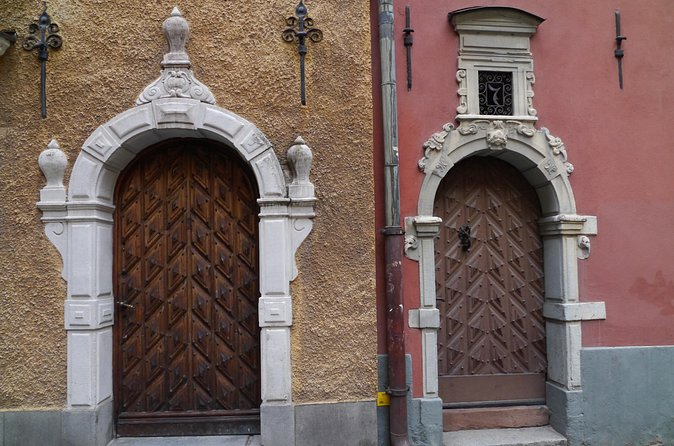
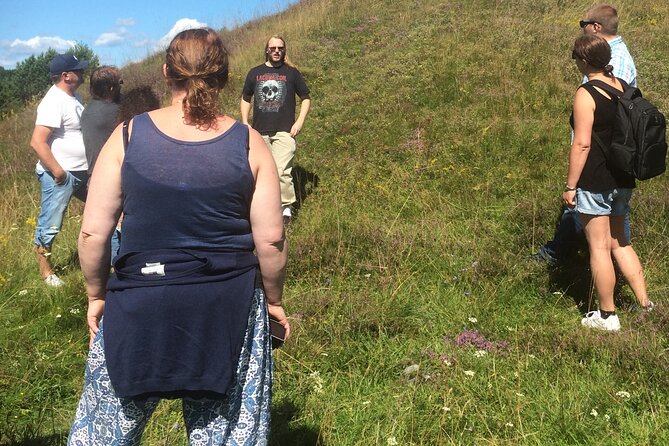
The walk then reaches Kungsträdgården, where the guide introduces more supernatural beings. The main figure here is Skogsrået, also called Huldra in related Scandinavian traditions. This forest being could appear attractive or inviting, but she was not harmless.
You also hear about the Myrling, an undead child. The story is disturbing because it touches on abandonment, death, and the return of someone who was not properly laid to rest. This is darker and sadder than a simple monster tale.
The stop lasts about 20 minutes, making it the longest section of the tour. That extra time allows the guide to explain how forest folklore reflected fear of leaving the safety of settled areas. In older stories, the woods were not just scenic places for a walk. They were uncertain territory filled with creatures that could mislead, seduce, or harm you.
The shift from the crowded Old Town streets to the park also helps the storytelling. The setting changes, and so does the type of danger. You move from executions and household protection to the risks beyond the city walls.
One past session received praise for giving a 10-year-old a mixture of history, mystery, and suspense. Still, parents should use their judgment. Stories involving death, undead children, executions, and the Devil may be too strong for some younger children.
Saint Jacob’s Church and the weak points in sacred space
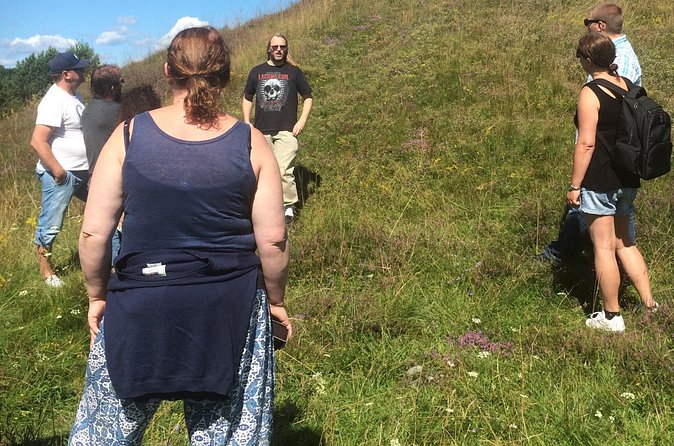
The final stop takes place outside Saint Jacob’s Church on Västra Trädgårdsgatan. Here the guide discusses the church door, the weak points of the building, and the ways people tried to protect sacred places.
The subject also includes an exorcism involving a child at baptism. The guide explains what people believed could happen during this vulnerable moment, and how church rituals were meant to guard against evil.
Another thread concerns punishment through supernatural or religious means. The guide asks what you might do if you wanted to punish a serious enemy, then connects that question with older beliefs and practices.
This ending brings several earlier subjects together. You have heard about babies before baptism, protection at doors, restless spirits, and the need to guard against forces that could cross between worlds. A church may look secure, but old folklore often focused on its entrances and weak spots.
The tour finishes outside Saint Jacob’s Church, beside Kungsträdgården. From there, it is about a 10-minute walk back toward the starting point and the Old Town. That makes the route useful if you plan to continue your evening near the park, though you should allow extra walking time if you need to return to Stortorget.
How the guide shapes the experience
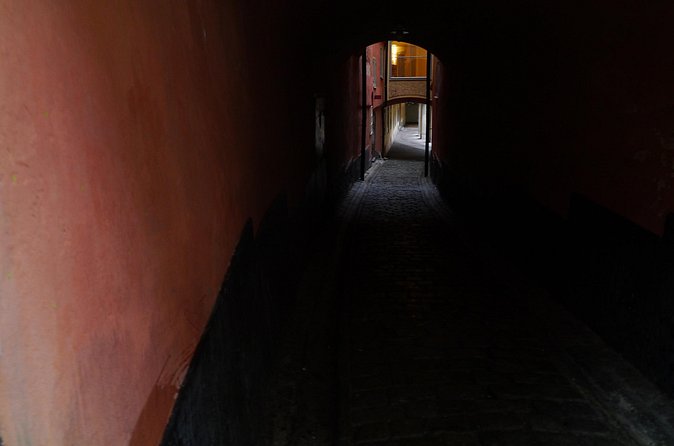
The guide matters greatly here. The subject can become a list of strange names unless someone explains why the stories mattered and how they fit Swedish life.
Jonathan has been praised for his facts, dirty historical details, humor, and ability to answer questions. One session ran much longer than expected, reaching more than two and a half hours. That suggests a guide who can become absorbed in the subject, but it also shows why you should not assume every tour will finish at exactly the same time.
Åsa has also received praise for being engaged and well informed. A very small group of three made one tour feel especially personal, with more room for questions and conversation.
The maximum group size is 30 people. That is not a tiny group, so your position near the guide may affect how much you hear. At the same time, the experience can sometimes be much smaller, which changes the feel of the walk. Ask questions when there is a natural pause, and stay near the guide at each stop.
The tour is offered in English. It is also described as suitable for most people, with service animals allowed and public transportation nearby.
Is the dark folklore stronger than the ghost stories?
The title suggests a classic ghost tour, but the actual content is broader. You get executions, magical uses of body parts, curses, dangerous spirits, baptism customs, water creatures, forest beings, and church folklore.
I would describe it as a dark history and folklore walk with ghost-tour elements. One session was described as an informative stroll rather than a traditional ghost tour, and that is a fair way to frame it.
This distinction matters. If you want actors, theatrical scares, or a carefully staged haunted-house mood, this may not be the right choice. If you want to understand why people feared certain places and creatures, the tour offers much more.
The balance may also vary by guide. One guide acknowledged that a session focused too little on dangerous folklore and promised to adjust the tour. That is useful information: the emphasis can shift between documented history and supernatural beliefs.
Timing, weather, and practical value
The experience is listed as approximately 1 hour 30 minutes, while its name refers to two hours. A past tour lasted about two and a half hours, so I would keep your evening flexible. The scheduled stops add up to about 75 minutes, with the remaining time used for walking and explanation.
You are outdoors for the entire route. Wear shoes that are comfortable on Old Town streets, and bring clothing suited to the weather. One person enjoyed the walk despite poor weather, but rain or cold can make it harder to hear and concentrate.
There are no admission tickets listed for the stops. The included feature is the guide, so the value comes from interpretation rather than entry to a museum, church, or paid attraction. That can be good value if you want a focused introduction to Stockholm’s darker past without spending time inside another venue.
The maximum group size is 30, and the start is near public transportation. The route is not a loop, but the end point is practical for continuing around Kungsträdgården or walking back to Gamla Stan.
Free cancellation is available when you cancel at least 24 hours before the start time. Cancellations within 24 hours are not refunded, and late changes are not accepted.
Who will enjoy Bloody Stockholm?
I would recommend this walk if you:
- Like local folklore more than polished stage effects.
- Want stories about executions, curses, death, and supernatural protection.
- Have already seen the main sights of Gamla Stan and want a different angle.
- Enjoy asking questions and listening to a guide explain unusual beliefs.
- Are visiting with older children or teenagers who can handle grim subjects.
- Prefer a walking experience with no listed admission fees.
You may want to skip it if you dislike stories about dead children, exorcism, executions, or the Devil. It may also disappoint you if you expect every stop to involve a documented haunting.
The experience suits an evening in Stockholm, but the outdoor format means you should plan around the weather. I would also avoid scheduling another fixed activity immediately afterward, since the finish time can vary.
Should you book this Stockholm ghost tour?
Book it if you want dark local history with Swedish folklore, not just a parade of haunted-house clichés. The strongest parts are the real setting, the Stortorget execution story, the unusual protective customs, and the range of Swedish supernatural beings.
I would describe it as a good-value guided walk for curious visitors who want context and storytelling. The main caution is the shifting balance between history and folklore, along with the possibility that a passionate guide may run well beyond the advertised time.
If that sounds appealing, meet at Stortorget ready for a thoughtful, sometimes grim, and often surprising walk through Stockholm’s old fears.
FAQ
How long is Bloody Stockholm?
The experience is listed as approximately 1 hour 30 minutes, although the tour name refers to two hours. A past session lasted more than two and a half hours, so allow extra time.
Where does the tour begin?
It begins at the Nobel Prize Museum, Stortorget 2, in Stockholm’s Old Town.
Where does the tour end?
It ends outside Saint Jacob’s Church at Västra Trädgårdsgatan 2A, beside Kungsträdgården. The end point is about a 10-minute walk from the starting area.
Is the tour offered in English?
Yes. The tour is offered in English.
What does the tour include?
A guide is included. The stops themselves have no admission ticket charge listed.
How large can the group be?
The maximum group size is 30 people. Some sessions may be much smaller.
Can I cancel for a full refund?
Yes, if you cancel at least 24 hours before the experience begins. Cancellations within 24 hours are not refunded, and changes within that period are not accepted.
Just added in Stockholm
- World War II Stockholm Old Town Walking Tour and Army Museum★ 4.6 · 4 reviews
- Wolf and Wildlife Tracking in Sweden★ 5.0 · 1 review
- Viking History Half-Day Tour from Stockholm★ 5.0 · 1 review
- Stockholm Old Town Walking Tour + Archipelago Cruise★ 5.0 · 1 review
- Wine tasting in Old Town Stockholm★ 5.0 · 1 review
- Wolf and Wildlife Tracking in Sweden★ 5.0 · 9 reviews
- Scandinavian Art, Architecture and Design Tour in Stockholm★ 4.5 · 11 reviews
- Voyage of the Vikings: Guided Exploration Through Sweden’s Past★ 5.0 · 2 reviews
Stockholm Tours, compared.
City Archipelago Sightseeing Cruise with Guide
Read our review →


Stockholm Pass: Save up to 50% – Includes Vasa Museum Ticket
Read our review →
The Original Stockholm Ghost Walk and Historical Tour – Gamla Stan
Read our review →Browse the lists this tour appears in