
Review · UPPSALA TOURS
Uppsala’s biggest attractions – 1h city walk in Uppsala city.
Uppsala’s grand story fits into one walk. This guided tour links the university, cathedral, castle, and old city in a brisk introduction to Sweden’s former intellectual and religious center. I like the excellent local anecdotes, including a bankrupt builder, student prisons, cathedral strikes, and a royal coronation that had to move to Stockholm. I also like the chance to hear about Celsius, Linné, and Rudbeck while seeing the places tied to their work.
The main drawback is that this is not a slow, scenic stroll. You may spend much of the hour standing while the guide points out buildings and explains their stories. The price, $91.75 per person, is also high for a short city walk, so you should book it for the guide’s storytelling and access to context, not simply for the distance covered.
In This Review
- Key points to know before you book
- Why this one-hour Uppsala walk is worth considering
- Riddartorget and the first look at university Uppsala
- Gustavianum and Olof Rudbeck’s unusual theater
- Uppsala Cathedral and the cost of greatness
- St. Erik’s Square and the university inside the city
- Uppsala Castle and the view toward the Botanical Garden
- The coronation that Uppsala could not finish preparing for
- Price, group size, and what you actually receive
- Who will enjoy this experience most
- My verdict: book it for the stories
- FAQ
- Where does the Uppsala city walk begin?
- Where does the tour end?
- How long does the tour last?
- Are Gustavianum and Uppsala Castle admission tickets included?
- What is the maximum group size?
- Can I cancel for a full refund?
Key points to know before you book
- The route connects Uppsala’s biggest historic sights: You visit the university area, Gustavianum, Uppsala Cathedral, St. Erik’s Square, and Uppsala Castle.
- The stories are unusually specific: Hear about the University House’s financial troubles, Olof Rudbeck’s anatomical theater, cathedral construction disputes, and the murder at the castle.
- The tour is guide-led rather than museum-heavy: Gustavianum and Uppsala Castle are discussed, but admission is not included.
- Expect a compact history lesson: The walk covers the 12th century through about 1900, with special attention to Uppsala’s university and royal past.
- The group can have up to 20 people: That keeps the experience fairly small, though the quality depends heavily on the guide.
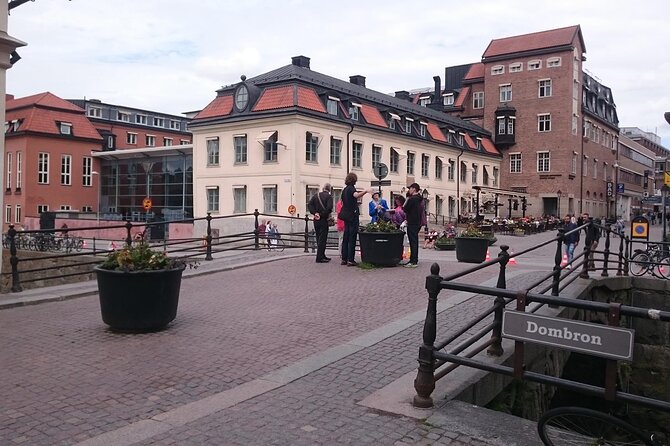
- You return to the starting point: Meet at Riddartorget, and the activity ends there.
Why this one-hour Uppsala walk is worth considering
Uppsala is easy to underestimate. Many people come for the cathedral or the university, take a few photos, and move on. This walk gives you the missing links. It explains why the university mattered, how the cathedral shaped the city, and why Uppsala’s royal ambitions did not always work out as planned.
The authorized Uppsala guide is the heart of the experience. The strongest praise has gone to guides Anette and Jonathan, both of whom were described as engaging, clear, and able to answer questions. Jonathan even impressed people who already lived in Uppsala, which is useful evidence that the tour is not only for first-time visitors.
Still, you should know what kind of tour you are booking. The route is short and packed with information. One piece of direct feedback called it a stationary train of a walk because the group spent more time listening in place than moving from sight to sight. Another pointed to a loose thread between the different stories.
I see that as the central tradeoff. If you want a polished historical introduction with colorful details, this walk can give your visit shape. If you want continuous walking, quiet corners, and long time inside each building, you may find it too compressed.
More Walking Tours in Uppsala:
- Uppsala: City Highlights and Hidden Gems Walking Tour
★ 4.7 · 12 reviews - Best of Uppsala: Private Walking Tour with a Local
★ 3.9 · 7 reviews - Uppsala Must See 2h city walk – 2h tour of all big attractions!
★ 5.0 · 4 reviews
Riddartorget and the first look at university Uppsala
The tour begins at Riddartorget, a practical central meeting point near public transportation. From here, the guide moves into Uppsala’s university quarter, where the city’s academic identity is visible in its buildings, paths, and old stones.
The first major stop is the University Main Building, usually called the University House. The building’s decoration is part of the story, not just background scenery. Its builder went bankrupt because the project became so costly, a fitting opening for a university city where prestige could be an expensive habit.
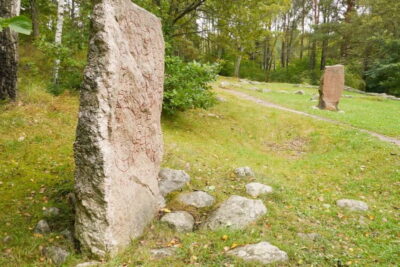
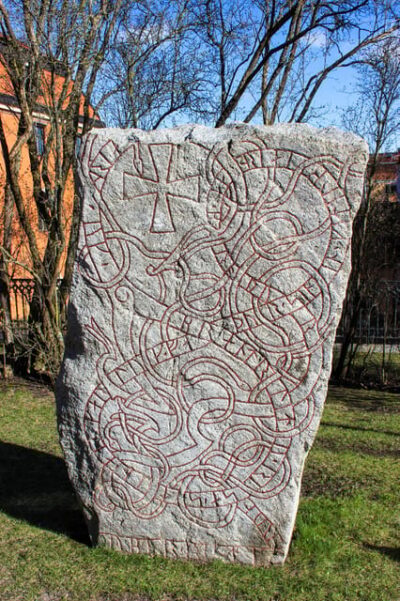
You also hear about the cathedral, built from the 1270s to the 1430s, and visit rune stones in the university park. These stones provide a reminder that Uppsala’s story did not begin with the university. The city reaches back through medieval Christianity and even earlier Scandinavian culture.
This opening section is scheduled for about 15 minutes and has no separate admission charge. It is a good use of time because you receive a broad map of the city before the guide narrows the focus to the university and cathedral.
Gustavianum and Olof Rudbeck’s unusual theater
Gustavianum brings you into the academic world of old Uppsala. The tour discusses the building, the earlier Academia Carolina, and the collections that once crowded the university’s rooms.
One of the most memorable subjects is the anatomical theater built by Olof Rudbeck. Its design was brilliant for its time, allowing people to observe anatomical demonstrations from tiered seating. The practical flaw was basic but serious: it had no ventilation system. You get the clever design and the uncomfortable reality together, which makes the story easier to remember.
The guide also explains how a party hall had to keep moving through two additional buildings because the university collections needed the space. That detail gives you a sense of how scholarship worked before modern museums, storage rooms, and purpose-built research facilities.
The tour places Rudbeck alongside other major Uppsala names, including Anders Celsius and Carl Linnaeus. You hear about the people, but also about the buildings and institutions that helped shape their work. That broader approach is useful. You are not simply given a list of famous Swedes. You are shown how a university city grows around its teachers, collections, lectures, and arguments.
The Gustavianum portion lasts about 10 minutes, and admission is not included. The supplied information does not promise a full museum visit, so treat this as an exterior and historical introduction unless your guide says otherwise. That distinction matters if you are hoping to spend time examining the collections.
Uppsala Cathedral and the cost of greatness
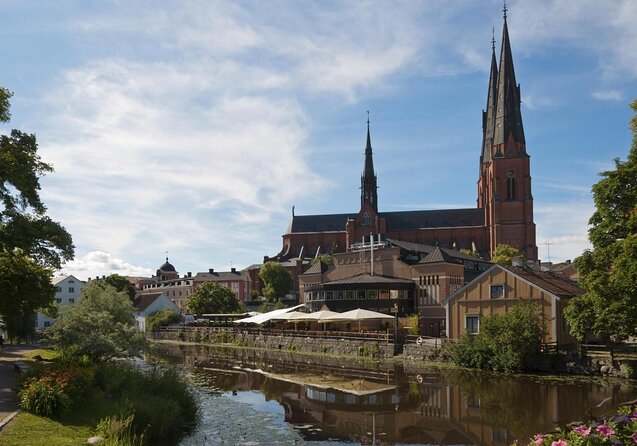
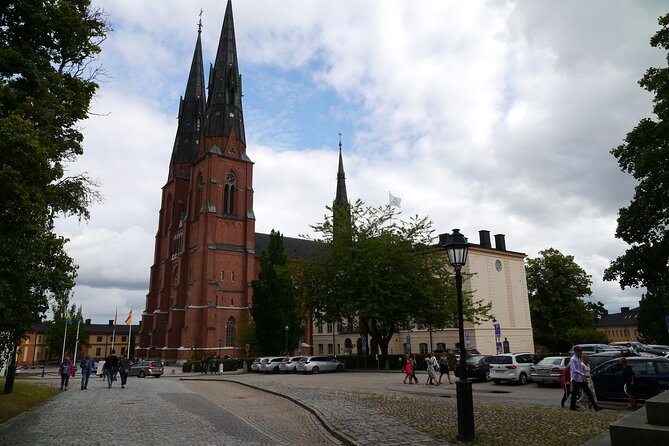
Uppsala Cathedral is the largest cathedral in the Nordic countries, and the tour gives it about 20 minutes. Its construction took several centuries, from the 1270s to the 1430s, so the building represents more than one generation’s ambition.
The guide connects the cathedral to the medieval buildings around it, including the kanikhus, or houses used by cathedral clergy. You also hear how the university’s foundation was tied to a desire to outdo the Danes. That rivalry helps explain why a university mattered here as a political and cultural project, not only as a place for lectures.
The stories about construction are especially good for visitors who prefer human details to dates. Limestone workers were paid more than soldiers, which helped trigger strikes. The cathedral’s building program created disputes, resentment, and gossip. Large monuments rarely rise smoothly, and Uppsala’s cathedral was no exception.
This is also the point where the tour’s format becomes clear. You will likely spend time looking up at the architecture while the guide supplies the details that are difficult to see from the outside. The cathedral itself is free to visit on this walk, but the route does not promise a long interior exploration. If you want time for chapels, memorials, or quiet reflection, return later on your own.
More Uppsala trips:
- Stockholm Viking History Full Day Tour to Sigtuna + Uppsala
★ 4.6 · 218 reviews - Cube of Art Uppsala Museum of Interactive Art
★ 4.5 · 69 reviews - Roofwalking on the worlds greatest pink castle!
★ 5.0 · 15 reviews - Guided tour 90min at Old Uppsala mounds and old Uppsala church
★ 4.5 · 5 reviews
St. Erik’s Square and the university inside the city
At St. Erik’s Square and the Consistory House, the story shifts from grand institutions to daily control. The guide discusses the plague’s arrival in Uppsala, meat sales at Oxblodstorget, and the sheds built into the wall around the cathedral.
The Consistory House had an especially broad role during the 1750s. It contained a prison, police functions, and administration for students. This gives you a sharper picture of the university as a city within the city. Students were not simply young scholars wandering between lectures. They lived under their own rules and could face their own system of discipline.
The tour also covers Uppsala during the plague years of 1709 to 1711. That subject adds a darker layer to the elegant squares and academic buildings. It shows how disease, food, authority, and religion were all part of urban life.
This section is scheduled for about 10 minutes. The stop may appeal most to people who enjoy social history, since the focus is less on grand architecture and more on how the city worked. It is also one reason the tour can be useful for people who already know the main sights. Familiar buildings acquire new functions and problems.
Uppsala Castle and the view toward the Botanical Garden
The final major stop is Uppsala Castle. Here, the guide tells the story of a murder connected with the castle and takes you into the courtyard, where you can look over the Botanical Garden.
The view is a strong finish because it shifts your attention from medieval and academic Uppsala to the city’s royal and scientific sides. The Botanical Garden is described as one of the oldest botanical gardens in Europe, and its position below the castle makes the connection between royal power and scientific study easy to see.
The castle section is listed at about 20 minutes, though admission is not included. As with Gustavianum, you should not assume that the ticket covers entry into the interior. The experience centers on the castle setting, the courtyard, the view, and the story of the murder.
The castle also provides a useful ending to the city’s political story. Earlier, you hear about Uppsala’s academic ambitions and religious power. Here, you hear about royal drama and violence. It is a more memorable finish than simply ending at another university building.
The coronation that Uppsala could not finish preparing for
One of the strangest stories on the route concerns Queen Kristina’s coronation. The whole city was voluntarily demolished before the ceremony, apparently to make way for a grand rebuilding plan.
The problem was time. Uppsala could not be rebuilt according to the plans before the coronation, so the event was moved to Stockholm instead. That story says a lot about the city’s ambitions. Uppsala wanted to present itself as a royal center, but grand plans collided with construction schedules and practical limits.
This is exactly the kind of anecdote that can change how you see the streets after the tour. A quiet open space may no longer look accidental. An old building may seem like a survivor of a much larger plan. The story also adds humor without making light of the people affected by the decision.
Price, group size, and what you actually receive
At $91.75 per person, this is an expensive one-hour activity. The cost is easier to justify if you value an authorized guide, a maximum group size of 20, and a tightly selected route through the city’s major historic areas.
It is harder to justify if you measure value by minutes or admissions. The walk is short, and entry to Gustavianum and Uppsala Castle is not included. All fees and taxes are included, but gratuities are not.
The listed stop times add up to about 75 minutes, even though the overall experience is described as approximately one hour. That may reflect rounded timings, a flexible pace, or an itinerary that can run longer than the headline duration. I would allow at least 90 minutes in your schedule so you are not rushing to your next plan.
A mobile ticket keeps arrival simple. The tour returns to Riddartorget, which is helpful if you want to continue exploring from the center rather than arrange transport from a different suburb.
Who will enjoy this experience most
I would choose this walk if you want a quick orientation before exploring Uppsala independently. It covers the cathedral, university, castle, and central squares in one concentrated session, giving you enough context to decide where you want to return.
It also suits history-minded visitors who enjoy odd details. The bankrupt University House builder, poorly ventilated anatomical theater, student prison, cathedral strikes, plague, castle murder, and failed coronation plan are far more memorable than a list of construction dates.
This is a good pick for local residents too. Jonathan’s tour reportedly revealed facts that some Uppsala residents did not know, and that is a useful test for a city walk. You do not need to be a first-time visitor to get something from it.
I would hesitate if you dislike standing still, prefer a gentle pace, or want extensive time inside museums. The route contains plenty of walking between sites, but the storytelling is the main event. You should also have a moderate level of physical fitness.
Service animals are allowed, and the meeting point is near public transportation. The group can include up to 20 people, so it is smaller than a large coach excursion but not necessarily intimate.
My verdict: book it for the stories
I recommend this tour for a first afternoon in Uppsala, especially if you want the city’s major sights tied together by a human guide. The best parts are the specific stories and the way the university, cathedral, castle, and botanical garden fit into one local narrative.
I would not book it solely to enter museums or to enjoy a long, flowing walk. The price is high for the duration, and the pace may feel stop-and-start. But if Anette, Jonathan, or another strong guide leads your group, the hour can give you a useful map of Uppsala and a collection of stories you will remember long after the buildings blur together.
Free cancellation is available if you cancel at least 24 hours before the local start time. A minimum number of participants is required, and if the tour is canceled for that reason, you are offered another date or experience, or a full refund.
FAQ
Where does the Uppsala city walk begin?
The tour begins at Riddartorget in Uppsala, Sweden.
Where does the tour end?
The activity ends back at the meeting point at Riddartorget.
How long does the tour last?
The experience is described as approximately one hour. The listed stop timings total about 75 minutes, so you may want to allow extra time in your schedule.
Are Gustavianum and Uppsala Castle admission tickets included?
No. Admission is not included for Gustavianum or Uppsala Castle. All fees and taxes for the activity are included.
What is the maximum group size?
The tour can have a maximum of 20 participants.
Can I cancel for a full refund?
Yes. You can cancel for a full refund up to 24 hours before the experience start time. Cancellations or changes made less than 24 hours before the start are not refunded or accepted.
Just added in Uppsala
- Uppsala bloody history 1h- racial biology, 18th century plague, 19th century prostitution etc.★ 5.0 · 4 reviews
- Uppsala Must See 2h city walk – 2h tour of all big attractions!★ 5.0 · 4 reviews
- Swedish Lifestyle and Private Walking Tour of Uppsala★ 5.0 · 1 review
- Uppsala Scavenger Hunt and Sights Self Guided Tour★ 5.0 · 2 reviews
- Adventure parc★ 4.5 · 3 reviews
- City walk 1h – Runes and rune stones in Uppsala★ 5.0 · 2 reviews
- Guided tour 90min at Old Uppsala mounds and old Uppsala church★ 4.5 · 5 reviews
- Best of Uppsala: Private Walking Tour with a Local★ 3.9 · 7 reviews
Uppsala Tours, compared.
Stockholm Viking History Full Day Tour to Sigtuna + Uppsala
Read our review →

Best of Uppsala: Private Walking Tour with a Local
Read our review →
Guided tour 90min at Old Uppsala mounds and old Uppsala church
Read our review →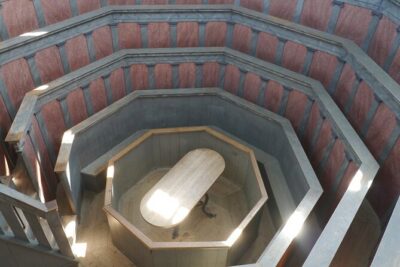
Uppsala bloody history 1h- racial biology, 18th century plague, 19th century prostitution etc.
Read our review →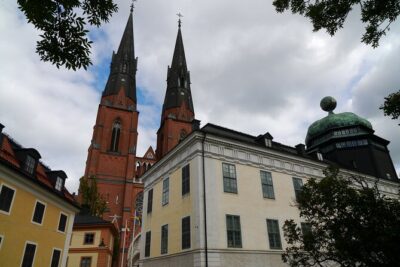
Uppsala Must See 2h city walk – 2h tour of all big attractions!
Read our review →Browse the lists this tour appears in