
Review · UPPSALA TOURS
Uppsala Must See 2h city walk – 2h tour of all big attractions!
Uppsala rewards curious walkers. This two-hour tour links the city’s grandest sights with its Viking past and stranger modern history. I like the mix of Uppsala Cathedral and Viking runestones, and I like that the walk reaches places many quick city visits miss, including Dekanhuset and the old mill by Upplandsmuseet. The main consideration is that several buildings may only be viewed from outside.
The walk costs $110.15 per person and begins at 5:30 pm from Riddartorget, or Knights’ Square. I also appreciate the flexible pace promised by the guide, who once found a lost participant and adjusted the walk to suit that person’s needs. Still, two hours is tight for this many stops, and some indoor visits depend on whether buildings are open.
In This Review
- Six things to know before you book
- Starting at Riddartorget with Uppsala’s cathedral
- Viking runestones beside the cathedral
- Uppsala University Main Building
- Dekanhuset and a darker Swedish chapter
- Carolina Rediviva and the possible Silver Bible visit
- Botaniska Tradgarden in ten minutes
- Uppsala Castle and its murderous past
- The old main square, Dombron, and the river
- Museum Gustavianum and the anatomical theatre
- Sankt Eriks Kalla and the story of Saint Erik
- What the $110.15 price includes
- Who should take this Uppsala walk?
- Should you book the 2-hour walk?
- FAQ
- How long is the Uppsala city walk?
- Where does the tour start?
- What time does the tour begin?
- Does the tour enter Uppsala Castle?
- Is the Silver Bible included?
- Is the tour suitable for everyone?
Six things to know before you book
- Viking runestones near the cathedral: You get an early look at Uppsala’s Viking age rather than only hearing about its royal and academic past.
- A walk through difficult history: Dekanhuset introduces the Swedish Race Biology Institute and its work from 1920 to 1958.
- The Silver Bible may be included: At Carolina Rediviva, you may see the famous Gothic-language manuscript if the library is open.
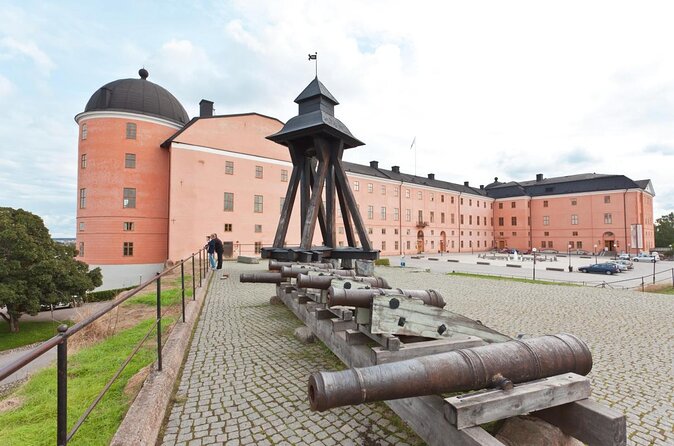
- Uppsala Castle is an outdoor visit: You enter the courtyard and hear about the murders connected with the castle, but the castle itself is closed to visitors.
- The group is capped at 20 people: That keeps the walk more manageable than a large coach-style tour.
- The route returns to its starting point: You finish at Riddartorget, with public transportation nearby and free cancellation up to 24 hours before departure.
Starting at Riddartorget with Uppsala’s cathedral
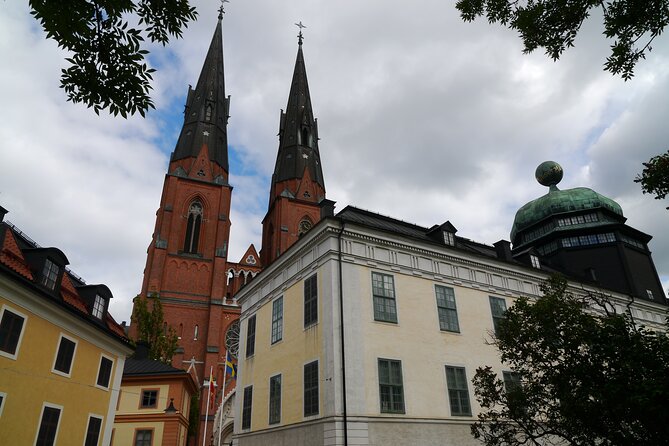
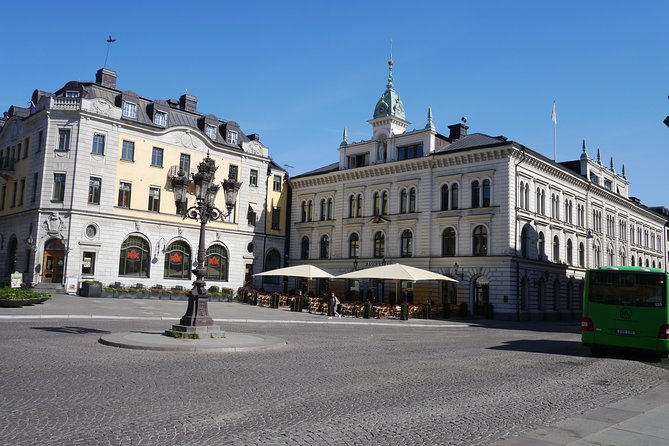
The tour starts at Riddartorget on Biskopsgatan at 5:30 pm. This is a useful meeting point because the walk begins beside one of Uppsala’s most important sights, the city’s great cathedral.
You first experience the cathedral from the outside. The tour does not promise entry, so set your expectations accordingly. Even so, beginning here gives the guide a strong visual anchor for the city’s religious story and lets you move straight into the older layers of Uppsala.
I like this opening because it avoids wasting time on a long introduction. You are placed in the middle of the historic center, then quickly led toward the evidence of the people who lived here long before the university and castle shaped the city.
More Walking Tours in Uppsala:
- Uppsala: City Highlights and Hidden Gems Walking Tour
★ 4.7 · 12 reviews - Best of Uppsala: Private Walking Tour with a Local
★ 3.9 · 7 reviews - Uppsala’s biggest attractions – 1h city walk in Uppsala city.
★ 4.5 · 3 reviews
Viking runestones beside the cathedral
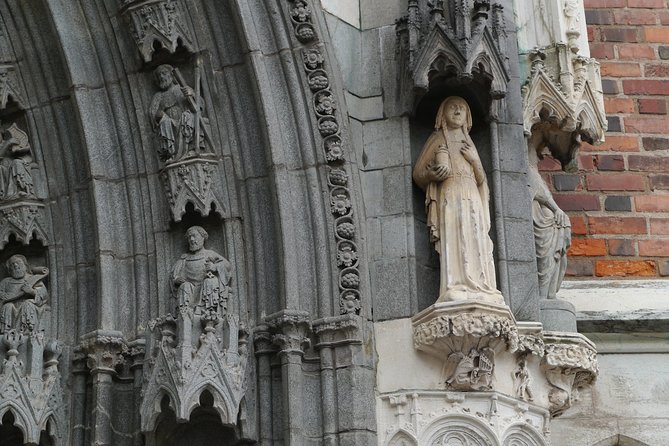
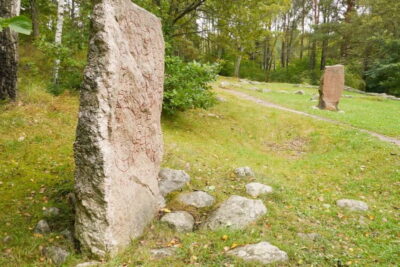
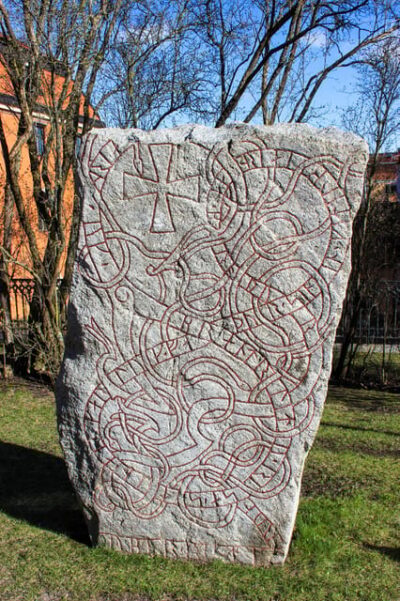
The first major stop brings you to Viking Age runestones close to the cathedral. You have about 20 minutes here, and admission is free.
This is one of the tour’s best choices. Uppsala is often presented through its cathedral, university, and royal connections, but the runestones give you something more direct: carved evidence of people, beliefs, journeys, and memorials from the Viking age.
The setting matters. Seeing these stones near the cathedral creates a clear contrast between two different eras of Swedish history. You can look at the stones while the guide explains how Uppsala’s identity reaches back far beyond the buildings most visitors photograph.
Because the stones are outdoors, this part does not depend on opening hours. It is also a good stop for anyone who wants historical context without spending the whole afternoon inside a museum.
Uppsala University Main Building
The walk continues to the Uppsala University Main Building for about 10 minutes. If the building is open, the guide will take you inside. If not, you will hear about the place from outside.
That conditional wording is important. You should not book this walk expecting a guaranteed interior visit. The outside stop still gives the university a place in the story, but the experience will be different if the doors are closed.
Uppsala University is central to the city’s character, and a short explanation helps connect the academic quarter with the religious and royal sights nearby. I would pay attention to how the guide links the university to the people and institutions that shaped Uppsala over time.
Ten minutes is enough for orientation, not a full university tour. If you want to study the building in detail, you will need extra time before or after the walk.
Dekanhuset and a darker Swedish chapter
Dekanhuset is one of the most unusual stops. The visit lasts about 10 minutes and covers the Swedish Race Biology Institute and its history from 1920 to 1958.
This is not a light sightseeing topic, and that is precisely why it matters. A city tour should not present Uppsala as only beautiful stone buildings and old academic traditions. Dekanhuset brings attention to a disturbing chapter in Swedish history and shows how respected institutions can also be connected to harmful ideas and practices.
The stop is brief, so expect an introduction rather than a long seminar. Still, it adds moral weight to the walk. I value this kind of stop because it asks you to see the city honestly, not as a polished collection of picturesque façades.
For some people, this will be the most memorable part of the tour. For others, it may feel abrupt beside the cathedral and university. That contrast is worth accepting. It reflects the complicated past the tour is trying to explain.
More Uppsala trips:
- Stockholm Viking History Full Day Tour to Sigtuna + Uppsala
★ 4.6 · 218 reviews - Cube of Art Uppsala Museum of Interactive Art
★ 4.5 · 69 reviews - Roofwalking on the worlds greatest pink castle!
★ 5.0 · 15 reviews - Guided tour 90min at Old Uppsala mounds and old Uppsala church
★ 4.5 · 5 reviews
Carolina Rediviva and the possible Silver Bible visit
At Carolina Rediviva University Library, you have around 20 minutes. If the building is open, the guide will take you inside to see the historical museum and the famous Silver Bible, written in the Gothic language.
This is another stop where access is not guaranteed. The wording makes clear that opening hours can change the plan, so treat the interior visit as a possibility rather than a promise.
If you do enter, the Silver Bible gives the stop a strong focus. It is a rare historical object with a direct connection to language, religion, scholarship, and the preservation of old texts. Even a short look can make the library feel like more than an impressive academic building.
If the doors are closed, you still get the setting and an explanation from outside. The drawback is that 20 minutes can pass quickly if you are hoping for a full museum visit. I would consider returning independently if this is one of your main interests.
Botaniska Tradgarden in ten minutes
The route reaches Botaniska Tradgarden, one of the world’s oldest botanical gardens, for about 10 minutes. If it is open, you explore it with the guide.
This stop broadens the tour beyond architecture and political history. You get a chance to hear about local flora and fauna, and the garden provides a change of pace after the university and library buildings.
The short time limit is the main weakness. Ten minutes allows for an introduction and a quick look, but not a relaxed garden visit. If you enjoy plants, plan to return on your own at another time rather than treating this stop as a complete garden experience.
The tour’s late start may also affect what you see inside. Since the guide specifically notes that the garden is visited if open, access depends on the conditions that evening. The value here is the guide’s interpretation and location in the route, not a long botanical exploration.
Uppsala Castle and its murderous past
Uppsala Castle receives about 20 minutes, including a visit to the courtyard. The castle itself is closed to visitors, and admission is not included.
This is a good example of why the tour works best as a city walk rather than a series of full museum visits. You see the castle grounds and hear about the murders connected with the building. The story gives the royal setting a darker edge, and the courtyard provides a physical place for the guide’s account.
Do not confuse this with a castle interior tour. You will not be touring the rooms or exhibits inside. The stop is about the outside setting and the stories attached to it.
I like the balance here. The guide does not need to spend the whole evening on one grand building, and you still get a sense of the castle’s role in Uppsala. If entering historic castles is your priority, this walk may leave you wanting more.
The old main square, Dombron, and the river
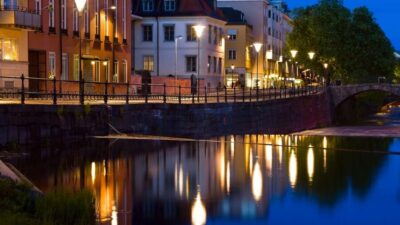
The route then drops toward the old main square and Dombron, the bridge over the river. This stop lasts about five minutes and covers the river’s history and Uppsala’s commercial past.
Five minutes is short, but the location is useful. Rivers explain cities. They affect trade, movement, work, and the position of markets. Here, the guide helps you see Uppsala as a working town, not only as a center of religion, royalty, and education.
You will also see the old mill that houses Upplandsmuseet. The tour does not promise entry to the museum, so think of this as an exterior point of interest. The old mill adds another practical layer to the city’s story, showing how water and industry fit into the historic center.
This part may feel rushed if you want photographs or a longer look at the buildings. Still, it breaks up the more formal sights and gives the walk a grounded, everyday quality.
Museum Gustavianum and the anatomical theatre
The tour passes Museum Gustavianum and views the anatomical theatre from outside. The stop lasts about 10 minutes, and admission is not included.
The anatomical theatre is an unusual subject for a city walk. It points toward Uppsala’s long academic tradition, but in a very physical way. You are not simply hearing about lectures and books. You are being shown a building connected with the study of the human body.
Since the visit is exterior only, you should not expect to see the theatre itself. The guide’s explanation is the main benefit. If this building catches your interest, you will need to arrange a separate visit if access is available.
This stop also works well beside Carolina Rediviva and the university. Together, they show different sides of academic life: books, research, teaching, and public knowledge.
Sankt Eriks Kalla and the story of Saint Erik
The final named stop is Sankt Eriks Kalla, the spring of Saint Erik. The walk lasts only about three minutes here and covers the battle, the spring, and Erik’s sainthood.
It is a quick stop, but it gives the tour a strong closing thread. You return to medieval religious history after seeing Viking stones, academic buildings, the castle, and the river.
Do not expect a long visit or a major monument experience. This is a brief point on the route, useful because the guide connects a physical location with a story about battle and sainthood. The tour then returns to Riddartorget, where the activity ends.
What the $110.15 price includes
At $110.15 per person, this is not a bargain if you measure value by paid admissions or hours inside museums. The price covers a two-hour guided walk, all fees and taxes, and the guide’s interpretation. The listed stops themselves do not add admission costs, although the castle and Museum Gustavianum are not included as interior visits.
The value depends on what you want from Uppsala. If you want a fast orientation with a local guide, the price may make sense, especially because the route covers religious, Viking, academic, botanical, royal, commercial, and difficult social history in one evening.
If you want extended time at the library, botanical garden, castle, or museum, you will probably find the tour too compressed. I would use it as an introduction, then return independently to the places that matter most to you.
The group size is limited to 20 people. That is large enough for a lively group but small enough for the guide to adjust the pace. One especially useful detail is the account of a guide finding a participant who had become lost and then adapting the walk to that person’s pace and interests. That suggests a practical, attentive approach rather than a rigid speech delivered at every corner.
Who should take this Uppsala walk?
I would recommend it to first-time visitors who want a clear sense of Uppsala in two hours. It suits people who enjoy history but do not want to spend the whole evening inside one museum.
It is also a good fit if you value variety. The route moves from runestones to a cathedral, university buildings, a botanical garden, a castle courtyard, a river bridge, a mill, and a medieval spring. You get many subjects without needing to organize them yourself.
Families and mixed-interest groups may appreciate the pace and range, though the tour requires a moderate level of physical fitness. The activity is near public transportation, service animals are allowed, and the group can include up to 20 people.
I would hesitate if you need guaranteed indoor access. The Main Building, Carolina Rediviva, and Botaniska Tradgarden are visited inside only if open. The castle and Museum Gustavianum are specifically outdoor stops, so the tour is not a substitute for museum tickets.
The tour is offered in English and uses a mobile ticket. You receive confirmation at booking, and you can cancel for a full refund up to 24 hours before the 5:30 pm start time. Gratuities are not included.
Should you book the 2-hour walk?
Book it if you want a guided first look at Uppsala that goes beyond the cathedral. The best reason is the range of stories: Viking runestones, the Silver Bible, the Swedish Race Biology Institute, castle murders, the river trade, the anatomical theatre, and Saint Erik all appear in one compact route.
Skip it if your main goal is long indoor visits or a slow botanical garden stroll. The tour gives you a strong framework, but several stops are conditional or exterior only.
For most first-time visitors, I see it as a useful orientation rather than a complete sightseeing day. Arrive ready to walk, keep your schedule afterward flexible, and note which places you want to revisit. That approach lets the guide handle the city’s broad story while you choose where to spend more time later.
FAQ
How long is the Uppsala city walk?
The tour lasts approximately two hours.
Where does the tour start?
It starts at Riddartorget, also called Knights’ Square, on Biskopsgatan in Uppsala.
What time does the tour begin?
The scheduled start time is 5:30 pm.
Does the tour enter Uppsala Castle?
No. The tour visits the castle courtyard and covers its murder stories, but the castle is closed to visitors.
Is the Silver Bible included?
The guide enters Carolina Rediviva and shows the historical museum and Silver Bible if the library is open. Interior access is not guaranteed.
Is the tour suitable for everyone?
Participants should have a moderate level of physical fitness. The tour is near public transportation, service animals are allowed, and the maximum group size is 20 people.
Just added in Uppsala
- Uppsala bloody history 1h- racial biology, 18th century plague, 19th century prostitution etc.★ 5.0 · 4 reviews
- Uppsala’s biggest attractions – 1h city walk in Uppsala city.★ 4.5 · 3 reviews
- Swedish Lifestyle and Private Walking Tour of Uppsala★ 5.0 · 1 review
- Uppsala Scavenger Hunt and Sights Self Guided Tour★ 5.0 · 2 reviews
- Adventure parc★ 4.5 · 3 reviews
- City walk 1h – Runes and rune stones in Uppsala★ 5.0 · 2 reviews
- Guided tour 90min at Old Uppsala mounds and old Uppsala church★ 4.5 · 5 reviews
- Best of Uppsala: Private Walking Tour with a Local★ 3.9 · 7 reviews
Uppsala Tours, compared.
Stockholm Viking History Full Day Tour to Sigtuna + Uppsala
Read our review →

Best of Uppsala: Private Walking Tour with a Local
Read our review →
Guided tour 90min at Old Uppsala mounds and old Uppsala church
Read our review →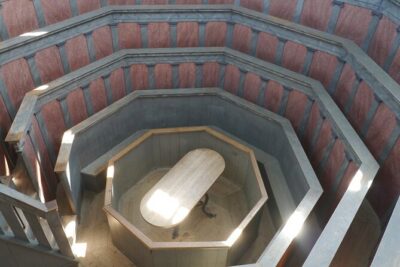
Uppsala bloody history 1h- racial biology, 18th century plague, 19th century prostitution etc.
Read our review →
Browse the lists this tour appears in