
Review · OLD TOWN WALKING TOURS
Stockholm Troll Hunt: Self-Guided Old Town Adventure
Trolls make good tour guides. This self-guided Stockholm hunt turns Gamla Stan into a puzzle board, leading you from the Royal Swedish Opera to Stortorget while mixing local legends with solid historical facts. I like the private format, since only your group takes part, and I like the freedom to pause or play at your own speed. The main catch is digital setup: allow time to install and understand the game before you reach the starting point.
The route takes about 50 minutes to 1 hour 15 minutes, depending on how quickly you solve the clues and how long you look around each site. It is a good-value choice at $7.21 per person, though the experience depends on clear instructions, a working phone, and your patience with puzzles and translations.
In This Review
- Key points at a glance
- Starting at the Royal Swedish Opera
- Parliament, power, and the Swedish government
- The Baroque palace and royal Stockholm
- Royal weapons at the Royal Armoury
- Storkyrkan, Stockholm’s oldest church
- The small Iron Boy sculpture
- Saint George and the Danish battle
- Den Gyldene Freden and Stockholm’s dining tradition
- Järntorget, the old trading center
- Stora Nygatan and the question of what counts as a square
- Tyska Kyrkan and the German quarter
- Stortorget and the Nobel connection
- Price, pace, and the phone setup
- Who will enjoy this Stockholm activity?
- Should you book the Stockholm Troll Hunt?
- FAQ
- How long does the Stockholm Troll Hunt take?
- Where does the hunt start and finish?
- Is a physical guide included?
- How many challenges are included?
- Is the activity private?
- Can I cancel for a full refund?
Key points at a glance
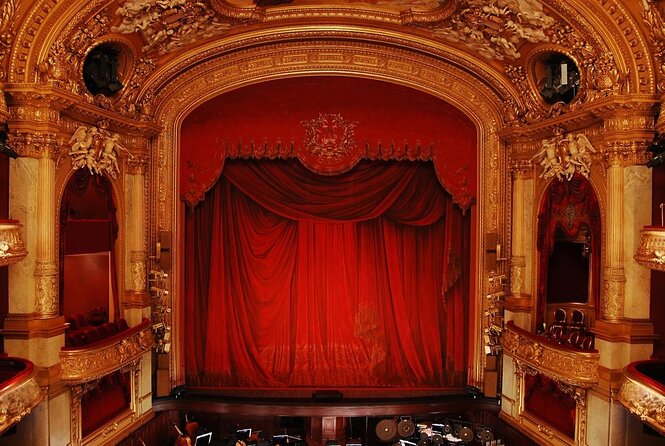
- Twelve historic stops: Follow a route through royal, religious, artistic, and culinary landmarks in Gamla Stan.
- A private group activity: You play only with your own friends or family, with no guide or strangers joining in.
- Flexible timing: Pause and resume the quest instead of racing through it on a fixed schedule.
- History with a task attached: Each stop asks you to inspect the surroundings and solve a challenge before moving on.
- A strong family option: The hunt gives children a reason to look closely at buildings, statues, signs, and public spaces.
- Low cost, with a small technical risk: The price is modest, but setup and translation quality may affect the experience.
Starting at the Royal Swedish Opera
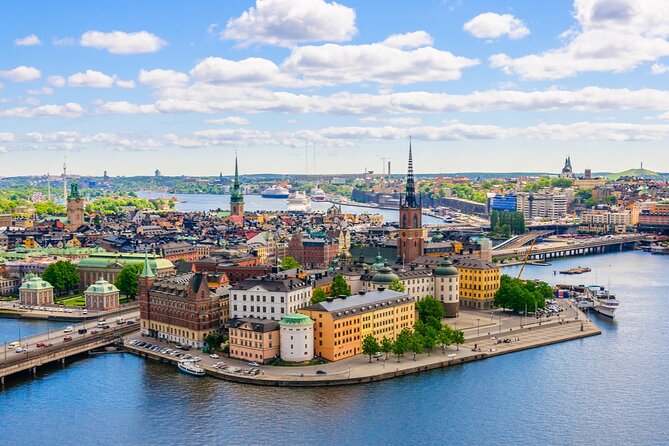
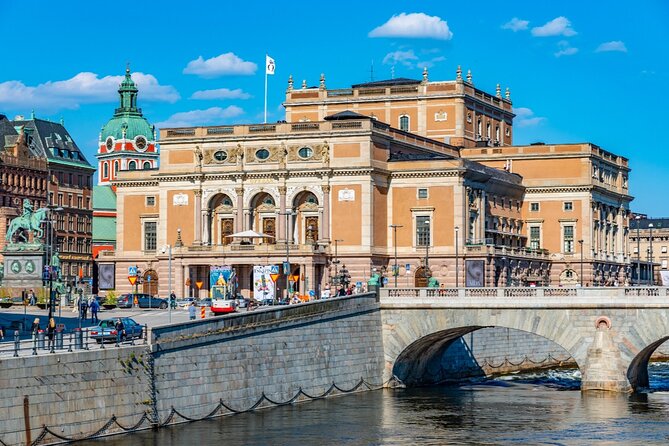
The quest begins at the Royal Swedish Opera on Gustav Adolfs torg. This is a fitting place to start because the building represents Sweden’s long effort to create its own national performing tradition.
Sweden’s national theatre for opera and ballet began its official role on January 18, 1773. Before that, King Gustav III dismissed a French opera troupe that had performed at Bollhuset near Slottsbacken. His aim was to form a Swedish ensemble capable of presenting Swedish operas.
The first troupe continued using Bollhuset until a new Opera House was completed in 1782. At this opening stop, you do not simply read a paragraph and walk away. You look around the square for the answer to a challenge, then enter the next part of the story.
That simple task changes how you see the place. A normal walk might leave you admiring the Opera House from the outside. Here, you are asked to inspect your surroundings. The drawback is that the challenge may not always be obvious, especially if you are trying to manage a phone, a group, and Stockholm’s busy streets at the same time.
More Old Town walks:
- Walking Tour of Stockholm Old Town
★ 5.0 · 1,175 reviews - The Original Stockholm Ghost Walk and Historical Tour – Gamla Stan
★ 4.5 · 1,165 reviews - Stockholm: Old Town Walking Tour with Local Guide
★ 4.7 · 719 reviews
Parliament, power, and the Swedish government
The next part introduces Sweden’s parliamentary tradition. The first important parliament is often linked to a meeting in Arboga in 1435. Over time, Sweden’s government developed into a system represented by the Four Estates: nobility, clergy, burghers, and peasants.
This stop gives the hunt some political weight. Stockholm’s old streets can feel like a parade of royal buildings and churches, but the story also asks who had a voice in governing Sweden. The Four Estates offer a useful glimpse into how power was divided before modern parliamentary democracy.
You will again search the area for an answer. This is one of the strengths of the format. You are not expected to sit through a long lecture. You get a short piece of context, then a reason to examine the location yourself.
For children, this section may need a little explanation from an adult. Terms such as clergy and burghers are not instantly clear to everyone. Still, the challenge gives families an easy opening to discuss how governments change over time.
The Baroque palace and royal Stockholm
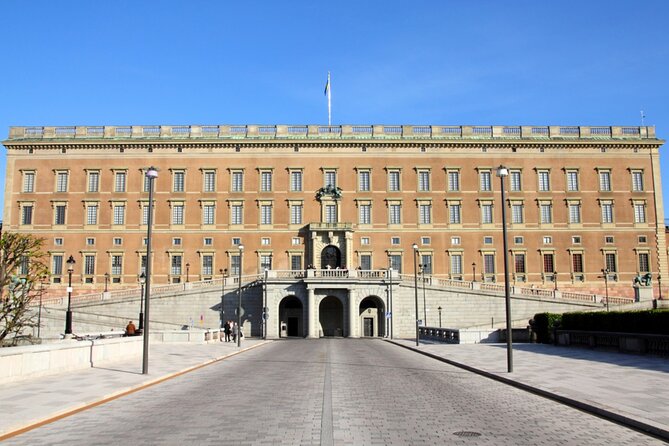
The route then brings you to Stockholm’s great palace. When it was built in the 18th century, the palace caused a stir across Europe. Today, it is regarded as one of the key Baroque buildings in the city.
This stop helps you understand the scale and ambition of royal Stockholm. The palace is not treated as just a grand photo stop. Its architectural style becomes part of the puzzle, encouraging you to look at the building and its setting rather than simply pass by.
The palace area can be confusing for a self-guided game because there are several important buildings and open spaces close together. Read the instructions carefully before moving on. If your group splits up to search for an answer, keep the phone with the person controlling the quest so nobody misses the next clue.
The experience is entirely virtual and has no physical guide. That keeps the cost low and lets you work at your own pace, but it also means no one is present to explain a detail if the wording feels unclear.
Royal weapons at the Royal Armoury
The Royal Armoury adds a darker and more personal side to the route. Its oldest objects include royal state and ceremonial weapons kept in the former Three Crowns Palace during the 16th century.
One of the most striking stories concerns Gustavus Adolphus. In the 1620s, he wanted his bloodstained clothes preserved in the armoury as a lasting memorial. That detail brings politics and warfare down to a human scale. Royal history is no longer only about palaces and ceremonies. It also involves battles, injuries, and the way rulers choose to be remembered.
This challenge works well for people who enjoy objects with a story behind them. It also gives you a reason to think about how museums preserve memory. You may want to slow down here, even though the full route can be completed in under an hour.
The hunt does not include admission to a museum or a physical guide. The value comes from the outdoor route and the information supplied through the phone. Treat the stop as an introduction to the subject rather than a substitute for a full museum visit.
More self-guided tours in Stockholm:
- Stockholm: Old Town Self-Guided Tour Learn and solve Puzzles
★ 4.1 · 64 reviews - Stockholm: Self Guided Kayak Adventure
★ 4.5 · 55 reviews - Stockholm: Self Guided GPS Bike Tour
★ 4.2 · 38 reviews - Stockholm Walking Tour with Audioguide on Your Smartphone
★ 4.5 · 27 reviews
Storkyrkan, Stockholm’s oldest church
Storkyrkan, also called Stockholm Cathedral or the Great Church, is the oldest church in Gamla Stan. It was first mentioned in 1279, and tradition connects its original construction with Birger Jarl, the founder of Stockholm.
This is one of the route’s most important historical pauses. The cathedral links the medieval city with the royal center around it. Its location also helps you understand how compact Gamla Stan is. Several centuries of Swedish religious and political life sit within a short walk of one another.
The challenge asks you to inspect the exterior surroundings for an answer. That keeps the activity moving, but you should remember that an outdoor puzzle cannot provide the same detail as entering the church. If you want to see the interior, check its separate opening arrangements rather than assuming the quest includes entry.
I like this balance of play and place. The puzzle gives younger members of your group something to do, while the historical note gives adults a reason to care about the stop.
The small Iron Boy sculpture
One of the more unusual stops takes you behind the Finnish Church to a small sculpture created by Swedish artist Liss Eriksson. It was made in 1954 but not inaugurated at its present location until 1967.
The sculpture is tucked into a secluded spot only a few meters from Stockholm Palace. Its location makes it easy to miss during an ordinary walk. That is exactly why it fits a treasure hunt. You have to search, and the reward is finding a quiet piece of public art away from the main route.
This stop is a good reminder that Stockholm’s Old Town is not only about famous monuments. Some of its most memorable details are modest and easy to overlook. The hunt encourages you to turn into side spaces and pay attention to small works that might otherwise disappear into the background.
Give your group a little patience here. A hidden sculpture can be fun to locate, but a self-guided game cannot physically point you toward it. Use the clue, compare your surroundings, and avoid rushing to the next location.
Saint George and the Danish battle

The next stop features a famous statue commissioned by Sten Sture the Elder after his victory over the Danish army at the Battle of Brunkeberg in 1471. During the battle, Sten Sture placed his army under the protection of Saint George.
The sculpture is widely attributed to the workshop of Bernt Notke, although it is not signed by him. That uncertainty makes the story more interesting. Medieval art often carries questions about workshops, attribution, and how historians decide who created a work.
The stop links art, religion, and military history in one place. You are not only searching for an answer. You are also seeing how a victory could be presented through a religious image and a public monument.
If your group includes children, the dragon and knight make this one of the easiest stories to remember. The challenge gives the statue a purpose beyond being something to photograph.
Den Gyldene Freden and Stockholm’s dining tradition
Den Gyldene Freden translates as The Golden Peace. It opened in 1722 and has remained in its original location for almost 300 years. The restaurant has long been associated with Stockholm’s cultural life, including members of the Royal Academy.
This stop changes the rhythm of the route. After churches, palaces, and military objects, you encounter a place connected to food, conversation, and city life. Its uninterrupted location gives the restaurant a special sense of continuity.
You do not need to plan a meal here for the stop to be worthwhile. The important point is that the Old Town is not a museum frozen in time. Historic buildings still serve everyday purposes, and restaurants can carry a city’s traditions just as museums do.
The game’s clues ask you to look around before continuing. If you are hungry, this is a natural point to note the restaurant for later. The quest itself does not include food or drinks, so keep that separate from the price of the activity.
Järntorget, the old trading center
Järntorget is Stockholm’s second-oldest square, slightly younger than Stortorget. It dates from around 1300 and served as the city’s main trade center for centuries.
The square was once full of movement and noise. Goods came from the waterfront, crossed the square, and moved into the surrounding buildings. The smells of trade, the sounds of transport, and the crowded upper storage spaces all formed part of daily life here.
This stop gives you a practical way to picture medieval Stockholm. Instead of thinking of Gamla Stan only as a collection of attractive facades, you can imagine how the streets worked as a port-connected commercial district.
The modern square may not immediately reveal all of that activity. That is where the story content helps. The puzzle adds a layer of purpose to a place you might otherwise cross without stopping.
Stora Nygatan and the question of what counts as a square
Another stop focuses on an elongated open space lined by the public library and Storkyrkoskolan, the school of the Great Church. It is officially called a square, although its shape makes it feel more like a street.
This is a small but useful lesson in city geography. Public spaces do not always fit neat categories, and names can preserve older ideas about how a neighborhood was organized.
The stop also brings education into the route. You have already seen religious and royal institutions, and now you get a glimpse of the school system connected to the cathedral. That variety keeps the hunt from becoming a string of palace facts.
You should be mindful of people using the school and library. A self-guided puzzle is best played quietly and with your group close together. The activity is private, but the public spaces belong to everyone.
Tyska Kyrkan and the German quarter
Tyska Kyrkan, officially Sankta Gertrud, is located between Tyska Brinken, Kindstugatan, Svartmangatan, and Prästgatan. The church takes its name from a medieval neighborhood dominated by Germans.
The church is dedicated to Saint Gertrude, who lived from 626 to 659 and served as abbess of the Benedictine monastery at Nivelles in present-day Belgium. She is also the patron saint of travelers.
This stop gives you a clear picture of Stockholm’s international past. Medieval cities were shaped by merchants, craftspeople, religious communities, and visitors from other parts of Europe. The German presence in this district is a reminder that Stockholm was connected to wider trade networks long before modern tourism.
The church’s position among narrow streets also suits a hunt. You will need to read the clue and identify the correct setting, rather than relying only on a large landmark visible from far away.
Stortorget and the Nobel connection
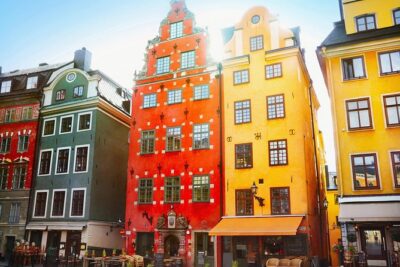
The route ends at Stortorget, Stockholm’s oldest and most famous square. The final stop concerns the former palace of the purse, built between 1773 and 1776 by Erik Palmstedt in the French Rococo style.
That building is now linked with the Swedish Academy and the Nobel Museum. Palmstedt also designed the square’s fountain, giving the space a stronger architectural unity.
Ending here makes sense. Stortorget brings together royal power, civic life, architecture, and Sweden’s modern cultural reputation. It is also a convenient place to stop and decide what you want to see next in Gamla Stan.
The final address is Stortorget 7. Since the hunt ends in a central Old Town square, you can continue exploring on foot after the game, although the activity itself does not include a guide or additional sightseeing.
Price, pace, and the phone setup
At $7.21 per person, this is priced more like a small add-on than a major tour. For a group of friends or a family, the cost can be appealing because you are paying for a private activity rather than for each person to join a scheduled walking group.
The strongest value comes from flexibility. You can pause the quest, stop for a snack, take photographs, or resume later. The stated play window is roughly 50 minutes to 1 hour 15 minutes, but the option to pause means you do not have to treat that as a strict race.
There is one important practical warning. Setup may be more complicated than expected, and the instructions do not make the flexible timing fully clear to everyone. Install the access code and prepare the game before you arrive at the Opera House, not when your group is already standing at the start.
The English version also deserves care. Some wording may be awkward, and unclear translations can make a puzzle difficult for the wrong reason. If a question seems confusing, reread the surrounding story and inspect the location carefully before assuming you have missed something.
You receive confirmation at booking, mobile access to the quest, and 12 interactive challenges. There is no physical guide, so your group controls both the pace and the quality of the experience.
Who will enjoy this Stockholm activity?
I would recommend it most to families, couples, and small groups who like solving clues together. Children get a clear mission, while adults receive enough historical context to make the walk more than a simple game.
It also suits people with limited time. Starting at the Royal Swedish Opera and ending at Stortorget gives you a compact route through central Stockholm. You can fit it into a day of sightseeing without giving up half a day to a formal tour.
You may want a different option if you prefer detailed commentary, expert answers, or a carefully narrated walk. A guide can explain questions immediately and add personal stories. This quest asks you to supply some of the energy yourself.
The private format is useful for groups that do not want to keep pace with strangers. Group discounts are available, and most people can participate. Service animals are allowed, and the start is near public transportation.
Free cancellation is available if you cancel at least 24 hours before the local start time. Changes or cancellations within 24 hours are not accepted for a refund.
Should you book the Stockholm Troll Hunt?
Book it if you want an inexpensive, flexible way to see major Old Town sights while keeping your group involved. The best parts are the variety of stops, the private format, and the chance to notice small places such as the Iron Boy sculpture that you might otherwise miss.
Before booking, make sure your group is comfortable using a phone and solving location-based puzzles. Set up the quest early, allow extra time for any unclear wording, and do not expect a live guide to fill in the gaps.
For $7.21, the risk is small. If you like independent sightseeing with a playful purpose, this is a sensible addition to a Stockholm visit. If you want polished storytelling from a local expert, spend more on a guided walking tour instead.
FAQ
How long does the Stockholm Troll Hunt take?
The activity takes approximately 50 minutes to 1 hour 15 minutes. You can also pause and resume it at your own pace.
Where does the hunt start and finish?
It starts at the Royal Swedish Opera, Kungliga Operan, Gustav Adolfs torg 2. It ends at Stortorget 7 in Stockholm’s Old Town.
Is a physical guide included?
No. The activity is fully virtual and includes mobile access to the quest, but no physical tour guide.
How many challenges are included?
The experience includes 12 interactive puzzle challenges connected to Stockholm’s history and legends.
Is the activity private?
Yes. Only your own group takes part, with no other participants joining your quest.
Can I cancel for a full refund?
Yes, if you cancel at least 24 hours before the experience start time. Cancellations made within 24 hours are not refundable.
Just added in Stockholm
- Wolf and Wildlife Tracking in Sweden★ 5.0 · 1 review
- World War II Stockholm Old Town Walking Tour and Army Museum★ 4.6 · 4 reviews
- Viking History Half-Day Tour from Stockholm★ 5.0 · 1 review
- Stockholm Old Town Walking Tour + Archipelago Cruise★ 5.0 · 1 review
- Wine tasting in Old Town Stockholm★ 5.0 · 1 review
- Wolf and Wildlife Tracking in Sweden★ 5.0 · 9 reviews
- Scandinavian Art, Architecture and Design Tour in Stockholm★ 4.5 · 11 reviews
- Voyage of the Vikings: Guided Exploration Through Sweden’s Past★ 5.0 · 2 reviews
Old Town Walking Tours, compared.
The Original Stockholm Ghost Walk and Historical Tour – Gamla Stan
Read our review →
Walking Tour of Stockholm’s Old Town, Gamla Stan
Read our review →
Old Town Guided Walking Tour (English / Deutsch)
Read our review →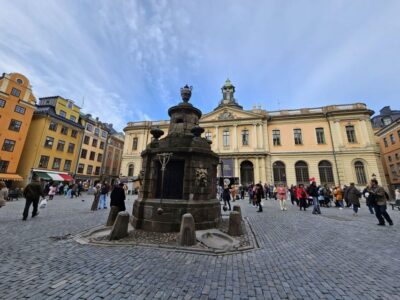
Secrets of Gamla Stan Guided Tour w/ Fika Option
Read our review →Browse the lists this tour appears in