
Review · OLD TOWN WALKING TOURS
Stockholm: Old Town Walking Tour, stories and secrets
Small streets tell big stories. This two-hour walk through Gamla Stan brings Stockholm’s old center to life through royal drama, local legends, medieval buildings, and everyday city life. I like the route’s variety, from Stortorget and the Royal Palace to the quieter waterfront views on Riddarholmen.
I also like the price: at $16 per person, it is an inexpensive way to get your bearings early in a Stockholm visit. The main tradeoff is the pace. You cover many sights in two hours, so most stops are for explanation, photographs, or a quick look rather than a full interior visit.
In This Review
- Key points to know before you book
- Starting at the Post Museum in Gamla Stan
- Runestone and Stortorget: the Old Town’s opening chapters
- Royal Palace and Stockholm Cathedral
- Iron Boy and St George: small sights with memorable stories
- Österlånggatan, Järntorget, and the older commercial city
- Mårten Trotzigs Gränd and Västerlånggatan
- German Church and the shift toward Riddarholmen
- Riddarholmen Church and the House of Nobility
- Mynttorget and the final lesson about public life
- How much value do you get for $16?
- What the guide style adds
- Who should take this walk?
- Should you book Stockholm’s Old Town Walking Tour?
- FAQ
- How long does the Stockholm Old Town walking tour last?
- Where does the tour meet?
- What language is the tour conducted in?
- Is the tour available as a private group?
- Is the tour suitable for wheelchair users?
- What should I bring?
Key points to know before you book
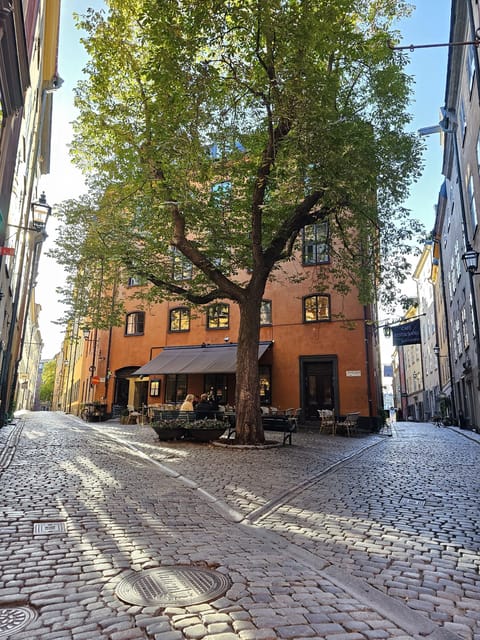
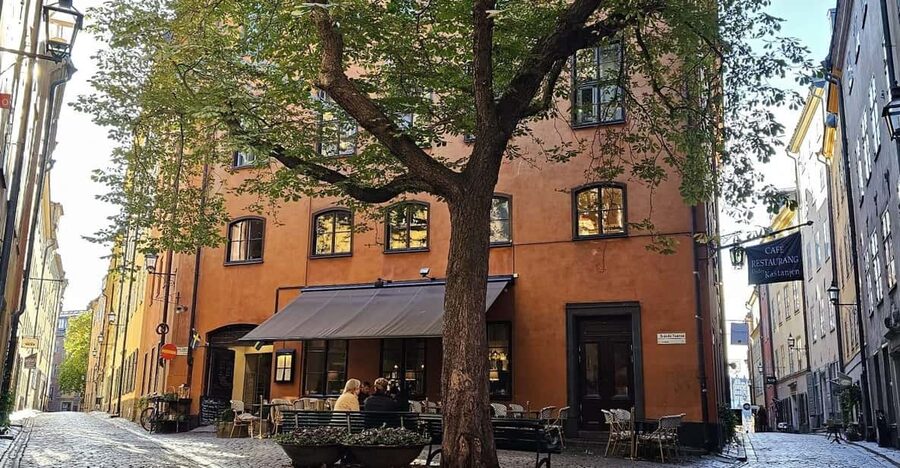
- A story-led route through Gamla Stan: The guide connects Swedish monarchs, public squares, narrow lanes, and ordinary city life instead of simply reciting dates.
- Strong first-day activity: The walk gives you a useful sense of Stockholm’s Old Town and includes practical suggestions for other places to visit and eat.
- A fine mix of famous and quirky sights: You see the Royal Palace and Stockholm Cathedral, along with the tiny Iron Boy statue and Mårten Trotzigs Gränd.
- Riddarholmen adds breathing room: The route leaves the tight medieval lanes for waterfront views and the striking Riddarholmen Church.
- English-speaking guides receive warm praise: Sara and Sarah are both named in the comments, with repeated praise for clear explanations, humor, energy, and helpful advice.
- Expect real walking: Comfortable shoes and weather-ready clothing matter, and the tour is not suitable for wheelchair users or people with mobility impairments.
Starting at the Post Museum in Gamla Stan
Your guide meets you in front of the Post Museum, Lilla Nygatan 6, at the entrance. Look for the official GetYourGuide logo, and arrive a little early because the walk starts promptly.
The nearest subway station is Gamla Stan, which makes the meeting point fairly easy to reach. From there, you begin in the heart of Stockholm’s Old Town, a compact district where medieval lanes, grand public buildings, churches, shops, and homes sit close together.
The guide’s role matters here. Gamla Stan can look like a pretty maze if you only stroll without context. A good explanation helps you understand why a square is important, why a lane is so narrow, or how royal power shaped the streets around you.
This experience is conducted in English. Private groups are available, though the supplied details do not specify the size of a standard group. If you choose the private option, it may suit families or friends who want more room for questions.
More Walking Tours in Stockholm
- Stockholm: Ghost Walk and Historical Tour
★ 4.7 · 2,206 reviews - Walking Tour of Stockholm Old Town
★ 5.0 · 1,175 reviews - The Original Stockholm Ghost Walk and Historical Tour – Gamla Stan
★ 4.5 · 1,165 reviews
Runestone and Stortorget: the Old Town’s opening chapters
One of the first stops is a runestone, a reminder that Stockholm’s story reaches farther back than its most famous royal buildings. You spend about ten minutes walking and hearing the guide set the scene.
Runestones are especially useful on a city walk because they make Sweden’s early past visible in an otherwise busy urban setting. Ask your guide how the stone fits into Stockholm’s story and what it tells you about the people who lived in the region before the city took its modern form.
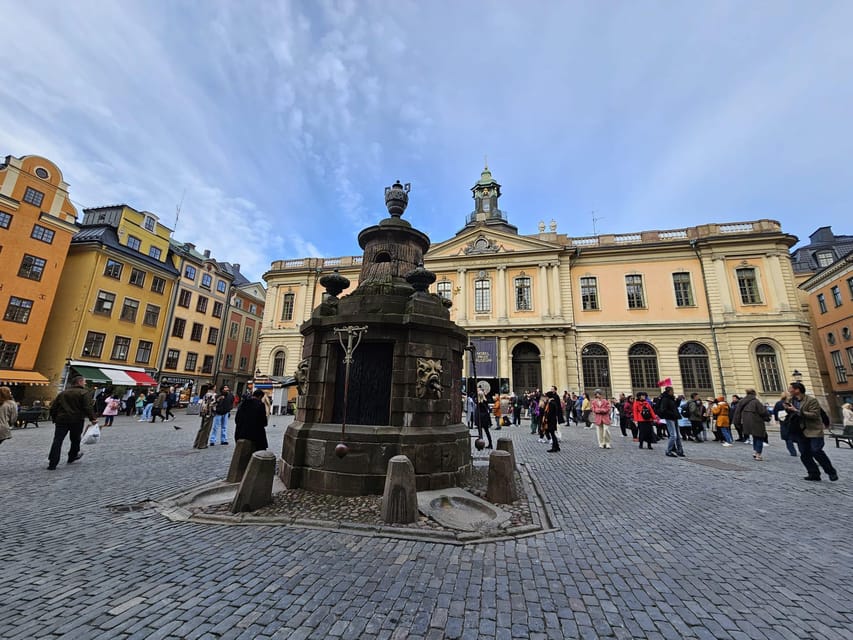
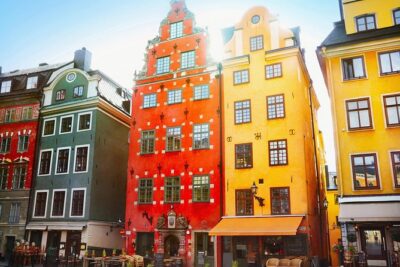
The route then reaches Stortorget, Gamla Stan’s best-known square. Its colorful historic facades make it an obvious photo stop, but the guide’s stories give the space more weight. This is where Stockholm’s public life, royal power, and difficult political moments can be discussed in one place.
You spend around ten minutes here. That is enough for a clear explanation and photographs, but not enough for a long architectural study. I suggest looking up at the upper floors, rooflines, and varied facades rather than focusing only on the square-level shops.
Royal Palace and Stockholm Cathedral
The walk continues to the Royal Palace, where you stop for photographs and pass by for roughly ten minutes. Since the tour does not include an interior visit, treat this as an outside introduction rather than a palace tour.
That arrangement keeps the walk moving and helps the guide link Sweden’s monarchs to the buildings around them. The royal story is not presented as a list of rulers alone. The focus is on the tensions, decisions, and human episodes that shaped the country.
Nearby, Stockholm Cathedral receives a closer look. You have time for guided commentary, sightseeing, photographs, and walking, with another itinerary entry for the cathedral suggesting it is an important part of the explanation.
The cathedral adds a different layer to Gamla Stan. The palace represents royal authority, while the church points toward religious and civic life. Together, the two stops help you see how power operated in the old city.
Because the schedule is tight, you should not expect a full guided visit inside every major building. The value here is the connection between places. You learn how the palace, cathedral, square, and surrounding lanes relate to one another.
Iron Boy and St George: small sights with memorable stories
The Iron Boy, Boy Watching the Moon is one of the route’s more unusual stops. You spend about five minutes walking to it, seeing it, and hearing the story connected with this tiny statue.
This is the sort of detail that can easily be missed if you explore alone. Gamla Stan is full of grand buildings, but small public artworks and local curiosities give the area a more personal feel. Keep your camera ready, although the narrow setting may make a quick photograph easier than a long stop.
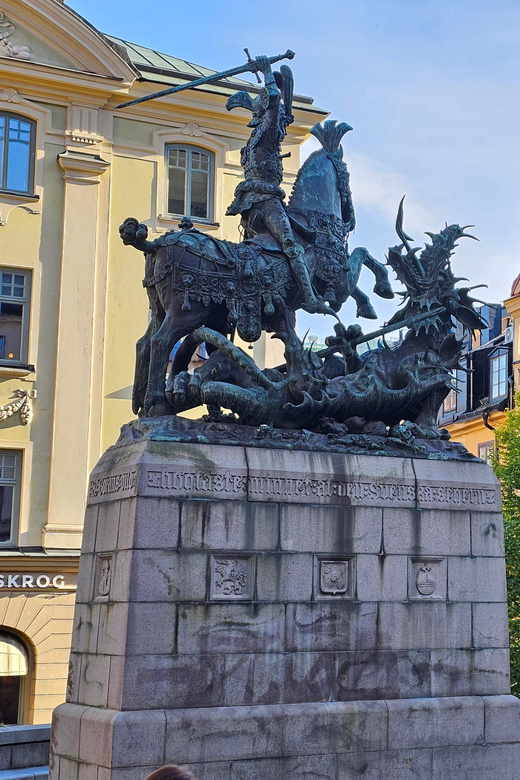
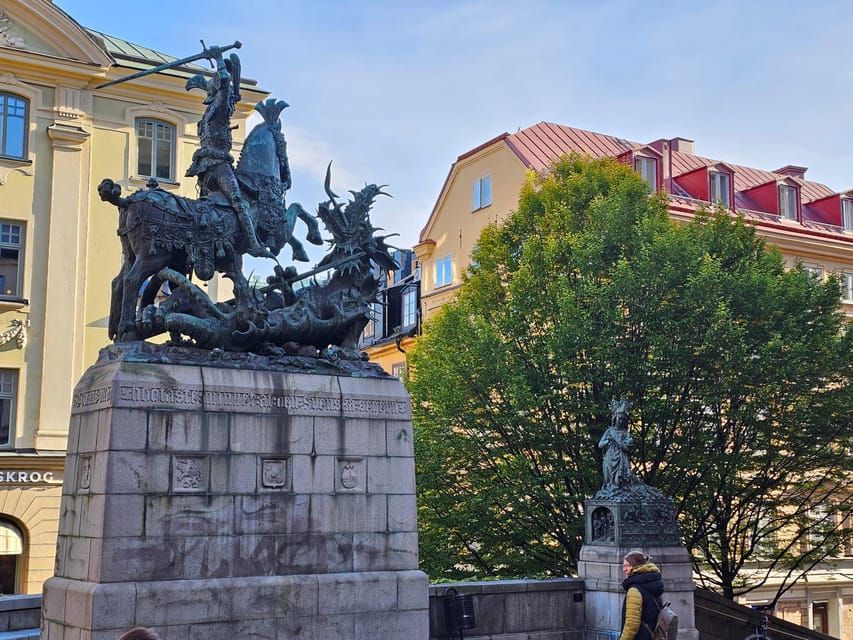
The route then visits the statue of St George and the Dragon. Again, the stop lasts about five minutes. The guide uses it to explain another piece of Stockholm’s visual and civic story.
I appreciate this part of the walk because it breaks up the large historical subjects. You move from kings and churches to statues, symbols, and the way stories are displayed in public spaces. The stops are brief, but they make the tour feel less like a standard list of royal buildings.
More Old Town walks:
- Stockholm: Old Town Walking Tour with Local Guide
★ 4.7 · 719 reviews - Walking Tour of Stockholm’s Old Town, Gamla Stan
★ 5.0 · 451 reviews - Stockholm: Old Town Historical Walking Tour
★ 4.9 · 344 reviews - Old Town Tour of Stockholm
★ 4.0 · 289 reviews
Österlånggatan, Järntorget, and the older commercial city
On Österlånggatan, you continue on foot for about five minutes. This stretch lets you experience the Old Town as a lived-in district rather than a collection of photo stops.
Next comes Järntorget, another public square with a role in Stockholm’s commercial past. The guide’s storytelling approach is useful here because a square’s importance is not always clear from its present appearance. You get a sense of how goods, people, and public activity shaped the old center.
The route does not promise long time at each location. Instead, the guide keeps you moving and builds a connected narrative. If you like detailed architectural inspection, you may wish the schedule allowed more time. If you want an efficient overview, the short pauses work well.
This section is also a good moment to ask for practical suggestions. Sara and Sarah are repeatedly praised for answering questions and offering ideas for restaurants, local dishes, and other activities. One guide even suggested a flatbread sausage dish, which is the kind of small food tip that can make a city walk more useful than a standard history lecture.
Mårten Trotzigs Gränd and Västerlånggatan
Mårten Trotzigs Gränd is one of Gamla Stan’s narrowest and most photogenic lanes. The stop lasts around five minutes, enough to appreciate the compressed passage and take a photograph.
This lane shows why comfortable shoes matter. The route is not a flat, open promenade. You move through older streets and tight spaces where other pedestrians may also be passing. The guide can help you notice how the medieval street pattern differs from the broader roads and squares.
The walk then reaches Västerlånggatan, one of the Old Town’s better-known streets. You have another short sightseeing stop before continuing toward the German Church.
These streets are where the tour’s everyday-life angle becomes most useful. The guide discusses not only monarchs and major events but also how people lived, moved through the city, and used these streets. That human scale is one of the experience’s strongest features.
German Church and the shift toward Riddarholmen

The German Church is viewed from outside as you pass by. Its presence reflects the international side of Stockholm’s old commercial center and gives the guide another chance to explain how different communities shaped Gamla Stan.
The stop is brief, so you should not expect a detailed interior visit. Still, it helps round out the picture. Stockholm’s Old Town was not only a royal quarter. It was also a place of trade, worship, work, and daily contact among different groups.
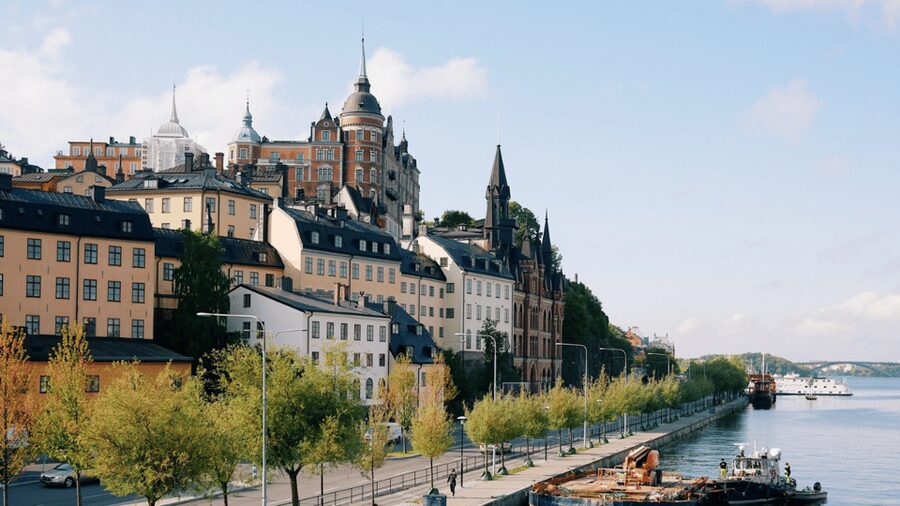
From here, the route heads toward Riddarholmen, also known as the Knights’ Islet. This is a welcome change of mood after the tight lanes of Gamla Stan. You get scenic views along the way and a chance to see Stockholm from a more open waterfront setting.
The waterfront is especially valuable because it gives you a sense of the city’s geography. Instead of seeing only streets and buildings, you begin to understand Stockholm as a city shaped by water and islands. The walk remains short, but the views provide a useful pause.
Riddarholmen Church and the House of Nobility
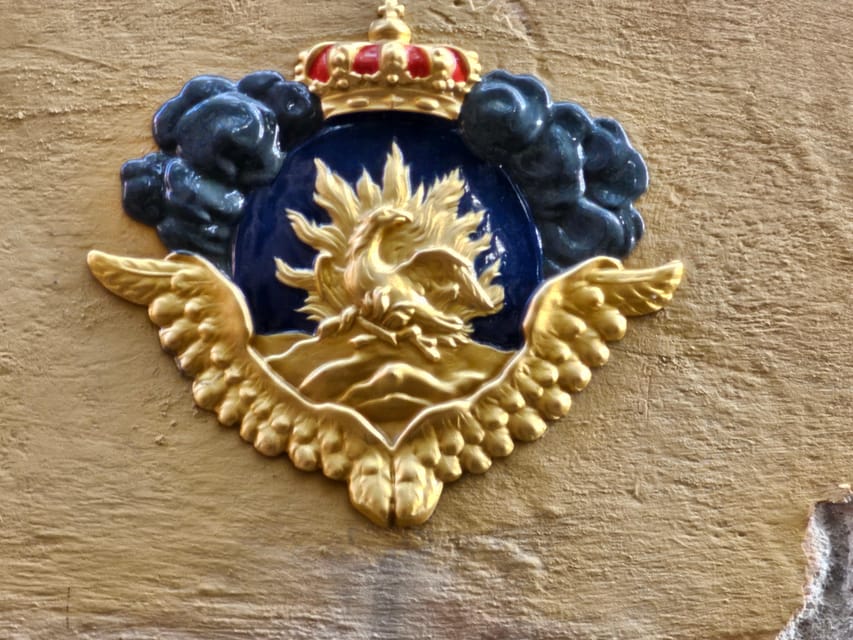
At Riddarholmen Church, you stop for sightseeing, photographs, and a short walk. The church is one of the route’s most visually imposing buildings, and its setting gives the guide a natural place to discuss Swedish rulers and national memory.
The schedule allows about five minutes here, so the focus is on the exterior and the story around it. If you want to visit the church inside, you would need to make separate plans outside the tour.
The route then passes the House of Nobility. This stop helps explain the role of Sweden’s aristocracy and the institutions that shaped the country’s political life. Placed after the palace and church, it adds another piece to the discussion of monarchy, religion, and social power.
By this stage, the guide has introduced several different sides of Stockholm: the royal court, the church, merchants, ordinary residents, nobles, and public spaces. That is why the tour works best when you listen for connections rather than trying to memorize every date.
Mynttorget and the final lesson about public life
The advertised finish is Mynttorget, a square associated with freedom of speech and assembly. Ending here gives the walk a modern political note after its focus on medieval streets and royal history.
It is a smart final stop because it reminds you that history is not sealed away in old buildings. Squares continue to carry public meaning. The guide uses Mynttorget to connect Stockholm’s past with civic life today.
The meeting information also says the activity ends back at the meeting point, while the route description identifies Mynttorget as the finish. Since those details do not match perfectly, confirm the final meeting arrangement when you book or meet your guide.
How much value do you get for $16?
At $16 per person, this is an easy tour to justify if you want a guided introduction to Stockholm. You are paying less for entry tickets and more for structure, interpretation, and the chance to ask questions as you walk.
The price is especially good for a first day in the city. Several comments describe the tour as a useful way to get oriented, and I agree with that logic. After two hours, you should have a clearer mental map of Gamla Stan and a list of places you may want to revisit at your own pace.
The value also depends on your expectations. This is not a deep architectural seminar or a series of long museum visits. Most stops last about five to ten minutes, and several buildings are viewed from outside. You get breadth and storytelling rather than extended time at one site.
The guide’s income relies mainly on tips, so plan to tip at the end if the experience serves you well. That is worth including in your budget, especially since the advertised price is low.
What the guide style adds
The strongest praise centers on the guides, especially Sara and Sarah. They are described as warm, funny, energetic, easy to talk with, and able to answer questions without losing the thread of the walk.
That matters in Stockholm because the Old Town can be visually impressive but historically dense. A guide who tells stories instead of listing facts helps the buildings make sense. The experience aims to explain the human choices behind the city, including royal conflict and ordinary life.
You can also use the guide as a practical resource. Ask about local food, nearby restaurants, or how to fit other activities into your stay. The advice is not a formal part of the sightseeing route, but it has been a useful feature for many people taking the walk.
The exact guide may vary. The supplied information names Sara and Sarah, so do not assume one particular person will lead every departure.
Who should take this walk?
I would choose this tour if you are visiting Stockholm for the first time, have only a couple of days, or want historical context before exploring on your own. It also suits anyone who prefers stories and conversation to reading plaques.
It is a good match for:
- First-time visitors who want to get their bearings
- History fans who enjoy royal and civic stories
- Couples, families, and private groups seeking a short introduction
- People who want restaurant and activity suggestions from a local guide
- Visitors who prefer a low-cost activity with no admission ticket
I would think twice if you need step-free access or use a wheelchair. The activity is specifically marked as unsuitable for wheelchair users and people with mobility impairments. The narrow streets and steady walking also make supportive shoes important.
Bring a camera, check the forecast, and dress for the weather. Stockholm’s outdoor conditions can affect your comfort more than the tour content, since the entire experience takes place on foot.
Should you book Stockholm’s Old Town Walking Tour?
Book it if you want an affordable, story-driven introduction to Gamla Stan, especially at the start of your visit. The route covers the major sights, adds quirky details such as the Iron Boy, reaches Riddarholmen for waterfront views, and ends with a thoughtful stop at Mynttorget.
Skip it if you want long interior visits, a slow photography walk, or a fully accessible route. For most able-bodied visitors who value clear explanations and local suggestions, the combination of a $16 price, two-hour length, and highly praised guiding makes this a strong first look at Stockholm’s oldest district.
FAQ
How long does the Stockholm Old Town walking tour last?
The tour lasts two hours. Starting times vary, so check availability when selecting your date.
Where does the tour meet?
Your guide waits in front of the Post Museum entrance at Lilla Nygatan 6 in Gamla Stan. The nearest subway station is Gamla Stan, and you should look for the guide with the official GetYourGuide logo.
What language is the tour conducted in?
The live tour guide speaks English.
Is the tour available as a private group?
Yes. A private group option is available.
Is the tour suitable for wheelchair users?
No. The activity is listed as unsuitable for wheelchair users and people with mobility impairments.
What should I bring?
Wear comfortable walking shoes, bring a camera, and dress for the weather. The tour starts promptly, and the guide asks you to consider leaving a tip because guides mainly rely on tips for their income.
Just added in Stockholm
- Wolf and Wildlife Tracking in Sweden★ 5.0 · 1 review
- World War II Stockholm Old Town Walking Tour and Army Museum★ 4.6 · 4 reviews
- Viking History Half-Day Tour from Stockholm★ 5.0 · 1 review
- Stockholm Old Town Walking Tour + Archipelago Cruise★ 5.0 · 1 review
- Wolf and Wildlife Tracking in Sweden★ 5.0 · 9 reviews
- Scandinavian Art, Architecture and Design Tour in Stockholm★ 4.5 · 11 reviews
- Wine tasting in Old Town Stockholm★ 5.0 · 1 review
- Voyage of the Vikings: Guided Exploration Through Sweden’s Past★ 5.0 · 2 reviews
Old Town Walking Tours, compared.
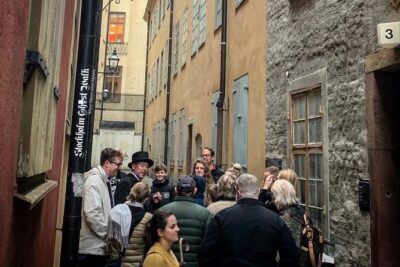
The Original Stockholm Ghost Walk and Historical Tour – Gamla Stan
Read our review →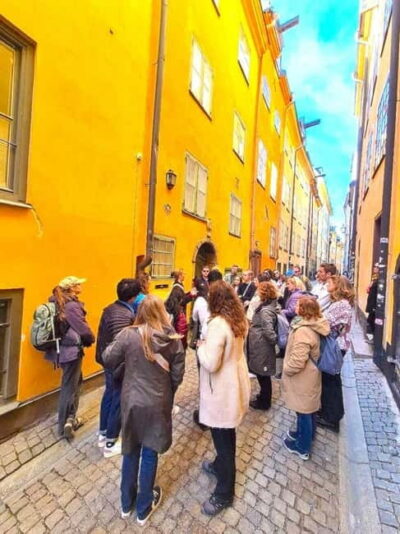
Walking Tour of Stockholm’s Old Town, Gamla Stan
Read our review →
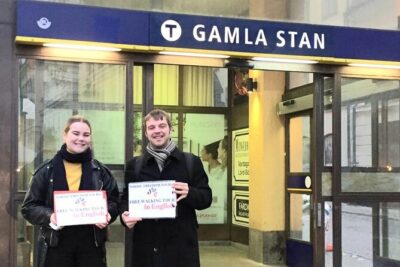
Old Town Guided Walking Tour (English / Deutsch)
Read our review →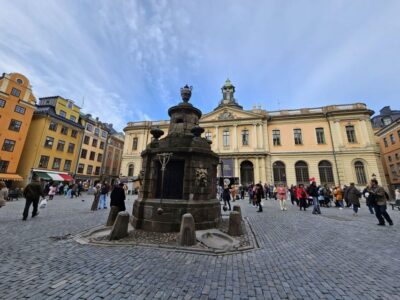
Secrets of Gamla Stan Guided Tour w/ Fika Option
Read our review →Browse the lists this tour appears in