
Review · OLD TOWN WALKING TOURS
Stockholm- A Beauty On The Water: Old Town Walking Tour and Boat Trip Combined
Stockholm rewards a two-angle introduction. I like that this small-group tour pairs the royal streets and medieval lanes of Gamla Stan with a peaceful boat ride through Djurgårdsbrunn Canal. I also like the way guides such as Bengt and Natalie add useful city advice, not just dates and names. The main drawback is value: at $135.16, the 3-hour experience feels pricey if you mainly want a standard boat cruise.
The walking portion is the stronger half for most people. You get close to Stockholm’s palaces, bridges, squares, and narrow lanes, while the boat lets you rest your feet and see the skyline from another angle. The canal trip is pleasant, but the audio system and limited outdoor viewing may reduce its appeal for anyone hoping for constant photography.
In This Review
- Key points to know before booking
- Starting at the Royal Swedish Opera
- Parliament and the long road to democracy
- Riksbron, where Stockholm opens up
- Lejonbacken and Sweden’s former great-power age
- Slottsbacken and the Bernadotte dynasty
- Stortorget, Stockholm’s most famous square
- Medieval lanes from Köpmangatan to Skeppsbron
- Boarding at Strömkajen for the canal cruise
- What the boat ride does well, and where it falls short
- Guides, group size, and pace
- Is $135.16 a fair price?
- Where the tour ends and what to do next
- Who should book this Stockholm combination tour?
- FAQ
- How long does the combined Stockholm tour last?
- Where does the walking tour begin?
- Where does the tour finish?
- Is the tour offered in English?
- How many people can join the tour?
- Is food included on the boat?
- Can I cancel for a full refund?
Key points to know before booking
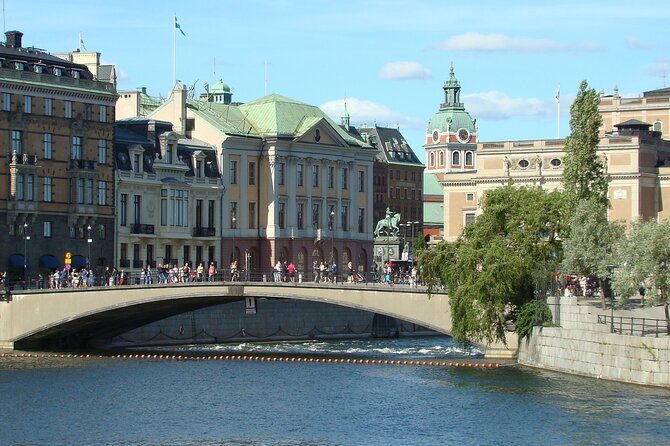
- Two very different views of Stockholm: Walk through royal and medieval Stockholm, then cruise along Djurgårdsbrunn Canal.
- A compact group of up to 10 people: This makes it easier to hear the guide and ask questions.
- Strong local storytelling: Bengt and Natalie are praised for clear explanations, patience, and practical suggestions for the rest of your visit.
- A history-heavy route: You’ll hear about kings, parliament, the Stockholm Bloodbath, the Bernadotte dynasty, and the Nobel Prize.
- An audio-guided boat ride: Headphones and multilingual commentary are available, though you should make sure the system works before the boat leaves.
- Best early in your stay: The tour gives you a useful map of central Stockholm and ends near Kungsträdgården and trams for Djurgården.
Starting at the Royal Swedish Opera
The tour begins at Gustav Adolfs torg, in front of the Royal Swedish Opera. This is a smart starting point because Stockholm’s royal, political, and cultural worlds meet here in a single view.
Your guide begins with a short introduction to Sweden, formally the Kingdom of Sweden, then points out the royal connections in the surrounding buildings. The Royal Palace sits nearby in grand Baroque style, built at the beginning of the 18th century. Across the square, the elegant former Heir Presumptive palace now houses the Ministry of Foreign Affairs.
The opera house itself has a dramatic connection to Swedish history. It figures in Giuseppe Verdi’s opera Un ballo in maschera, based on the assassination of Swedish king Gustav III. That small detail helps turn a pleasant square into a place with political plots, royal ambition, and theatrical flair.
You spend about 15 minutes here. There is no admission charge for this stop, and the focus is on orientation and exterior views rather than an opera performance or a full palace visit.
More Boat Trips in Stockholm
- Stockholm: City Archipelago Sightseeing Cruise with Guide
★ 4.3 · 10,798 reviews - Stockholm: Archipelago Boat Tour
★ 4.4 · 3,110 reviews - Stockholm: Highlights Boat Tour
★ 4.3 · 2,542 reviews
Parliament and the long road to democracy
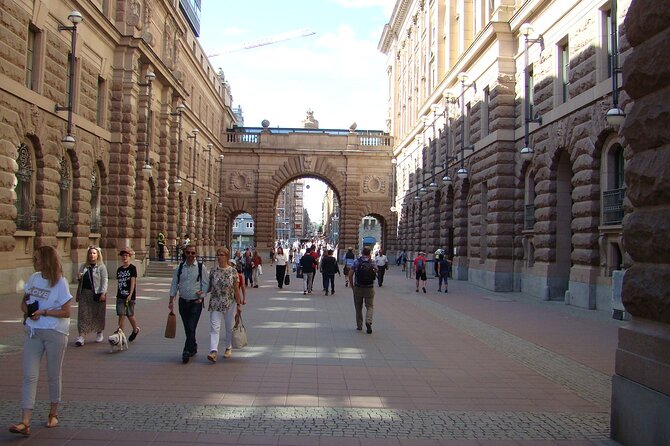
From the opera, the route continues toward Riksdagshuset, Sweden’s Parliament Building. Its Neo-Renaissance design, with a Neo-Baroque facade section, reflects the late 19th-century confidence of the city. Construction took place from 1897 to 1905.
The building is more than a handsome facade. It gives your guide a chance to explain how Swedish government changed over time. Before the modern parliament, the Riksdag of the Estates brought together Nobility, Clergy, Burghers, and Peasants. Each group met separately before presenting its views to the king.
That system ended in 1866, when a two-chamber parliament was introduced. Voting rights were still unequal, and general suffrage did not arrive until the elections of 1921, after a long campaign led by liberals and socialists. In 1975, the two chambers became one, and the king’s role was confirmed as representative rather than political.
You get roughly 10 minutes here. It is a short stop, but the explanation gives you helpful context for understanding Sweden’s modern political identity. If you prefer tours devoted only to architecture, this section may feel a little talk-heavy. I find it worthwhile because the guide connects the stonework to the country’s political development.
Riksbron, where Stockholm opens up
Riksbron provides one of the route’s best clusters of views. From the bridge, you can see Riddarholmen, often called Knights Island, along with the prime minister’s residence, government buildings, and the House of Nobility.
Stockholm City Hall is also visible from here. The building is famous as the setting for the annual Nobel Prize banquet, held after the prize ceremonies. Seeing it from the bridge gives you a useful sense of how water separates and joins the city’s islands.
This is a 15-minute photo and explanation stop. The views depend on the weather, but the location works in all seasons because the surrounding buildings carry much of the interest. Keep your camera ready, but listen too. The point is not just to collect postcard views. Your guide helps explain how Stockholm’s government, monarchy, and old aristocracy sit close together.
Lejonbacken and Sweden’s former great-power age
Lejonbacken lies on the north side of the Royal Palace and is one of Stockholm’s most popular photo spots. The broad approach gives you a strong view of the palace, and it is a more open setting than the tight streets of Gamla Stan.
Here the story shifts to Sweden’s period as a major power in Northern Europe during the 17th and 18th centuries. You see the Royal Garden and its statue of Karl XII, the last of Sweden’s warrior kings. Across from the older royal setting, the financial district reflects the architectural fashion of the late 19th and early 20th centuries.
The Grand Hôtel is another landmark in view. It is Stockholm’s most prestigious hotel and the place where Nobel laureates stay during the award ceremonies. That contrast is typical of this part of Stockholm: royal power, military ambition, finance, and international prestige all share the same compact center.
You spend about 15 minutes at Lejonbacken. This is another good place to ask questions, especially if you want to understand how Sweden moved from a military power toward a more peaceful and socially organized country.
More Walking Tours in Stockholm
- Stockholm: Ghost Walk and Historical Tour
★ 4.7 · 2,206 reviews - Walking Tour of Stockholm Old Town
★ 5.0 · 1,175 reviews - The Original Stockholm Ghost Walk and Historical Tour – Gamla Stan
★ 4.5 · 1,165 reviews - Stockholm: Old Town Walking Tour with Local Guide
★ 4.7 · 719 reviews
Slottsbacken and the Bernadotte dynasty
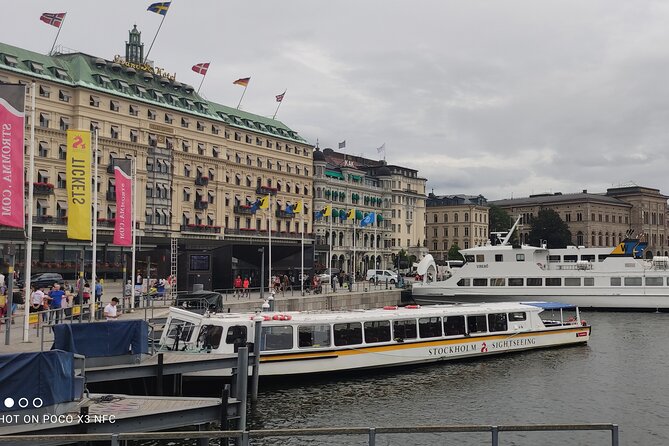
The route continues along Slottsbacken, beside the Royal Palace. You pass through the palace courtyard and make a short visit to the Palace Chapel, where the royal family baptizes its children.
The stop also introduces Carl XIV Johan, the founder of the Bernadotte dynasty. His path to the Swedish throne was unusual. He came from France and had built a career in Napoleon’s army before being adopted into the Swedish royal family.
Sweden initially brought him in with hopes that he would help recover territory lost to Russia during the Napoleonic Wars. Instead, he focused on diplomacy, infrastructure, and education. The result was a long period of peace. Sweden celebrated 200 years of peace in 2014.
This part of the walk is especially useful if you know little about the Swedish monarchy. It explains why the current royal line has French military roots and why the king today serves mainly a ceremonial role. At around 10 minutes, it is concise rather than exhaustive, so you get the essential story without a lecture.
Stortorget, Stockholm’s most famous square
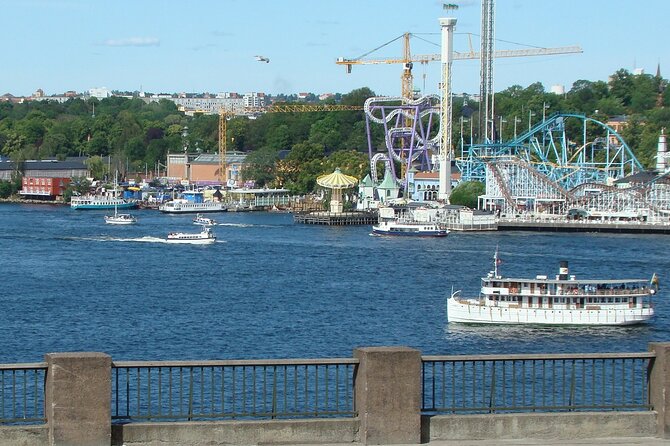
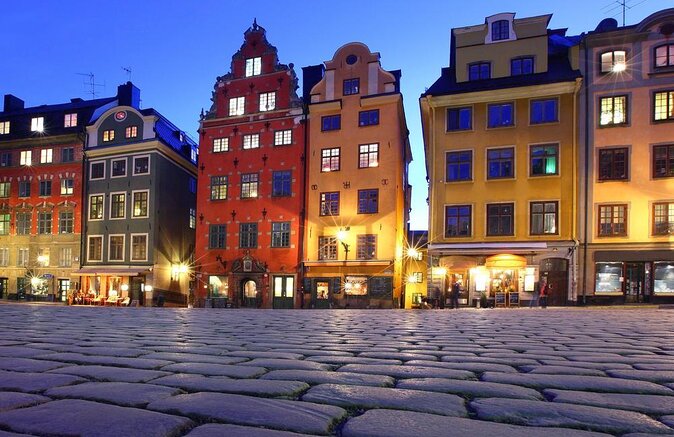
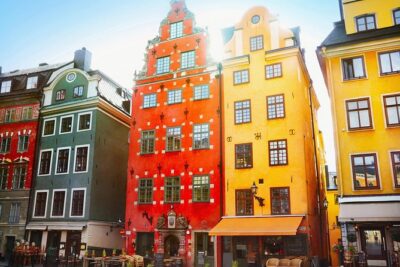
Gamla Stan begins to feel fully medieval at Stortorget, the central square of Stockholm’s Old Town. The colorful buildings around the square show 17th-century Scandinavian Renaissance and 18th-century Classicism. It is the city’s most photographed spot, and you’ll quickly see why.
Stortorget also carries one of Sweden’s darkest stories. In November 1520, the Danish king Christian II ordered the execution of about 100 noblemen and priests here. The event became known as the Stockholm Bloodbath, and in Sweden Christian II is remembered as Christian the Tyrant.
The Nobel Prize Museum sits on the square. Swedish Royal Academies and other committees select winners in science, literature, and several other fields. Your guide may not take you inside, but the exterior location gives you a useful connection between Stockholm’s old political center and its modern role in science and culture.
You have about 15 minutes here. It is a busy photo stop, so keep track of the group while looking up at the facades. The square can feel crowded, but the guide’s stories give it purpose beyond its attractive colors.
Medieval lanes from Köpmangatan to Skeppsbron
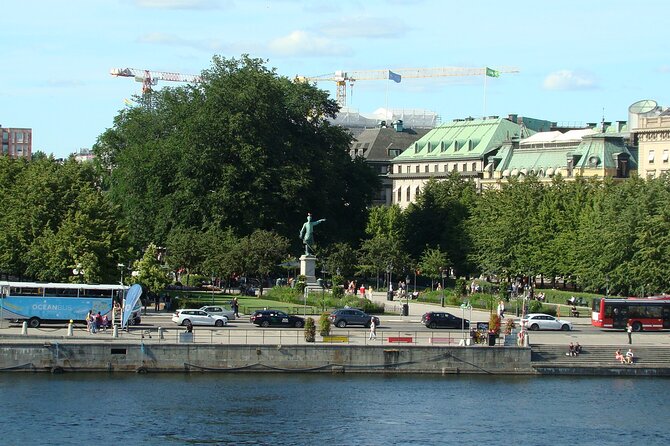
From Stortorget, you walk along Köpmangatan, or Merchants Street. Written records mention this street as early as 1350. The name tells you what the street was for: commerce, movement, and the daily business of a medieval port city.
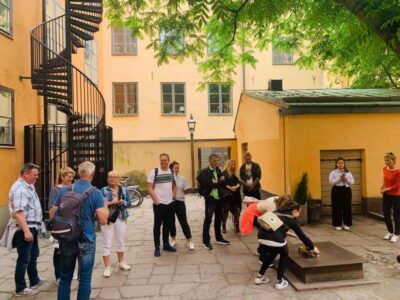
The guide then leads you through narrow alleyways where the scale changes. Tall buildings press close together, paving stones replace broad modern streets, and you get a stronger feel for the old town’s medieval shape. You continue along Österlånggatan and down toward Skeppsbron, where ships have loaded cargo since the 17th century.
This 20-minute section is one of the tour’s most appealing parts. You are not just looking at a royal facade from a distance. You are walking through the old urban fabric, with the chance to notice doorways, street angles, and small architectural details.
The tradeoff is physical. The tour requires a moderate level of fitness, and the route includes steady walking through old streets. Wear comfortable shoes. The compact group size, capped at 10 people, helps the guide keep the pace manageable. Several people have especially praised Bengt for explaining clearly, answering questions, and keeping a group of nine engaged without rushing.
Boarding at Strömkajen for the canal cruise
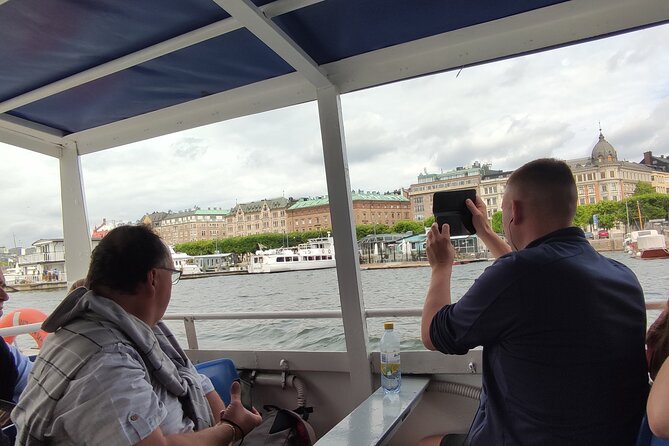
At Strömkajen, the walking tour gives way to a 50-minute boat trip operated by Stromma. This is a natural break after roughly two hours on foot. You can sit down, relax, and watch Stockholm from the water instead of navigating another street.
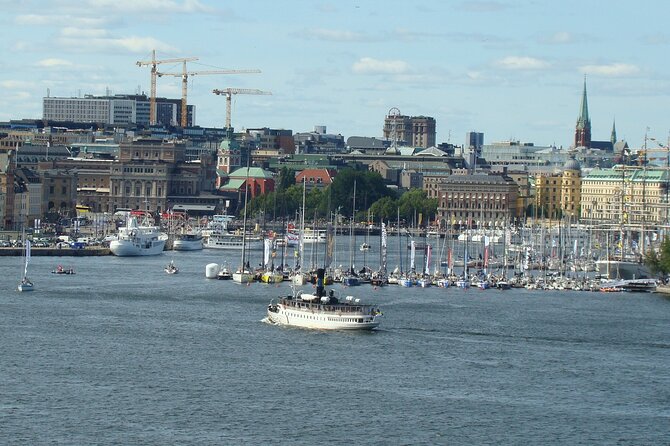
The boat heads through Djurgårdsbrunn Canal, one of the calmer and more scenic waterways in the city. The ride offers views of the Stockholm skyline and a different sense of how the city’s islands fit together. The canal portion is less intimate than the walk, but it adds useful scale.
Audio commentary is available in English, along with Spanish, Chinese, Estonian, Finnish, French, German, Italian, and Russian. Headphones are available, and headphone sockets can be found by seats in the front half of the boat. Earphones are also provided for anyone who does not bring their own.
Pay attention to this practical point: the audio experience has not always been easy to follow through the mobile phone and QR code system. If you want the commentary, ask about the seat sockets or provided earphones before departure. You do not want to spend the whole cruise trying to make your phone cooperate.
The boat has a bar serving Swedish fika, including coffee and a cinnamon roll, as well as tea, soft drinks, and pastries. Beer, wine, sandwiches, and snacks are also available. These purchases are separate from the tour price.
What the boat ride does well, and where it falls short
The boat succeeds as a rest and a change of viewpoint. After the walking route, you can let the city pass by while seated, and the canal offers a quieter mood than the central streets. One useful advantage is that the cruise continues the sightseeing without asking you to do more walking.
It is less successful if your main goal is open-air photography. Some people have found that outdoor viewing is limited, making it harder to take clear pictures or enjoy the scenery without reflections and obstructions. The cruise is also audio-guided rather than led live by the walking guide, so it lacks the personal contact that makes the first half work so well.
I would treat the boat as a pleasant bonus, not the main reason to book. If you want a dedicated Stockholm archipelago cruise or a long open-air sightseeing trip, this 50-minute canal ride may feel modest. If you want an easy finish after a history-focused walk, it fits the day nicely.
Guides, group size, and pace
The guide is the key part of this experience. Bengt receives especially strong praise for his humor, clear explanations, and ability to answer questions without turning the tour into a classroom. Natalie is also noted for being patient, flexible, and willing to suggest places to visit and eat afterward.
The tour is offered in English and has a maximum of 10 people. That limit matters in Gamla Stan, where narrow lanes and crowded squares can quickly scatter a large group. It also gives you a better chance of hearing the guide and asking about the royal family, Swedish politics, or places to visit after the tour.
The walking section generally takes about two hours, followed by the 50-minute boat ride. Some descriptions place the total experience closer to 2.5 hours, while the advertised duration is approximately three hours. Allow about half a day so you do not have to hurry to your next appointment.
Is $135.16 a fair price?
At $135.16 per person, this is not a bargain walking tour. You are paying for a small group, an English-speaking guide, a structured history route, and the included boat trip. The price makes more sense if you want one organized introduction that combines two kinds of sightseeing.
The value is strongest for a first visit, a short stay, or anyone who wants orientation before exploring alone. It is weaker for independent visitors who already know Gamla Stan and could book a separate canal cruise at a lower total cost.
The guide quality also affects the value. With a strong guide such as Bengt or Natalie, the walking portion can feel personal and well paced. The boat audio system is more uneven, so the second half does not always match the standard of the first.
Where the tour ends and what to do next
The boat finishes at Södra Blasieholmshamnen 9, close to Kungsträdgården. That makes the ending useful rather than awkward. You are near a central park, public transportation, and trams heading toward Djurgården.
Djurgården is Stockholm’s museum island. From there, you can reach the Vasa Museum, Viking Museum, ABBA Museum, and Skansen open-air museum. If you plan to visit several of these attractions, the tour’s ending location helps you continue sightseeing without crossing the city again.
The tour starts at the Royal Swedish Opera and ends somewhere else, so plan your route before meeting the group. Confirmation arrives at booking, and public transportation is nearby at both ends. Free cancellation is available up to 24 hours before the start time. Cancellations or changes made later are not refunded or accepted, and the tour requires a minimum number of participants.
Who should book this Stockholm combination tour?
I would recommend it to first-time visitors who want a clear introduction to Stockholm’s central sights without spending a full day on a large bus. It also suits families and small groups who prefer a guide that can answer questions and adjust the pace.
It is a good choice for history-minded visitors. The route moves from royal architecture to parliament, aristocratic institutions, medieval trade, political violence, the Nobel Prizes, and the modern monarchy. You get a useful framework for exploring more museums and neighborhoods afterward.
I would hesitate if you mainly want dramatic boat photography, outdoor seating, or the lowest possible price. The walking tour earns most of the fee, while the cruise is a quieter, more ordinary add-on with possible audio frustrations.
Book this tour if you want to get your bearings early, hear Stockholm explained by a personable guide, and finish with a calm canal ride. Skip it if you already know the Old Town well and would rather choose a dedicated boat trip on your own. With a 4.9 rating from 54 reviews and 96 percent recommendation, it is a well-liked introduction, but its value depends heavily on how much you want the guided history portion.
FAQ
How long does the combined Stockholm tour last?
The advertised duration is approximately three hours. The walking section takes about two hours, followed by a 50-minute boat ride.
Where does the walking tour begin?
The tour begins at the Royal Swedish Opera at Gustav Adolfs torg 2 in Stockholm.
Where does the tour finish?
The boat ends at Södra Blasieholmshamnen 9, close to Kungsträdgården.
Is the tour offered in English?
Yes. The walking tour is offered in English. The boat has audio guides in English, Spanish, Chinese, Estonian, Finnish, French, German, Italian, and Russian.
How many people can join the tour?
The maximum group size is 10 people.
Is food included on the boat?
The boat has a bar serving coffee, cinnamon rolls, tea, soft drinks, pastries, beer, wine, sandwiches, and snacks. The tour information confirms the boat ride is included, but it does not state that food or drinks are included in the ticket price.
Can I cancel for a full refund?
Yes. You can cancel at least 24 hours before the experience start time for a full refund. Cancellations and changes made less than 24 hours before the start time are not accepted or refunded.
More Old Town Walks
- Walking Tour of Stockholm’s Old Town, Gamla Stan
★ 5.0 · 451 reviews - Stockholm: Old Town Historical Walking Tour
★ 4.9 · 344 reviews - Old Town Tour of Stockholm
★ 4.0 · 289 reviews - Stockholm: Old Town Guided Walking Tour (English / Deutsch)
★ 4.7 · 284 reviews
Just added in Stockholm
- Wolf and Wildlife Tracking in Sweden★ 5.0 · 1 review
- World War II Stockholm Old Town Walking Tour and Army Museum★ 4.6 · 4 reviews
- Viking History Half-Day Tour from Stockholm★ 5.0 · 1 review
- Stockholm Old Town Walking Tour + Archipelago Cruise★ 5.0 · 1 review
- Wine tasting in Old Town Stockholm★ 5.0 · 1 review
- Wolf and Wildlife Tracking in Sweden★ 5.0 · 9 reviews
- Scandinavian Art, Architecture and Design Tour in Stockholm★ 4.5 · 11 reviews
- Voyage of the Vikings: Guided Exploration Through Sweden’s Past★ 5.0 · 2 reviews
Old Town Walking Tours, compared.
The Original Stockholm Ghost Walk and Historical Tour – Gamla Stan
Read our review →

Walking Tour of Stockholm’s Old Town, Gamla Stan
Read our review →
Old Town Guided Walking Tour (English / Deutsch)
Read our review →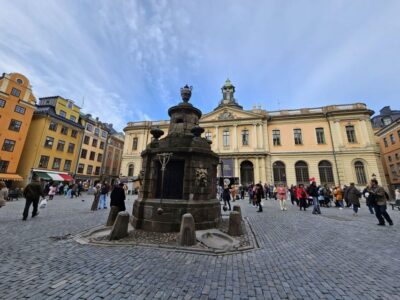
Secrets of Gamla Stan Guided Tour w/ Fika Option
Read our review →Browse the lists this tour appears in