
Review · GOTHENBURG TOURS
Private Guided Tour in Gothenburg
Gothenburg reveals itself one good stop at a time. This private tour links the city’s grand squares, churches, market halls, and café streets into a three-hour introduction, with a guide to explain what you are seeing instead of leaving you to decode the architecture alone. I especially like the mix of local food culture and major landmarks, plus the small group format, which lets your party set the pace within reason. The main drawback is cost: $580.62 per group is a strong value for 10 to 15 people, but expensive for one or two.
I also like that the route shows several sides of Gothenburg. You get civic buildings and grand art spaces at Götaplatsen, the everyday feel of Stora Saluhallen, and the unusual fish market known as Feskekörka. Food is not included, so you should budget separately for coffee and cake during the Swedish fika stop.
In This Review
- Key points at a glance
- Why this three-hour route works
- Starting at Gothenburg Town Hall
- Götaplatsen and Carl Milles’s Poseidon
- Stora Saluhallen, Gothenburg’s indoor food stop
- Feskekörka, the fish market shaped like a church
- Haga Nygata and the Swedish fika pause
- Masthugget Church and its 60-meter tower
- Oscar Fredrik Church and its Neo-Gothic character
- What the $580.62 price really means
- Who will get the most from this tour?
- Should you book this Gothenburg tour?
- FAQ
- Where does the private Gothenburg tour begin?
- Where does the tour end?
- How long does the tour last?
- How many people can join the private tour?
- Is food included in the tour price?
- Does the tour include a Swedish fika stop?
- Are admission tickets included?
Key points at a glance
- Gunnar Asplund’s Town Hall extension: See how a 17th-century building and a 1936 addition meet in one design.
- Götaplatsen’s Poseidon statue: Stand before Carl Milles’s famous sculpture, surrounded by Gothenburg’s Concert Hall, Museum of Art, and City Theater.
- Stora Saluhallen market hall: Browse food from around the world in Gothenburg’s largest indoor market.
- Feskekörka’s church-like design: See the 1874 fish market, shaped in Neo-Gothic style by Victor von Gegerfelt.
- Haga Nygata fika break: Leave room for Swedish coffee and cake in one of the city’s most inviting café streets.
- Two very different churches: Compare the tall Masthugget Church with the Neo-Gothic Oscar Fredrik Church.
Why this three-hour route works
Gothenburg can feel spread out when you first arrive. This tour gives you a useful framework by connecting central civic sights, food stops, and churches in one guided outing. Instead of spending three hours at one museum, you get a broad look at the city’s architecture and daily life.
The private format is the key advantage. Your group of up to 15 people has its own guide, so you are not sharing the experience with a large mixed crowd. That matters when you want to ask about a building, pause for a photo, or get help understanding how Gothenburg’s older and newer architecture fit together.
The tour lasts about three hours. The listed stops add up to roughly that amount, with the longest pause at Haga Nygata. Since transportation and food are not included, plan on meeting at Gustaf Adolfs Torg and following the route on foot, with any food or drink purchased separately.
One especially strong point is the guiding. The available feedback praises the guide’s ability to explain the city clearly and bring its past to life. No guide’s name is provided, but that comment points to the part of this experience that matters most: the quality of the explanation. The buildings are worthwhile on their own, but the tour becomes much more useful when someone connects them.
More things to do in Gothenburg:
- Gothenburg: Archipelago cruise with guide
★ 4.3 · 1,002 reviews - Gothenburg: City Canal Sightseeing Cruise
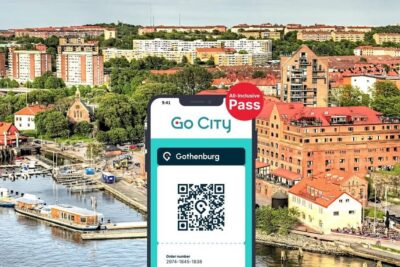
★ 4.7 · 470 reviews - Gothenburg: Go City All-Inclusive Pass with 20+ Attractions
★ 3.8 · 222 reviews
Starting at Gothenburg Town Hall
The tour begins at Gothenburg Town Hall, at Gustaf Adolfs Torg 1. This is a smart starting point because the building gives you an early lesson in Gothenburg’s changing architectural taste.
The original Town Hall dates to the 17th century. Its later extension, completed in 1936 under architect Gunnar Asplund, creates the stop’s main interest. You are not simply looking at an old government building. You are seeing how a newer structure can sit beside an older one without pretending to be from the same period.
The building uses Beaux-Arts design, and the guide’s role is important here. A quick look may reveal only a formal civic façade. With explanation, you can pay attention to the contrast between the original building and Asplund’s addition, including the way the two parts relate rather than compete.
You have about 25 minutes here. That is enough time for an outside architectural explanation and photographs, but it is not a long interior visit. The admission cost is listed as free, and the attraction of this stop is the design and context rather than a ticketed museum experience.
Götaplatsen and Carl Milles’s Poseidon
From the Town Hall, the route reaches Götaplatsen, one of Gothenburg’s best-known squares. The central focus is Poseidon, the large statue by Carl Milles. It is one of those city symbols that helps you recognize Gothenburg in photographs, but the surrounding buildings make the square more than a statue stop.
Götaplatsen is framed by the Gothenburg Concert Hall, the Gothenburg Museum of Art, and the City Theater. That combination gives the square a strong cultural role. You can look at Poseidon as a work of public art, then turn around and see how the city placed major music, art, and theater institutions around it.
The planned 25-minute visit is well judged for an orientation tour. You can hear the basic story, take in the layout, and get a sense of where Gothenburg’s cultural life is centered. If you want to enter the museum or attend a concert, that would require separate time and arrangements. This tour gives you the outside view, not a full cultural program.
Stora Saluhallen, Gothenburg’s indoor food stop
Stora Saluhallen is the most direct connection to Gothenburg’s daily food culture. It is the city’s largest indoor market hall, with shops selling groceries from many parts of the world.
I like this stop because it breaks up the monuments and architecture. Markets tell you how a city eats, shops, and meets its practical needs. You can browse the stalls, look at unfamiliar ingredients, and notice the range of food beyond traditional Swedish fare.
The visit is scheduled for about 25 minutes. That gives you time to look around, but you should not expect a leisurely meal and a full shopping trip within the same stop. Food expenses are not included, so anything you buy comes out of your own pocket.
This is also a useful place to ask your guide questions. A private guide can point out items or explain what you are seeing in a way a quick walk through the hall cannot. If food markets are a priority for you, this stop may feel short. If you mainly want a taste of local city life, it gives the tour a welcome change of pace.
A few more options to weigh up in Gothenburg
- Bike Tour Gothenburg, Guided Bicycle Tours
★ 5.0 · 88 reviews - Archipelago Tour with guide Gothenburg
★ 4.0 · 73 reviews - Make Your Own Tour – Guided Walking Tour
★ 4.5 · 32 reviews - Gothenburg : Private Walking Tour with A Guide (Private tour)
★ 4.0 · 19 reviews
Feskekörka, the fish market shaped like a church
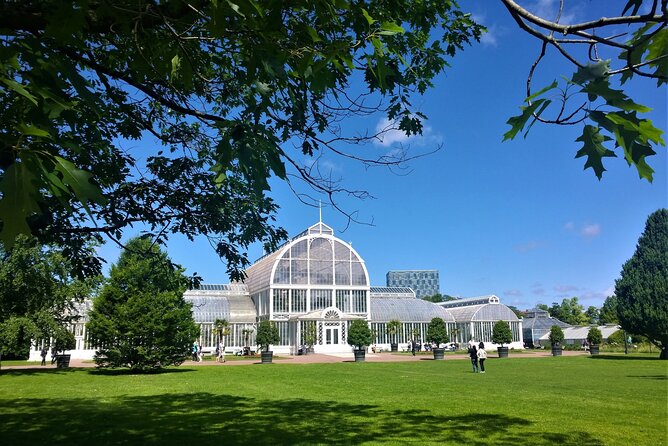
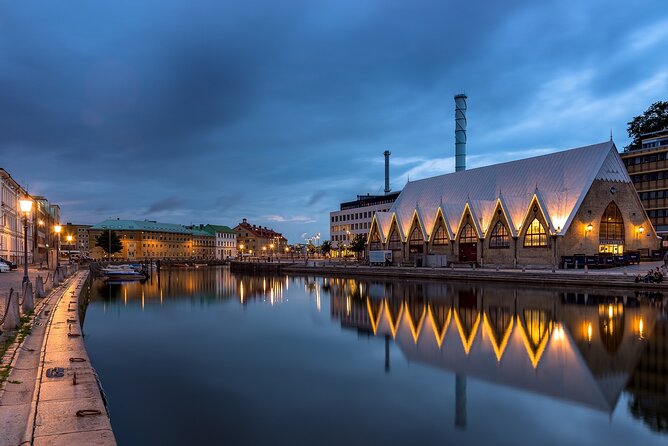
Next comes one of Gothenburg’s most unusual buildings: Feskekörka, whose name means Fish Church. It is a fish market, not a place of worship, but its Neo-Gothic form makes the joke immediately clear.
The building dates to 1874 and was designed by Victor von Gegerfelt. Its church-like appearance is not a minor decorative touch. The steep, dramatic design was made to resemble a religious building, giving an ordinary market a memorable public face.
You will walk by the building rather than spend a long indoor period there. The stop lasts around 25 minutes, and the building also contains a fish and seafood restaurant. Since food is not included, you can look around and decide for yourself if you want to eat there, though the tour does not promise a meal.
This is a good example of why a guide helps. Without context, Feskekörka can look like an attractive old church. With context, it becomes a playful piece of city architecture tied to Gothenburg’s connection with seafood and trade.
Haga Nygata and the Swedish fika pause
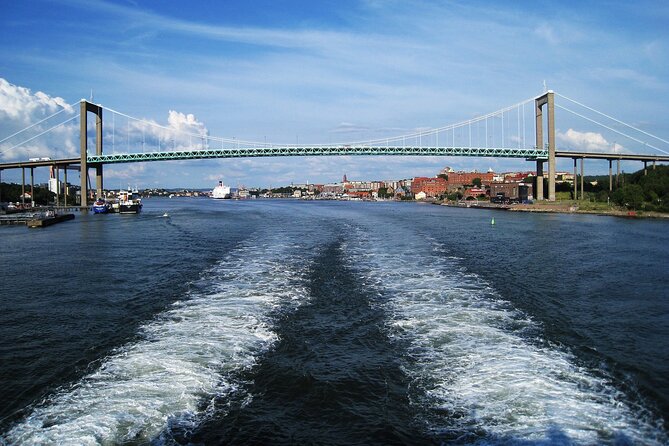
Haga Nygata is the tour’s most relaxed stop. This street is lined with cafés and shops, and you have about 40 minutes to stroll, browse, and possibly enjoy a Swedish fika.
Fika is more than simply grabbing coffee. It is a Swedish habit of taking time for coffee and something sweet, often cake or a pastry, in a social setting. The tour gives you a chance to experience that custom in a natural place rather than treating it as a staged cultural demonstration.
Keep the practical detail in mind: food and drink are not included. You will pay for your own coffee and cake, and the exact length of your café stop may depend on the group and the guide. If you prefer not to eat, you can use the time to explore Haga Nygata’s shops and street character.
This is probably the stop most likely to appeal to people who want a little breathing room. The route has already included civic architecture, a market hall, and a famous statue. Haga Nygata lets you slow down and enjoy the city at street level.
Masthugget Church and its 60-meter tower

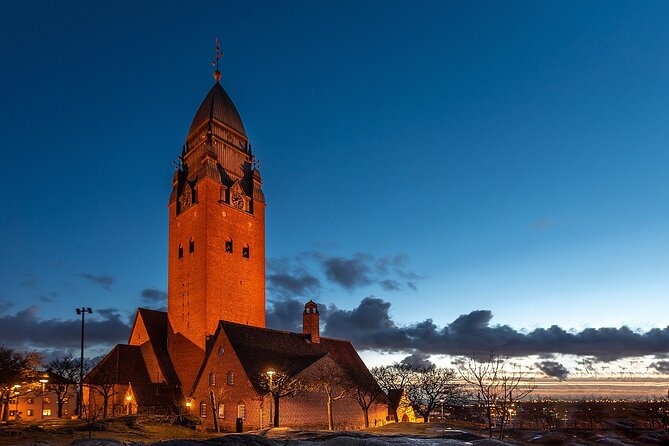
Masthugget Church comes near the end of the route. Dating from 1914, the church is known for its tower, which rises about 60 meters and makes the building an important Gothenburg landmark.
The stop is scheduled for 20 minutes. That is enough for a guided look at the exterior and a brief visit if access is available during the tour, but you should not plan on an extended service, concert, or architectural study. The supplied details do not promise a special interior program.
Masthugget Church adds another kind of architecture to the day. After the formal civic buildings and the theatrical fish market, you get a landmark with a strong vertical presence. The guide can help place it within the city, which is especially useful if you want to understand why this church matters beyond its appearance.
Oscar Fredrik Church and its Neo-Gothic character
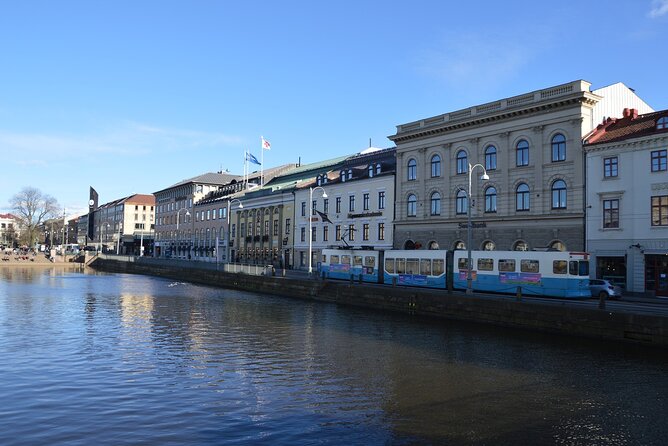
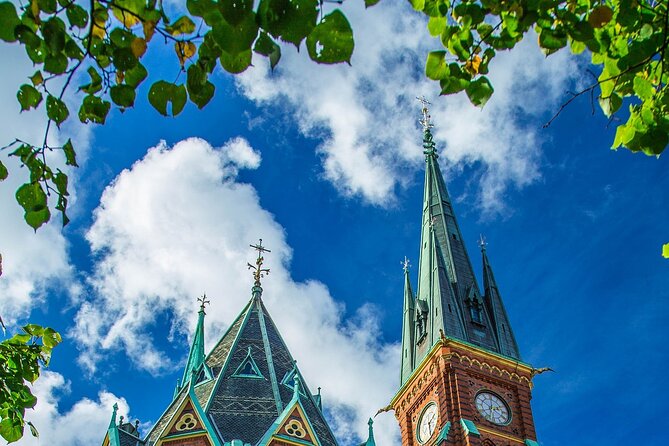
The final church is Oscar Fredrik Church, built in Neo-Gothic style and named after King Oscar II. It gives you a second religious building for comparison, rather than ending the tour with one isolated church.
The 20-minute stop should help you notice the features that make Neo-Gothic architecture recognizable. You may find the comparison with Feskekörka particularly fun: one is a fish market designed to resemble a church, while the other is an actual church built in a Neo-Gothic style.
The tour ends back at the original meeting point. That is useful if you need to continue sightseeing from central Gothenburg or return to nearby public transportation. The activity information says it is near public transportation, and most people can participate.
What the $580.62 price really means
The price is $580.62 for a private group of up to 15 people. At the maximum group size, that works out to about $39 per person. For 10 people, it is about $58 per person. For two people, the effective price is about $290 each, which is much harder to justify unless having a private guide is central to your plans.
This is not a cheap sightseeing walk for a couple. It becomes more reasonable for a family, reunion group, cruise group, or set of friends who can split the cost. The private format also gives you a more personal experience than a standard group tour, although the tour still follows a set route and schedule.
Admission to the listed stops is free, but that does not make the full outing cost-free. You must pay for food, coffee, cake, and any transportation you choose to use. The price mainly covers the guide and the convenience of having the route organized around your group.
I would book it for a larger party that wants a broad first look at Gothenburg without spending time planning the connections. I would hesitate if you are traveling alone or as a couple and are comfortable walking between these sights with a guidebook or audio guide.
Who will get the most from this tour?
This experience suits first-time visitors who want several major Gothenburg sights in one outing. It also works well for people who prefer explanations over simply taking photos, especially at the Town Hall, Götaplatsen, and Feskekörka.
It is a good fit for groups with mixed interests. One person can enjoy architecture, another can browse the market hall, and someone else can look forward to fika at Haga Nygata. The route also offers enough variety that you are not spending all three hours inside churches or all three hours around food.
You should think twice if you want long visits inside museums, detailed church interiors, or a full meal. The tour visits many places, but the short stop structure means you get an introduction to each one rather than a deep examination.
The cancellation terms are strict. The experience is non-refundable and cannot be changed for any reason, so confirm your group size, date, and meeting plans before paying.
Should you book this Gothenburg tour?
Book it if you have a group large enough to share the cost and want a guide to connect Gothenburg’s architecture, food culture, public art, and churches. The strongest parts are the private format, the mix of well-known sights with everyday places such as Stora Saluhallen and Haga Nygata, and the guide’s praised ability to make the city’s past understandable.
Skip it if you are a couple watching every krona, or if you prefer choosing your own pace and spending a full hour at one attraction. For the right group, though, this is a practical three-hour introduction that gives Gothenburg a clear shape.
FAQ
Where does the private Gothenburg tour begin?
It begins at Gustaf Adolfs Torg 1, 411 10 Göteborg, Sweden.
Where does the tour end?
The activity ends back at the meeting point.
How long does the tour last?
The tour lasts approximately three hours.
How many people can join the private tour?
The private tour is for one group of up to 15 people.
Is food included in the tour price?
No. Food and transportation expenses are not included. You may purchase coffee, cake, or other food during the stops at your own expense.
Does the tour include a Swedish fika stop?
Yes. The route includes time at Haga Nygata, where you may take a short Swedish fika break at one of the cafés.
Are admission tickets included?
The listed stops show free admission. The tour includes a private guide, while food and transportation are separate expenses.
Just added in Gothenburg
- West Sweden: Sea Kayak Delight in Nature Reserves★ 5.0 · 6 reviews
- West Sweden: Self Guided Kayak Tour – Southern Route★ 5.0 · 1 review
- West Sweden: Rock Climbing Day★ 5.0 · 2 reviews
- Private Boat Ride in Gothenburg with pickup★ 4.0 · 9 reviews
- Explore the Instaworthy Spots of Gothenburg with a Local★ 5.0 · 3 reviews
- Discover Gothenburg’s most Photogenic Spots with a Local★ 4.5 · 7 reviews
- Gothenburg : Private Walking Tour with A Guide (Private tour)★ 4.0 · 19 reviews
- Historical Walking Tour in Restaurant and Bars in Central City★ 5.0 · 9 reviews
Gothenburg Tours, compared.

Go City All-Inclusive Pass with 20+ Attractions
Read our review →


Browse the lists this tour appears in