
Review · GOTHENBURG TOURS
West Sweden: Rock Climbing Day
Find your footing on Swedish granite. This eight-hour climbing day is a friendly introduction to real outdoor rock climbing in Västra Götaland County, with an experienced, certified instructor leading the way. I like the small group of up to eight people, which should give you more time on the rock, and I like that the day teaches both climbing and belaying rather than treating the activity as a quick photo stop. The main drawback is the full eight-hour commitment: if you are only mildly curious about climbing, this is a long trial session.
You meet at the big red barn called UpplevelseLadan, then head to one of the nearby granite crags for a day built around safety, basic skills, and personal challenge. You should not expect a formal climbing course qualification from this experience. Think of it as a practical test of whether outdoor climbing feels right for you before committing to a longer basic course.
In This Review
- Key points to know before booking
- Starting at UpplevelseLadan near the West Sweden crags
- Learning the basics before pushing higher
- What climbing on natural granite feels like
- An eight-hour day with room for nerves and progress
- Safety is central, but you still need to take responsibility
- The views are part of the reward
- Value, group size, and booking flexibility
- Who should book this rock climbing day?
- Should you book it?
- FAQ
- Where does the rock climbing day meet?
- How long does the experience last?
- Is the activity suitable for people who have never climbed?
- What will I learn?
- Who leads the activity?
- What languages are available?
- How large is the group?
Key points to know before booking

- Real Swedish granite: You climb outdoors on a nearby crag rather than staying inside on artificial walls.
- An eight-hour introduction: The long format leaves room to learn, practice, rest, and try again.
- Small groups: A maximum of eight participants helps keep instruction more personal.
- Climbing and belaying basics: You learn how the climber moves and how the partner manages the rope.
- Certified instruction: An experienced, certified guide leads the activity and keeps safety at the center.
- Big views as a reward: Reaching the top of a route gives you more than a climbing exercise. You also get a new view from above the crag.
Starting at UpplevelseLadan near the West Sweden crags
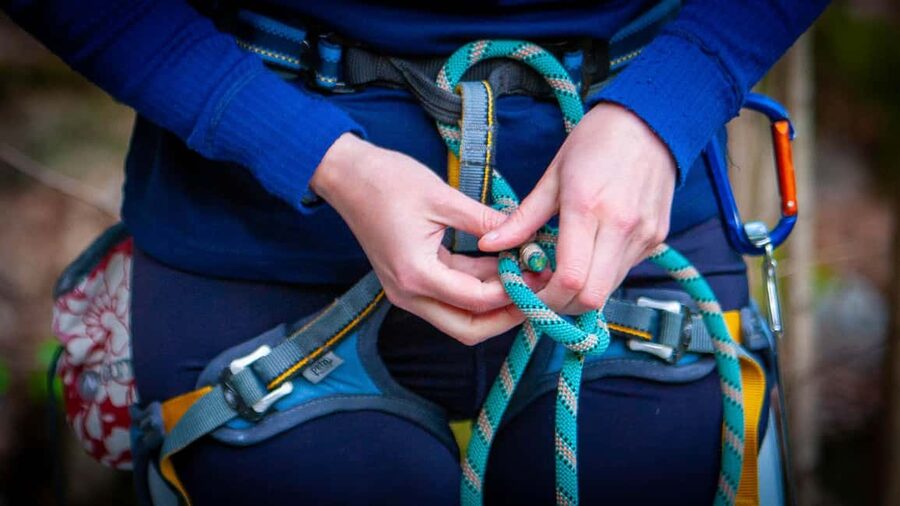
Your day begins at the big red barn, UpplevelseLadan. The meeting point is at coordinates 58.329505920410156, 11.906596183776855, so save the location before setting out. The name is easy to remember, but the exact coordinates are the useful part when you are navigating in the Swedish countryside.
From there, the climbing team takes you to a suitable crag nearby. The exact rock face can vary, so you should not arrive expecting one named summit or a fixed viewpoint. The important promise is the setting: outdoor granite, real rock texture, and a climbing day chosen for a safe introduction.
That change from an indoor wall to open rock is what gives the experience its character. In a climbing gym, holds are brightly marked and routes are easy to read. Natural rock asks you to look more closely. You begin to notice small edges, cracks, changes in texture, and the best position for your hands and feet.
I like that the experience begins with a good introduction rather than throwing a first-timer straight onto a difficult route. The stated aim is to bring you to a good crag for a safe start, not to prove how tough you are. That makes this a sensible choice if you have never climbed or have only tried a few indoor sessions.
More things to do in Gothenburg:
- Gothenburg: Archipelago cruise with guide
★ 4.3 · 1,002 reviews - Gothenburg: City Canal Sightseeing Cruise
★ 4.7 · 470 reviews - Gothenburg: Go City All-Inclusive Pass with 20+ Attractions
★ 3.8 · 222 reviews
Learning the basics before pushing higher
The day focuses on the basics of rock climbing and belaying. Climbing is the obvious part, but belaying is just as important. It is the rope-management role that helps protect the person on the wall, so learning it gives you a better understanding of how climbing works as a shared activity.
The guide leads you through the process in a controlled way. The supplied information does not list every lesson step, equipment item, or formal skill check, so I would not assume that the day covers advanced rope systems or independent lead climbing. You are there for a first experience and a foundation, not a specialist certification.
Expect the guide to explain how to approach the rock, how to use your body, and how to work with your climbing partner. The focus is on enjoying the movement while staying within a sensible safety structure. For a beginner, that balance matters. Too much technical information can make a first day feel like school, while too little instruction can make the activity feel careless.
The small group size helps here. With no more than eight participants, you have a better chance to watch demonstrations clearly and ask questions. You may still spend some time waiting while another person climbs, but that pause is useful. You can study the route, notice how different people solve the same section, and recover before your own turn.
I especially like the way this format treats climbing as a social activity. You are not simply attached to a wall while an instructor watches from a distance. You learn how the climber and belayer depend on one another, which is part of what makes climbing feel rewarding.
What climbing on natural granite feels like
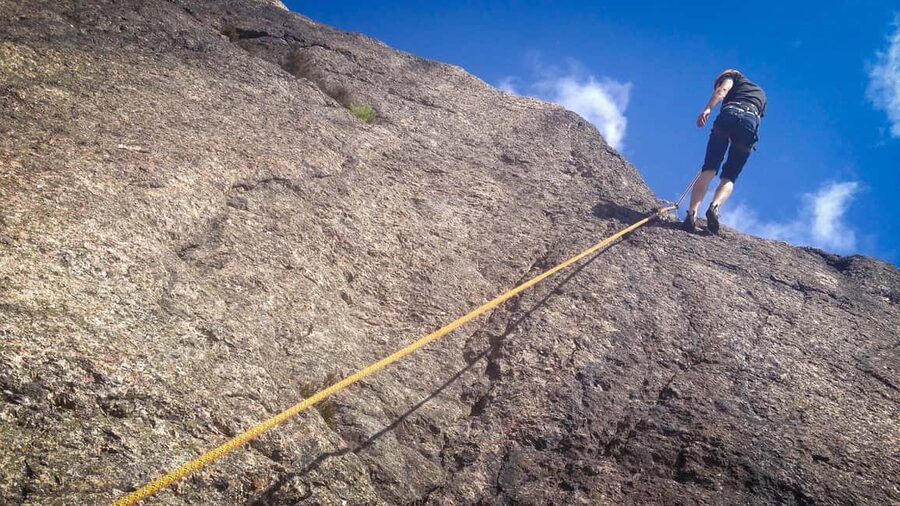
Swedish granite gives this experience a strong sense of place. You are not using colored plastic holds in a gym. You are reading the shape of the rock itself, with its natural edges and uneven surfaces. The supplied information does not name the exact crag or grade of the routes, so the day should be approached as an introduction rather than a chance to chase a particular level.
For you, the biggest adjustment may be psychological. A climbing wall can feel predictable. An outdoor crag can make the first move seem more serious, even when the guide has selected a suitable beginner route. That is where the instructor’s role becomes important. A calm explanation and a clear safety routine can help you move past the first hesitation.
The activity is designed to challenge you without making the challenge the whole point. You are encouraged to push beyond your comfort zone, but the description also keeps returning to fun and safety. That is a good sign for a first outdoor attempt. You should expect to feel some nerves, especially before leaving the ground, but the day is not presented as a test of athletic ability.
You do not need to arrive as an expert. The experience is aimed at people who have never climbed, as well as those who have tried a few times indoors and want to see how the real thing feels. If you already climb outdoors regularly, you may find the instruction too basic.
The guide’s job is not simply to get you to the top. It is to help you understand what you are doing, why the rope system matters, and how to make sensible choices on the rock. That makes the day more useful than a one-off thrill ride.
An eight-hour day with room for nerves and progress
Eight hours is a serious block of time, and that is both a strength and a limitation. Climbing uses concentration and physical effort, so a rushed two-hour session would give you little chance to settle in. The longer format allows you to learn, attempt routes, take breaks, and return to the rock with a clearer head.
You should expect the day to develop in stages, even though exact timings are not provided. The opening part will likely involve meeting the guide, traveling to the crag, and getting familiar with the activity. Instruction in climbing and belaying follows, then the practical part takes over as you begin trying the rock yourself.
The middle of the day is where the experience earns its place as a full-day activity. You have time to make an attempt, think about what went wrong, and try again. Outdoor climbing often involves small gains rather than one dramatic leap. You may not climb the highest route, but you can still improve your foot placement, confidence, or ability to trust the rope.
The final part should bring a sense of achievement, especially if you reach a higher point on the crag and take in the views. The description promises great views from atop the rock, but it does not identify a specific panorama. Keep your expectations flexible. The pleasure comes from seeing the surrounding area from a height you reached under your own effort.
The drawback is simple: eight hours can feel long if you discover that climbing is not for you. This is not a quick sampler that you can finish before lunch. I would book it only if you are willing to give the activity a proper chance.
A completely different kind of day:
- Gothenburg: City Sightseeing Hop-On Hop-Off Bus Tour
★ 3.8 · 206 reviews - Gothenburg: Haga Old Town Walking Tour
★ 4.5 · 205 reviews - Landvetter Airport Bus Transfer Departure
★ 3.5 · 158 reviews - Landvetter Airport Bus Transfer Arrival
★ 3.5 · 117 reviews
Safety is central, but you still need to take responsibility

The experience is led by an experienced and certified instructor, and safety is one of its clearest selling points. That matters most when you are new to climbing. A first outdoor session has more moving parts than an indoor introduction, so professional guidance is worth more than flashy extras.
The guide should help you understand the climbing system before asking you to rely on it. Learning belaying is especially valuable because it shows how the group protects the person on the wall. You are not only learning how to climb upward. You are learning how to take part responsibly.
Still, you should not read the word safe as risk-free. Rock climbing is a physical adventure, and the whole point is to move beyond your usual comfort zone. Listen closely, follow instructions, and tell the guide if you are nervous or unsure. The information provided does not give a minimum age, fitness requirement, medical guidance, or equipment list, so ask the provider about those points before booking if they affect you.
The group limit of eight also supports a safer learning environment. It gives the guide a manageable number of people to supervise, while keeping the atmosphere less crowded than a large group outing. The exact amount of individual climbing time will depend on the group, the crag, and the pace of instruction.
The views are part of the reward
The climbing itself is the main event, but the views from the crag give the day a clear payoff. Reaching a higher point changes how you see the surrounding area. Even a modest climb can feel significant when you look back at the ground below and remember the first nervous move.
I would not book this solely for sightseeing. The experience is active, and the view is tied to your effort on the rock. If you want a relaxed day of scenery, a sea-kayaking or sightseeing experience in West Sweden may suit you better. If you like the idea of earning your viewpoint, this activity offers a more memorable reward.
The setting also helps explain why an outdoor introduction is worth doing after an indoor session. Indoor climbing can teach you basic movement, but a natural crag adds texture, exposure, and a stronger connection to the region. You get to test whether the activity still appeals when the holds are not color-coded and the setting feels less controlled.
That is the real question this experience helps answer: do you like climbing outdoors? After eight hours of learning, waiting, trying, and looking out from the rock, you should have a much clearer answer.
Value, group size, and booking flexibility
No price is provided here, so I cannot judge the exact cost against other climbing days. I can judge what the format offers for the money. You receive a full eight-hour experience, a certified instructor, access to a real granite crag, instruction in climbing and belaying, and a small group capped at eight.
That combination can offer good value for a first-timer, especially if a private lesson would cost much more. The benefit is not only the time spent climbing. You are also paying for route choice, safety oversight, teaching, and the chance to find out if you want to take a longer basic climbing course later.
The value is weaker for someone who already has solid outdoor experience. You may not need a beginner-focused day, and the group format may offer less freedom than arranging a private session. Check the current price and ask what is included before paying, since the available information does not specify transport, food, or equipment.
Booking is fairly flexible. You can cancel up to 24 hours in advance for a full refund, and you can reserve now and pay later. Those terms are useful in West Sweden, where weather can affect outdoor plans, although the information does not spell out how weather cancellations are handled. If conditions are a concern, ask Upplevelsebolaget directly.
Who should book this rock climbing day?
I would recommend it most strongly to:
- First-time climbers who want to try real rock
- Indoor climbers curious about moving outdoors
- Active visitors who enjoy a physical challenge
- People who prefer small groups and guided instruction
- Anyone considering a longer basic climbing course
It may not be the best fit if you want a relaxed sightseeing day, dislike heights, or already have substantial outdoor climbing experience. The course is built around learning and confidence, not speed or advanced routes.
The language choice is helpful for international visitors. The live guide speaks English or Swedish, so you can select the language that lets you follow safety instructions most clearly. That is more important here than on a simple walking tour.
Should you book it?
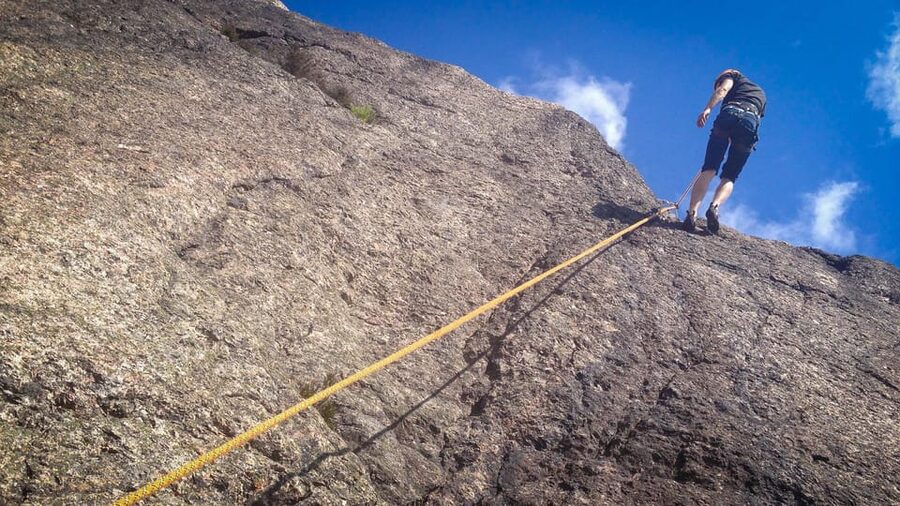
Book this West Sweden rock climbing day if you are curious about outdoor climbing and want a careful, full-day introduction rather than a short novelty session. The combination of natural granite, certified instruction, belaying practice, a maximum of eight participants, and views from the crag gives you a proper taste of the sport.
Skip it if you are only looking for a quick activity or if you already climb outdoors with confidence. Before booking, confirm what equipment and transport are included, then meet at UpplevelseLadan ready to learn, listen, and accept a few shaky first moves. If the day goes well, you may leave with more than a good view. You may have found your next long-term hobby.
FAQ
Where does the rock climbing day meet?
The meeting point is the big red barn called UpplevelseLadan in Västra Götaland County, Sweden. The listed coordinates are 58.329505920410156, 11.906596183776855.
How long does the experience last?
The rock climbing day lasts eight hours. Starting times vary, so you need to check availability when booking.
Is the activity suitable for people who have never climbed?
Yes. The experience is designed as a safe introduction for people who have never climbed, as well as people who have only tried climbing indoors or a few times.
What will I learn?
You will learn the basics of rock climbing and belaying while practicing on a nearby granite crag.
Who leads the activity?
An experienced and certified instructor leads the day.
What languages are available?
The live guide speaks English and Swedish.
How large is the group?
The activity is limited to eight participants.
Just added in Gothenburg
- West Sweden: Sea Kayak Delight in Nature Reserves★ 5.0 · 6 reviews
- West Sweden: Self Guided Kayak Tour – Southern Route★ 5.0 · 1 review
- Private Boat Ride in Gothenburg with pickup★ 4.0 · 9 reviews
- Explore the Instaworthy Spots of Gothenburg with a Local★ 5.0 · 3 reviews
- Historical Walking Tour in Restaurant and Bars in Central City★ 5.0 · 9 reviews
- Discover Gothenburg’s most Photogenic Spots with a Local★ 4.5 · 7 reviews
- Gothenburg : Private Walking Tour with A Guide (Private tour)★ 4.0 · 19 reviews
- Guided boat tour to Vinga in Gothenburg★ 3.5 · 8 reviews
Gothenburg Tours, compared.



Go City All-Inclusive Pass with 20+ Attractions
Read our review →




Browse the lists this tour appears in